
Macao and the Japanese Wall: The Real Test for British Table Tennis
**Câu trả lời cốt lõi:** Tại WTT Champions Macao, Anna Hursey (hạng 37) và Tom Jarvis (hạng 45) của Anh đều thắng vòng một nhưng đối mặt thử thách lớn ở vòng trong khi chạm trán hạt giống Nhật Bản: Hursey gặp Miwa Harimoto (hạng 3), Jarvis gặp Sora Matsushima (hạng 3). **Dữ kiện chính:** - Anna Hursey thắng Leong On Na (hạng 475) 3-0, chỉ thua 14 điểm, mở màn bằng chuỗi 7-0 và hiệp một 11-1. - Hursey (hạng 37) kém Miwa Harimoto (hạng 3) 34 bậc; Tom Jarvis (hạng 45) kém Sora Matsushima (hạng 3) 42 bậc. - WTT Champions Macao thuộc tầng hai hệ thống WTT; nhà vô địch nhận khoảng 1.000 điểm xếp hạng. - Harimoto để Zeng Jian kéo hiệp hai tới 12-10 trước khi thắng 3-0 ở vòng một. **Nguồn:** Phân tích từ bản tin Table Tennis England về WTT Champions Macao; đối chiếu dữ liệu xếp hạng ITTF. **Hỏi đáp liên quan:** - Hỏi: Ai có cửa gây bất ngờ cao hơn ở vòng trong? Đáp: Tom Jarvis, vì độ biến động của nội dung nam lớn hơn, dù khoảng cách thứ hạng của anh (42 bậc) lớn hơn của Hursey. - Hỏi: Kết quả vòng một của Hursey nói lên điều gì? Đáp: Nó chỉ xác nhận đẳng cấp hạng 37 và không cung cấp dữ liệu chẩn đoán cho trận gặp Harimoto. - Hỏi: Yếu tố nào quyết định trận Hursey gặp Harimoto? Đáp: Ngưỡng chịu đựng khi trận đấu bị đẩy vào thế khó, chứ không phải đỉnh kỹ thuật.
Macao and the Japanese Wall: The Real Test for British Table Tennis
Anna Hursey served the first ball of her opening match at WTT Champions Macao, and the next seven points drifted past like a stroll. Leong On Na, the host wildcard ranked No. 475 in the world, pushed a return wide of the table edge. The score read 7-0. The first game closed at 11-1. Across three games, Hursey conceded only 14 points, never trailed once, and produced no scrambling save that forced the arena to hold its breath.
It was a training session that happened to be scored. It confirmed that the 19-year-old from Wales is standing exactly where a world No. 37 should stand. It said nothing more.
I rewatched the footage three times from Tokyo — an old habit carried over from the months spent in front of 447 matches during the lockdown, when I learned that table tennis tells the history of itself through every point, if only you are willing to listen. The first viewing, I counted points. The second, I looked for tactical intent. The third, I asked one question: does this match offer any diagnostic value for the next round? The answer was no. And that is the part worth discussing.
Context: a wall already built
WTT Champions Macao sits in the second tier of the WTT system, below the Grand Smash and above the Contender and Star Contender events. The champion collects roughly 1,000 ranking points — enough to lift a mid-tier player toward seeded status at higher-tier events, or enough to cost a young player ground with an early exit. The prize money was not specified in the source report, but the structure of WTT Champions events typically incentivizes players to reach at least the quarterfinals for a meaningful return. The field is strong enough that no one can take a shortcut.
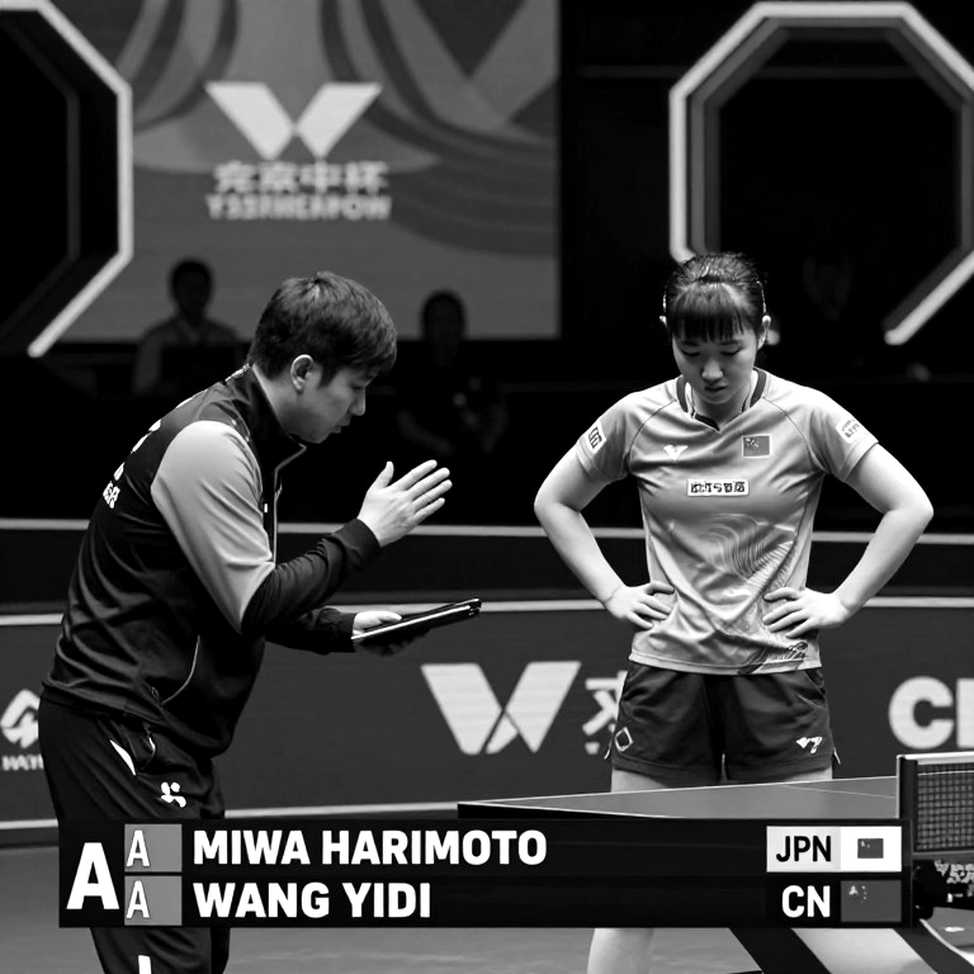
For British table tennis, the knockout draw built two tests bearing the same name: Japan. Anna Hursey, world No. 37, faces Miwa Harimoto, No. 3. Tom Jarvis, world No. 45, faces Sora Matsushima, No. 3. Both opponents are only 18 and 19, both are being groomed for the next Olympic cycle, and both won their opening matches 3-0. Harimoto even allowed Zeng Jian to push the second game to 12-10 — a detail I will return to.
This is the larger picture that isolated numbers fail to draw. The top tier of the women's field is still ruled by Chinese players and Harimoto, with Japan the immediate challenger. The men's field is more open but still leans toward China, with a European resurgence and Japan, Chinese Taipei, Hong Kong and Singapore trailing behind. Britain's place in this hierarchy sits below the leading Asian nations and several European ones. The two matches in Macao are measuring sticks, not title races.
The ranking gaps are concrete. Hursey trails Harimoto by 34 places. Jarvis trails Matsushima by 42. On paper, Hursey's win probability is estimated at around 20-25 percent, Jarvis's at around 25-30. But rankings do not play the ball. And a place in the last 16 means different things to the two of them: for Hursey, it is accumulated points toward seeded status; for Jarvis, it is confirmation that a slot at this tier of event is no longer a surprise.
The scoreline does not tell the whole story
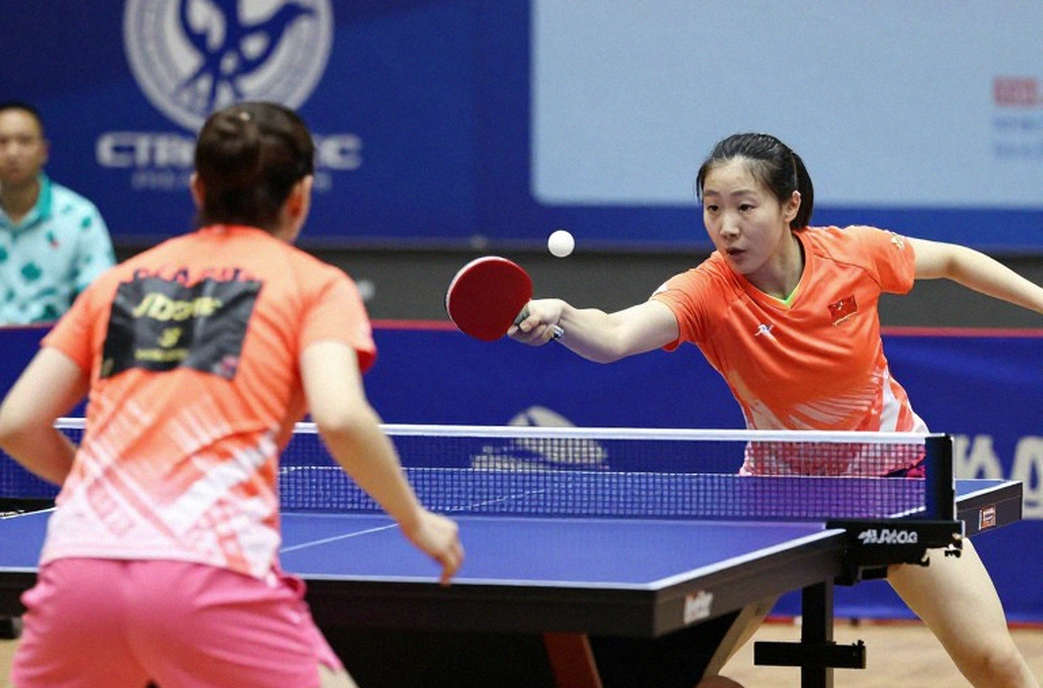
Hursey's 3-0 win over Leong is not a technical statement. When you face a world No. 475 who was granted a wildcard for local-market reasons — a common WTT practice that does not affect fairness at the top of the draw — dominance is the expected outcome, not an achievement. The seven-point opening run and the 11-1 first game say two things: Hursey entered the match with high concentration, and she executed an aggressive serve-and-attack plan from the very first exchanges.
An easy win is not a comfortable win. It is a match that fails to prepare you for the shock of quality.
Across all three games, Hursey never trailed once. That sounds like good news, and in one sense it is. But it also means she was never pushed into a position where she had to adjust. No game forced her to call a tactical timeout, no scoreline made her change her serve rhythm, no rally tested her crisis management. A player walking into the next round without having been tested for rhythm is a player gripping a bat whose flex she has yet to learn.
The gap between the first-round and second-round opponent here is the widest possible: from No. 475 to No. 3. In table tennis, where a player can win 11-1 against one opponent and lose 4-11 to another within two hours, that shock is far more real than it appears. The short-serve, backhand-lock and third-ball attack that worked against Leong will not automatically work against someone who reads serves at an entirely different level.
One detail of Hursey's context deserves mention. She is one of the few Welsh players to reach this stage of a WTT Champions event. Her presence in Macao as world No. 37, at 19, points to a targeted, invested development path. But the source report offers no data on her coaching relationship or off-court support system, so conclusions about the effectiveness of that apparatus must wait. The only certainty is this: she is being placed in exactly the arenas she needs.
With Jarvis, the situation is similar but structurally different. In the men's field, the density of top players is thinner, the gap between the 3-15 group is easier to narrow, and a No. 45 player at peak fitness — Jarvis is 26, at his career peak — has more avenues to cause an upset. Against Matsushima, Jarvis is not merely facing a No. 3. He is facing a 19-year-old accustomed to expectation, and sometimes that expectation weighs more than any opponent standing across the table.
Harimoto's match against Zeng Jian left a trace worth studying, if Hursey's coaching staff do their job properly. A 12-10 second game means the Japanese No. 3 does not crush every opponent outside the top 10 at every moment. That is a single data point, and I will not build an entire house on one pillar. But it shows there are lulls in Harimoto's rhythm, and a left-handed player with Hursey's varied serve arsenal could find an opening if she pins those lulls down.
The blind spot where instinct and data part ways
The media framing treats these two matches as equals: two British players, two Japanese No. 3s, two underdogs. But the data says otherwise. Jarvis trails Matsushima by 42 places; Hursey trails Harimoto by 34. Hursey's gap is smaller in numerical terms. Anyone looking only at rankings would pick Hursey as the brighter prospect.
I think the opposite. Jarvis has the more realistic upset path, and the reason lies not in ranking but in the structure of the men's game.
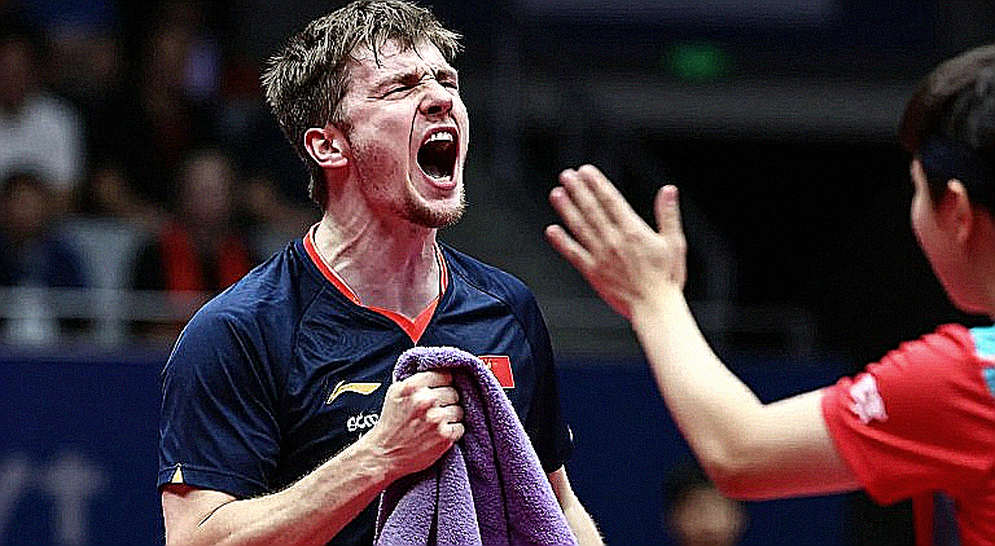
The men's field at this level carries higher volatility. Male No. 3 players tend to accumulate points through consistency in a system where rivals of equal standing constantly shift form. One afternoon when the serve will not land, and a No. 45 with ten years of international experience can turn it into a five-game match. Jarvis is no newcomer. He is seasoned enough to know exactly what capacity he enters the arena with.
The real gap between a world No. 37 and a world No. 3 is not at the technical ceiling. It is at the threshold of endurance when the match turns ugly.
Harimoto demonstrated this to a small degree by letting Zeng Jian drag the second game to 12-10. A No. 3 is not invincible at every moment. But they are the players who know how to win even when not at their best — and that is precisely the skill a No. 37 player does not yet possess.
On the women's side, I want to state plainly something the media atmosphere tends to avoid. Hursey is facing someone nearly her own age who already operates at a different level. Harimoto is not merely No. 3; she is the product of a generational-skip development strategy Japan has pursued for years: placing talents aged 15-20 into elite competition as early as possible, accepting losses for the sake of accumulation. Hursey is walking the same road, but a few years behind. This match, therefore, is not just a last-16 tie. It is a measurement of time.
Hursey's value will not be appraised in a press room. It will be appraised on the table, before the Macao crowd, on Thursday. And Jarvis's value likewise, only a day earlier.
What remains after the Macao night
Do not ask what Hursey and Jarvis lack. Ask what they will regret in three years if this Macao night passes without leaving anything behind.
For Hursey, the real value of Thursday lies not in the result but in how she loses — if she loses. A loss with extended games, narrow margins and a game won is a loss that pays interest on a career. A steady 0-3 defeat is an unpaid bill. For Jarvis, Wednesday is a rare chance for a No. 45 player to prove that his endurance threshold has reached a level the ranking has yet to reflect.
British table tennis stands at one of those rare moments when it has two players simultaneously reaching a round where every mistake is punished. That is not a disaster. That is the definition of growing up.
And if either of them clears the Japanese wall, Macao will no longer be just a match. It will be a marker people will have to look up for years to come.