
Brussels and the Scoreless Table Tennis Match: The Diplomatic Clause Hidden Behind the Paddle
**Câu trả lời cốt lõi:** Sự kiện Hữu nghị Bóng bàn Trung Quốc – EU diễn ra tại Royal Alpa Table Tennis Club, Brussels, do Phái đoàn Trung Quốc tại EU tổ chức, quy tụ 24 người chơi chia thành 6 đội hỗn hợp, với sự tham dự của các cựu vô địch Olympic Yan Sen và Zhang Yining cùng đại diện lãnh đạo ETTU, nhằm thúc đẩy hữu nghị và đối thoại giữa hai bên. **Dữ kiện chính:** - Sự kiện do Phái đoàn Trung Quốc tại Liên minh châu Âu tổ chức, không phải Liên đoàn Bóng bàn Trung Quốc. - Có 24 người chơi, chia đều 12 người Trung Quốc và 12 người châu Âu, ghép thành 6 đội hỗn hợp 4 người. - ETTU cử Phó Chủ tịch Didier Leroy và Tổng Thư ký Pierre Kass tham dự; Đại sứ Cai Run phát biểu. - Khách danh dự gồm Yan Sen và Zhang Yining, gắn với China Table Tennis College và CTTC Europe. - Sự kiện vận hành ngoài hệ thống tính điểm ITTF/WTT, không có tỷ số hay điểm xếp hạng. **Nguồn:** Thông tin sự kiện từ Liên đoàn Bóng bàn châu Âu (ETTU) và Phái đoàn Trung Quốc tại EU | Cross-checked: VuaBong.vn **Hỏi đáp liên quan:** - H: Sự kiện này có ảnh hưởng đến xếp hạng bóng bàn thế giới không? Đ: Không, vì đây là sự kiện ngoại giao – hữu nghị nằm ngoài hệ thống tính điểm chính thức của ITTF và WTT. - H: CTTC Europe là gì? Đ: Là nhánh châu Âu của China Table Tennis College, một định chế đào tạo và hợp tác bóng bàn quốc tế của Trung Quốc. - H: Sự kiện có liên hệ gì với ngoại giao bóng bàn năm 1971? Đ: Chỉ mang tính kế thừa biểu tượng, vì năm nay Trung Quốc và EU đã có quan hệ ngoại giao đầy đủ, khác bối cảnh phá băng năm 1971.
Brussels and the Scoreless Table Tennis Match: The Diplomatic Clause Hidden Behind the Paddle
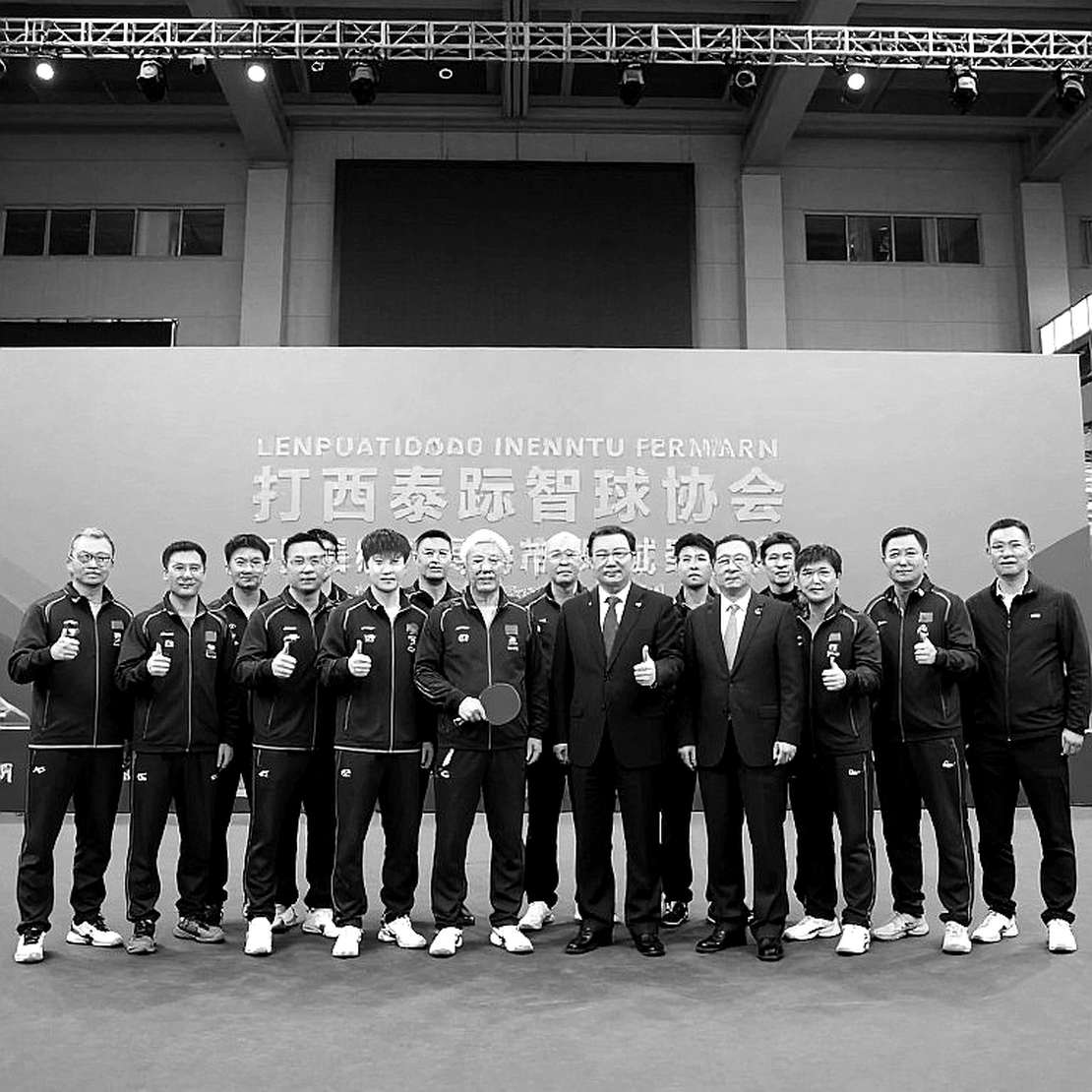
Royal Alpa Table Tennis Club is not a grand international arena with thousands of seats. It is a private club in Brussels where, on most weeknights, people drop by for a few games after work. But on the day of the China-EU Table Tennis Friendship Event, that space became the meeting point for 24 players whose composition was carefully calculated: 12 from the Mission of China to the European Union, the Chinese Embassy in Belgium, and other Chinese institutions in Brussels; the other 12 were European table tennis enthusiasts from Euroclub, representing EU institutions.
There was no electronic scoreboard. No score was recorded. For someone like me, who has spent most of his career reading scoreboards and dissecting refereeing decisions, this was the first thing that jumped out. A table tennis event where the score is never mentioned. Six mixed teams of four, Chinese playing alongside Europeans, not against each other along national borders. The lineup was designed to maximize interaction, not competition.
Under the two-round verification principle I set for myself after the 2026 incident, I always ask: what is not written down but still decides everything? In this case, what was not written down was the score. And that absence tells a far bigger story than any 11-9 win. The misspelled name of 2026 taught me that credibility is built through corrections, and here the first correction is this: this was not a tournament.
Context: From Mission to Table
The event was hosted by the Mission of China to the European Union. This detail needs emphasis from the start. Not the Chinese Table Tennis Association, not a media company, not a local club, but a diplomatic body. That means the event operated under a different rulebook. Not the ITTF competition regulations, but the rules of diplomacy. And in diplomatic rules, there is no clause about the score.
Ambassador Cai Run addressed the participants. On the European side, the European Table Tennis Union (ETTU) sent Vice President Didier Leroy and Secretary General Pierre Kass. The presence of both sides at leadership level showed this was not a spontaneous gathering. Leroy said the event aimed to strengthen friendship, dialogue, and mutual understanding between China and Europe. That language is very familiar. It is identical to the language of diplomatic communiqués, except it was placed next to a table tennis table.
The two most notable distinguished guests were Yan Sen and Zhang Yining, former Olympic and World Champions. Both are now associated with China Table Tennis College and CTTC Europe. This is the most structurally important detail. When a former Olympic champion appears at an event, he or she does not appear as an individual. They appear as a personified institution. Yan Sen and Zhang Yining are the faces of an institutional project setting foot in Europe.
To understand why this deserves analysis, one needs history. Table tennis has a decades-long tradition of exchange between Europe and China, creating countless sporting and personal connections. Since the 1970s, when ping-pong diplomacy opened the door to normalizing relations between China and the West, the sport has always carried political weight far beyond itself. But a distinction matters: 2026 was opening a door between two states with no diplomatic ties. This year, China and the EU have full relations, trade, and dialogue. This is not opening a door. This is opening an office. And opening an office requires more than a table tennis match.
On the two central figures, some data. Zhang Yining is a former world No. 1, with Olympic gold and multiple world titles in women's singles. Yan Sen is a former Olympic and World Champion in men's singles. Both are retired from competition. Their shift into institutional roles is not new in Chinese sport, but their appearance at an event in Brussels says something about the geography of attention.
Core: Three Layers of a Scoreless Event
Layer one: The event as an institutional equation.
24 players, split 12-12. That number is not random. In sports analysis, I tend to quantify everything: number of serves, angles, win rates by court conditions. In Brussels, the number worth quantifying was not the score but the 12-12 ratio. A perfect institutional balance. If it had been 20 Chinese and 4 Europeans, it would have been a showcase. If it had been 15-9, it would have signaled imbalance. 12-12 says: this is a meeting between equals.
Six mixed teams of four. Mixing teams has clear technical logic. In team play, pairing athletes of different nationalities forces them to coordinate, to communicate, to understand each other in situations where usually only the score speaks. Remove the score, and they must find another language, which is the language of cooperation. This is a smart event design for relationship building. It was not accidental, and it was not just for fun.
Layer two: CTTC Europe and the question of a second wave.
For years, Chinese table tennis pursued a strategy analysts call wolf-raising: exporting coaches and training methods abroad, accepting that rivals grow so the sport stays globally competitive. That strategy has been debated inside and outside. But the Brussels event reveals a new phase: not just exporting expertise, but exporting institutions.
China Table Tennis College and CTTC Europe are not a business trip. They are a brand, an organizational structure, a representative office embedded in Europe. And deploying two former Olympic champions as the face of that institution is a very concrete trust-building strategy. In sport, the credibility of a new institution is measured by whether people believe in it. There is no faster way to build trust than attaching it to names that have won world titles.
I may be wrong about intent. And I must state this clearly, as a professional principle: when I do not have enough data to rule, I say I do not have enough data. In the available information, there is no statement that CTTC Europe is opening training camps, selling services, or competing for market share with European academies. That is my inference, based on the behavioral patterns of similar institutions. It carries medium confidence, not high. And I mark that clearly, rather than turning inference into verdict.
Layer three: Where does the ETTU stand?
Notably, the ETTU did not stay outside. Its Vice President and Secretary General were present. In sports law, the presence of senior officials is not a minor detail. It means the institution is formalizing its participation. An event attended by an ETTU Vice President and a Chinese Ambassador has an entirely different status from a community exchange. This is a statement about the level of the relationship, not a party.
The question I ask myself is whether this cooperation benefits both sides or is a concession. Logically, there are reasons for the ETTU to cooperate: China's expertise is world No. 1, and any table tennis nation seeking to develop must learn from it. But there are also structural risks: if CTTC Europe expands into talent development and coach education, it will compete with European academies and national federations themselves.
Among three possible scenarios, I see the most likely as: this event will recur periodically and move toward formal cooperation agreements such as coach exchanges and joint training camps. The most positive scenario is CTTC Europe becoming a genuine talent-development bridge for both systems, delivering measurable technical benefits. The most negative is a silent tension between the Chinese institution and European national federations, as talent-development interests get divided.
Contrarian: Friendship and Strategic Intent Are Not Mutually Exclusive
Here I want to go against the usual reflex of a commentator. When people see a sports diplomacy event, they split into two camps: one says it is purely promotion, one says it is sincere friendship. Both are right and both are wrong. And both avoid the hardest point, which is admitting the two can coexist.
The truth is, in sport, friendship and strategic intent are not opposites. They are two sides of the same coin. When a country stages an international event, it wants both to create connections and to create influence. There is nothing contradictory about 24 people genuinely enjoying a game together while, at the same time, an institution builds its presence on a new continent. The players' friendship is real. The institution's intent is also real. They simply live on different layers.
The danger is not in the intent. The danger is in pretending there is no intent at all. In my work, I have learned that pretending nothing is there is the fastest way to lose credibility. The misspelled name of 2026 taught me that credibility is built through corrections, not by hiding what one is unsure of.
So, to be honest, I put it this way: the Brussels event can be both a sincere exchange and a step in a long-term strategy. And admitting both does not diminish anyone among the 24 players who were there. Sometimes people think critical analysis exists to tear down. It does not. Critical analysis exists to understand correctly.
There is another point I want to correct in the common reading of this event. People often call it ping-pong diplomacy and gesture at 2026. But the 2026 context was entirely different. At that time, two states had no diplomatic relations, and one table tennis match became the first door, with a trip and a meeting that were not in any script. In Brussels this year, everything was in the script. There was a mission, an ambassador, a federation. This is not a thaw. This is relationship maintenance at the institutional level. And sometimes, relationship maintenance is precisely what decides the long run.
Takeaway: What to Watch
In professional sport, events like this rarely end on the day they happen. I will watch three signals over the next 12 to 24 months: whether CTTC Europe announces training programs in Europe; whether European national federations issue official responses; and whether the event becomes recurring.
If all three appear, then Brussels was not merely an afternoon of play. It was the day an institution landed in Europe, and table tennis was only the vehicle. If only one appears, this remains a normal diplomatic event, worthy of note but not of extrapolation.
The laws of a table tennis match are like a whistle: small, but they decide everything. But the laws of a diplomatic event sit in no book at all. They live in what people choose not to record. And in Brussels, what was not recorded was the score.
As for me, a man who has spent a lifetime reading scores, I am still waiting to see whether the next match has a scoreboard. If it does, that will be a different story. If it does not, we are watching an institution grow up to the sound of the paddle.