
The 52-Week Drop: The Silent Fight for Survival Shaping World Table Tennis
**Câu trả lời cốt lõi:** Bảng xếp hạng bóng bàn thế giới của WTT vận hành theo cơ chế cuốn chiếu 52 tuần, giữ tám kết quả tốt nhất; điểm tự động hết hạn sau một năm, tạo áp lực bảo vệ điểm buộc các tay vợt thi đấu dày hơn mức an toàn. **Dữ kiện chính:** - Mỗi tay vợt giữ tám kết quả tốt nhất trong vòng 52 tuần; điểm hết hạn theo đúng ngày ghi nhận. - Vô địch một giải Grand Smash mang về khoảng 2.000 điểm, mất trọn khi hết hạn nếu không có kết quả thay thế. - Luật cấm che bóng khi giao bóng có hiệu lực từ năm 2002; bóng 40 mm áp dụng từ năm 2000, thể thức 11 điểm từ năm 2001. - SEA Games 31 tổ chức tại Hà Nội năm 2022 đưa bóng bàn vào nhóm môn được khán giả Việt Nam chú ý. - Kho dữ liệu công khai của bóng bàn thiếu chỉ số chuẩn hóa tương đương xG trong bóng đá. **Nguồn:** Phân tích dữ liệu WTT và lịch sử luật thi đấu ITTF, tổng hợp ngày 13 tháng 8 năm 2026 | Cross-checked: VuaBong.vn **Hỏi đáp liên quan:** - Hỏi: Vì sao tay vợt hàng đầu vẫn tụt hạng dù không thua trận nào? Đáp: Vì điểm cũ hết hạn sau 52 tuần và bị trừ tự động nếu không có kết quả tương đương thay thế. - Hỏi: Vì sao bóng bàn thiếu chỉ số phân tích chuyên sâu? Đáp: Dữ liệu theo dõi chuyển động và chỉ số chất lượng cơ hội chưa được công bố đầy đủ cho công chúng. - Hỏi: Tay vợt Việt Nam gặp khó khăn gì khi tích điểm? Đáp: Số suất dự giải WTT còn hạn chế, trong khi điểm ở các giải khu vực thấp hơn nhiều so với các tầng giải lớn.
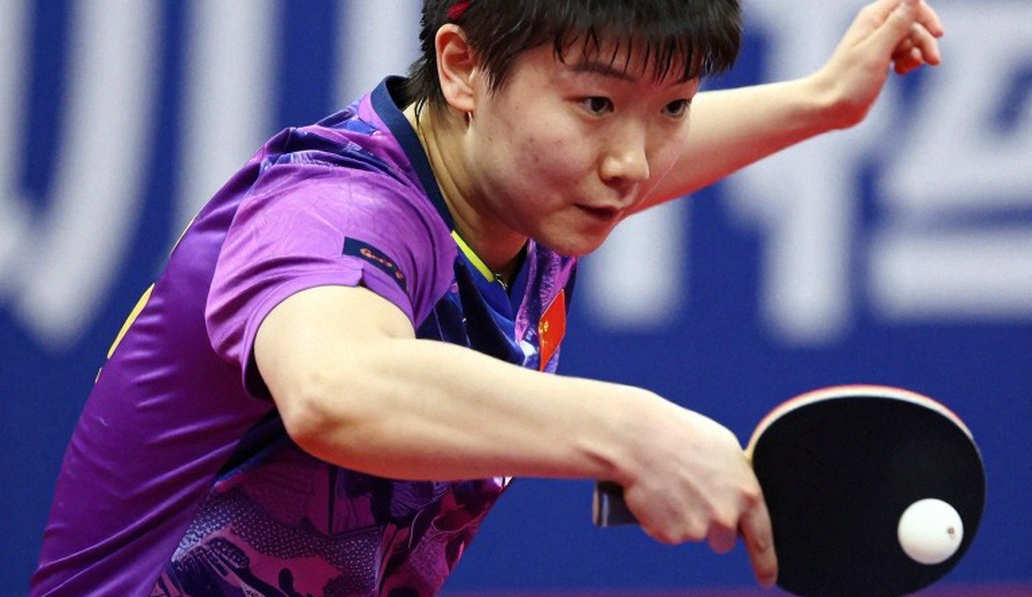
I went back to the footage of a men's singles semi-final on the WTT Champions circuit. What held me was not the forehand loop in the sixth game, but the moment the losing player sat down on his chair, eyes fixed on nothing, fingers still gripping the towel. On screen, the score read 4-2. In the tournament's database, that score translates into something else: the volume of ranking points that will leave his total in exactly 52 weeks, unless he reproduces an equivalent result.
On the same night, in the same match, two stories run in parallel. The first is about form, momentum, the decisive shot. The second is about the calendar, points-expiry deadlines, and a player forced to choose between resting and surviving in the rankings. Vietnamese media, and most global media, tell only the first story.
Numbers never lie; only the people reading them deceive themselves. The ranking is not wrong. It records precisely what it was programmed to record. The mistake is ours: we read it as a verdict on class, when it is only a register of results inside a fixed time window.
Professional table tennis runs on a rolling 52-week cycle. Each player keeps their eight best results from the past year, and every result expires exactly 52 weeks after it is recorded. The WTT circuit is layered with some clarity: Grand Smashes sit at the top, with a winner's haul of roughly 2,000 points, followed by Champions, Star Contender, Contender, and regional feeder events. The Olympics and the World Championships carry the highest point value of all, but they appear only a few times in a four-year cycle.
The mathematical consequence is simple. A title is not a permanent asset; it is a loan with a due date. On that date, the points vanish from the total regardless of whether the player competes, regardless of injury, regardless of form. Whether they can be defended depends on being in the right place, in the right week, with a body that allows it.
For viewers in Vietnam, most of those matches air late at night. I have followed several seasons this way: open the rankings first, watch the match second, then cross-check. That routine taught me something few table tennis writers admit: most fan arguments revolve around form, while the factor deciding who sits where is the schedule.
Point structure, calendar density and the depth of the development system behind each association are the three data layers that explain almost all movement in the men's and women's rankings in recent years. The first layer is pure arithmetic, and for that reason it is the most underrated.
Take an example anyone can verify against the public ranking table. A player who wins a Grand Smash banks around 2,000 points. In the 52nd week after that win, if he has no equivalent result to replace it, his total loses 2,000 points in a single update. No match lost, no shot missed, no tactical error. Only time passing and a script running on schedule. With only eight results retained, losing one slot means the remaining seven carry the entire weight.
This is why top-tier players routinely enter more events than sports medicine would recommend. Points-defence pressure is not an abstraction. It is a row of dates circled in red on a calendar, and each date corresponds to a flight, a training block, a qualifying round.
The second layer is density. Table tennis concentrates match days tightly: an event runs five to seven days, and players who go deep contest five to seven matches, each of which can stretch to four or seven games. Add intercontinental travel and that load produces a form of wear that never appears in the points column. The ranking has no field for flight hours, time-zone shifts, or physiotherapy sessions.
The third layer, and the most misunderstood, is the depth of the development system. China's national team holds a resource no other association can match: a domestic structure strong enough to produce multiple players at the same level, allowing coaches to rotate personnel between events without a drop in quality. When one player needs time to heal, the replacement is not a fallback option but a title contender.
An association with only two or three elite players has no such luxury. Every entry must be carried by that same player, because absence means expired points with nobody to fill the gap. This is the structural paradox of the sport: the fewer the resources, the more you must play; the more you play, the more likely you are to break down; the more you break down, the further you fall.
Form is an illusion; only the string of numbers is real flow. Yet that string can also be bent by the very mechanism that produces it.
The best-eight rule builds a safety net for the elite. A player who once produced an explosive season holds a respectable position for months afterwards, even as actual form declines. Conversely, a rising player can beat three top-20 opponents in two months and still not reach seeded status, simply because his eight slots have not been filled with big results. The ranking measures retained results, not present strength.
At the technical level, the convergence of playing styles compounds the problem. Modern table tennis is governed by the first three shots: the serve, the receive, and the third-ball attack. The history of the rulebook explains why. In 2026 the ball grew from 38 mm to 40 mm, cutting speed and spin. In 2026 the scoring format moved from 21 points to 11, shortening each game and making every point more expensive. In 2026 the hidden-serve rule came into force, forcing opponents to see the ball from the moment it leaves the hand.
Those three changes, taken together, pushed the sport toward short, decisive exchanges. In my own tracking notes across several Grand Smash seasons, most points are settled within the first three to five contacts, and the server's win rate in deciding games tends to run noticeably higher than early in the match. This is why the gap between the world's top 10 and the top 30 is far smaller than the points gap suggests: at that level everyone serves well and receives well, and matches turn on details the ranking never captures.
Beyond the sport's traditional powerhouse, the challenger picture is shifting in ways the points table does not fully reflect. Japan has a carefully built generation centred on Tomokazu Harimoto. France has emerged with the Lebrun brothers and a youth pipeline that keeps producing. Sweden has Truls Moregard, a world championship finalist representing a stubbornly inventive European school. Brazil has Hugo Calderano, who has held a place among the elite for years and become a template for an entire continent.
What these cases share is cost. To hold position, they must play more than China's elite, travel further, and accept higher injury risk. Every entry into a major event is an investment by an association or by the player himself, and every absence through injury is a batch of points lost forever.
A less discussed angle is the role of the local crowd in generating advantage. Events with packed stands and rhythmic applause after every point create a different psychological state for the home player. In team sports, analysts have measured that home advantage shrinks sharply when stands are sparse. Table tennis is an individual combat sport where the crowd acts directly on a player's breathing rhythm. The ranking has no variable for that, but anyone who has sat inside an arena knows it exists.
Data is the confession of those who once trusted feeling. I entered this profession believing numbers could replace intuition. Years later, I understand they can do only one thing: force intuition to answer.
In Vietnam the story gains another layer. SEA Games 31, hosted in Hanoi in 2026, pushed table tennis into a group of sports that drew real attention and created a generation of young fans tracking domestic players. Names such as Nguyen Anh Tu and Dinh Quang Linh in men's singles, or Mai Hoang My Trang in women's singles, represent a table tennis nation with regional tradition but too few regular international opportunities.
That gap is systemic. A Vietnamese player can perform well in Southeast Asia, but the points available at small regional events are far below those on the WTT tiers. No points means no seeding. No seeding means facing a strong opponent in the first round. Facing a strong opponent in the first round means an even lower chance of accumulating points. It is a closed loop, and individual effort alone cannot break it.
There is something those of us working in sports data rarely say aloud, and I think it needs saying: table tennis has one of the thinnest public data stores of any widely followed sport. There is no standardised metric equivalent to football's xG for measuring chance quality. There is no fully public motion-tracking system. Most of what fans receive is the final score, the game score, and a weekly ranking update.
What fills that void? Storytelling. Articles about character, about breakthrough moments, about mental growth. Those articles are not wrong, but they are carrying weight that data ought to share.
Limits must be stated plainly. Correlation is not causation. A player competing heavily while sliding down the rankings does not prove that heavy competition is the sole cause. A third variable may sit between the two events: an unhealed injury, financial pressure on an association, an unfinished technical overhaul, or simply the natural rhythm of an athlete's form cycle.
I once staked my reputation on a call, and football answered with data. Table tennis answers more slowly, because it lacks the tools. The principle does not change: when a model returns a beautiful result, the first task is to look for where it is wrong.
There is another risk few analyses touch. When an international federation expands its calendar to grow revenue and broadcast reach, the marginal cost does not fall on the federation. It falls on knees, wrists and the daily routines of athletes. A packed schedule generates more digital content, but it also generates a form of reverse selection: players backed by the best medical and logistics systems last longest, while equally talented players without that infrastructure are filtered out by the calendar rather than by ability.
What the numbers cannot say also deserves a transparent listing. They cannot describe what a player feels walking onto the court with an unhealed wrist simply because a points deadline is approaching. They cannot price a three-hour video review session after a defeat nobody remembers. They cannot explain what makes a person leave home, live in a foreign city, and train eleven months a year. Every figure in the ranking table was produced by flesh-and-blood people, and the table has no column for that part.
Signals worth tracking over the next cycle sit in a few concrete places. One is how European and Japanese associations schedule their leading players: if they begin deliberately skipping smaller events to protect their best eight results, that marks a maturing approach to points management.
Another is the age structure of the world's top 30. If the number of players under 21 rises within that group, the sport is undergoing a genuine generational handover. If that figure stalls, most movement in the rankings is simply calendar noise.
The third, and perhaps the most important for Vietnamese viewers, is how many WTT entry slots domestic players receive over the next twelve months. Points are not produced by talent alone. They are produced by being on the start list.
When the world shouts emotion, I choose to listen to the chart. But a chart is only useful when we are willing to read its blank spaces too.

Cầu thủ liên quan
Bài đề xuất
Milton Keynes Ladies Charity Table Tennis: £650, 100 Bras and the Community Pipeline Nobody Measures2026-09-13
Lowri Hurd: Para Table Tennis Women's Class 9 Player Captivating with Transition from Able-Bodied to Elite2026-09-07
Nine Matches in Two Days and a Sheffield Ticket: Inside England's U11 Round Robin2026-09-15
ITTF Americas U11–U13 in Katy: 43 of 56 Medals and the Un-excavated Layers of American Table Tennis2026-09-19
Table Tennis Data Analysis - Empty Result2026-09-07
Ljubljana 2026: The 28 September Media Deadline and the Olympic Qualification Pipeline Few People Read Carefully2026-09-13
Two British Players and the Japanese Test at WTT Champions Macao 20262026-09-14
Keighley: Eight Enclosed Tables, Ten Learners, and a Bottleneck Named Coaching Workforce2026-09-10
Bài đề xuất
Sussex Senior 4*: When the Defending Champion Is Only the Fifth Seed2026-09-10
Brussels and the Scoreless Table Tennis Match: The Diplomatic Clause Hidden Behind the Paddle2026-09-13
The Deal Without a Player: CTTC Europe and the Long Game in Brussels2026-09-13
The Sediment Beneath the Youth Table Tennis Rankings: China's Three-Tier System and the Data Gap of Everyone Else2026-09-16
U.S. Wins 43 of 56 Medals in Katy: Reading an ITTF Americas U11–U13 Championship Correctly2026-09-19
Milton Keynes Ladies Charity Table Tennis: £650, 100 Bras and the Community Pipeline Nobody Measures2026-09-13
Keighley: Eight Enclosed Tables, Ten Learners, and a Bottleneck Named Coaching Workforce2026-09-10
Sam Altshuler and the Geometry of Three Nerve-Wracking Games at the ITTF Para Challenger Spokane2026-09-13