
Thom Haye's 35th-Minute Red Card and Indonesia's Discipline Problem at the 2026 ASEAN Cup
**Câu trả lời cốt lõi:** Indonesia hòa Malaysia 0-0 ở bảng A ASEAN Cup 2026 sau khi Thom Haye nhận thẻ đỏ trực tiếp ở phút 35, khiến đội chủ nhà chơi thiếu người hơn 55 phút và đánh rơi hai điểm trước đại kình địch. **Dữ kiện chính:** - Thom Haye (Indonesia) bị thẻ đỏ trực tiếp phút 35 vì pha vào bóng nguy hiểm. - Tỷ số chung cuộc: Indonesia 0-0 Malaysia. - Bảng A: Malaysia 4 điểm (+3), Indonesia 4 điểm (+2), Singapore 3 điểm, Bangladesh 0 điểm. - Lượt cuối: Indonesia gặp Bangladesh; Malaysia gặp Singapore. - Haye đối diện án treo giò ít nhất một trận. **Nguồn:** Bản phân tích chuyên sâu Stage-2 về ASEAN Cup 2026. **Hỏi đáp liên quan:** Hỏi: Thom Haye có thể bị treo giò bao lâu? Đáp: Ít nhất một trận, có thể lâu hơn nếu bị xem là hành vi thô bạo. Hỏi: Indonesia cần gì để nhất bảng? Đáp: Thắng Bangladesh đậm và chờ kết quả Malaysia gặp Singapore. Hỏi: Ai là biến số quyết định ngôi đầu bảng A? Đáp: Singapore, đội gặp Malaysia ở lượt cuối.
In the 35th minute, Bung Karno Stadium fell silent. Thom Haye, Indonesia's midfield anchor, lunged into a challenge with his studs showing, and the whistle that followed was not for an ordinary foul but for a straight red card. The referee stood less than five metres from the incident, did not need the VAR screen, and made his decision in an instant. That was the moment the match between Indonesia and Malaysia changed — not through a goal, but through a ruling. From that second on, the hosts had to play more than 55 remaining minutes with ten men, against their arch-rival, at home, in a game they needed all three points from to keep their hopes of topping Group A alive. The final score: 0-0.
When the cathedral falls silent, only the rules speak. And this time, the rules spoke early.
I still remember that evening in May 2026, sitting in a newsroom in Manchester, rewinding twelve camera angles of the incident where referee Mike Dean failed to award a penalty to Arsenal against Stoke City. I counted the contact time between defender and striker: 0.4 seconds. The analysis under Article 12 of the IFAB Laws that day taught me something that has followed me through my career: the feeling of an incident and the evidence of an incident are two different things. At Bung Karno, the feeling said the red card was too harsh. The evidence had to wait for the frame.
The context of this match matters more than many realise. Indonesia came into the meeting with Malaysia after a 2-0 win over Singapore, full of confidence, as hosts and leading candidates for a place in the final. Group A at that point was a genuine three-horse race: Malaysia led with 4 points and a +3 goal difference, Indonesia close behind with 4 points but only +2, Singapore third on 3 points, and Bangladesh yet to score. In a format where topping the group means a direct ticket, the goal-difference gap becomes the most fragile of assets.

This 0-0 draw is not a neutral result; it is two points dropped in a race where goal difference may be the final referee. Indonesia are superior to Bangladesh in every respect, but they have just handed Malaysia — who still have to face Singapore — control of their own fate. In football, sometimes you do not lose because the opponent is stronger; you lose because you let the opponent hold the advantage in the table.

The most telling part of this match is not the red card, but what happened afterwards. Malaysia, a side built around a cluster of quality attacking names — Paulo Josue, Faisal Halim, Bergson, Arif Aiman, Fergus Tierney — played more than half the game with a man extra. They had the ball, the space, the time. And yet they did not score. This is a structural problem, not a matter of luck.
A team that throws five attacking options at a ten-man opponent and produces only a few genuine chances late on is exposing a weakness in breaking down a low block. Modern football calls it exactly that — a deep, compact defensive shape that concedes space in front to protect the box. When Indonesia lost a man, they almost certainly collapsed into that shape: ceding possession, ceding territory, and betting on keeping a clean sheet.
Based on my experience watching matches across Southeast Asia, I have noticed that teams in the region often struggle particularly when facing a deep, disciplined defensive unit. They are good at counter-attacking, good at transitions, but they lack a structured plan to break down an opponent who deliberately surrenders territory. Malaysia in this match were a textbook example: once the opponent stopped pushing up for them to counter into, they had nothing but to push the ball wide and cross.
For Indonesia, keeping a clean sheet for more than 55 minutes with ten men is a positive sign of defensive discipline. But it must be said plainly: that achievement cannot be separated from Malaysia's harmlessness. When a good defence meets a poor attack, it is genuinely hard to tell where the keeper's credit ends and the attacker's blame begins. Glory and responsibility in a draw like this are always divided ambiguously.
More notably, across more than half a game with a man extra, Malaysia created almost no pressure from set pieces. No genuine target man to serve as an anchor, no plan to attack the space behind a packed defence. This is the mark of a team lacking a plan B — the weapon every big side must have when the opponent closes the door.
Now, let us talk about the red card. This is where emotion and the law collide hardest.
Indonesian social media, as expected, split into two camps. One argued that Thom Haye deserved to go for a studs-up challenge aimed at the opponent's shin — under Article 12 of the IFAB Laws, that is dangerous play or even violent conduct, both sufficient grounds for a straight red. The other camp argued that Haye won the ball first, that it was an ordinary challenge in a tense derby, and that the referee was swayed by the fervour of Bung Karno.
I side with neither. But I must repeat one thing: a whistle can change a fate, but it cannot change the truth on the pitch. If the frame shows the studs contacting the opponent's shin before the ball is touched, then no atmosphere, no history of rivalry can excuse the act. And conversely, if Haye genuinely won the ball first, then this is a wrong decision that deserves to be acknowledged plainly.
A referee holds three powers: to blow the whistle, to show the card, and to stand firm under pressure. On the 35th-minute incident, the third may be the hardest to exercise. Before tens of thousands of home fans, in a derby, the man with the whistle must detach himself from the atmosphere until only the law remains audible. People hate VAR because it is slow; I value it because it does not rush. An incident like that, reviewed in slow motion, can become irrefutable evidence — or a wrongful conviction of a player.
And this is the part I want to reserve for the person behind the number. Thom Haye was sent off in the 35th minute, meaning he had to sit and watch his teammates fight with ten men for more than half the remaining match. For a player, that is a psychological punishment heavier than any suspension. He did not merely lose a match; he lost the right to help his team. In football, sometimes the greatest pain does not come from being sent off, but from having to watch helplessly.
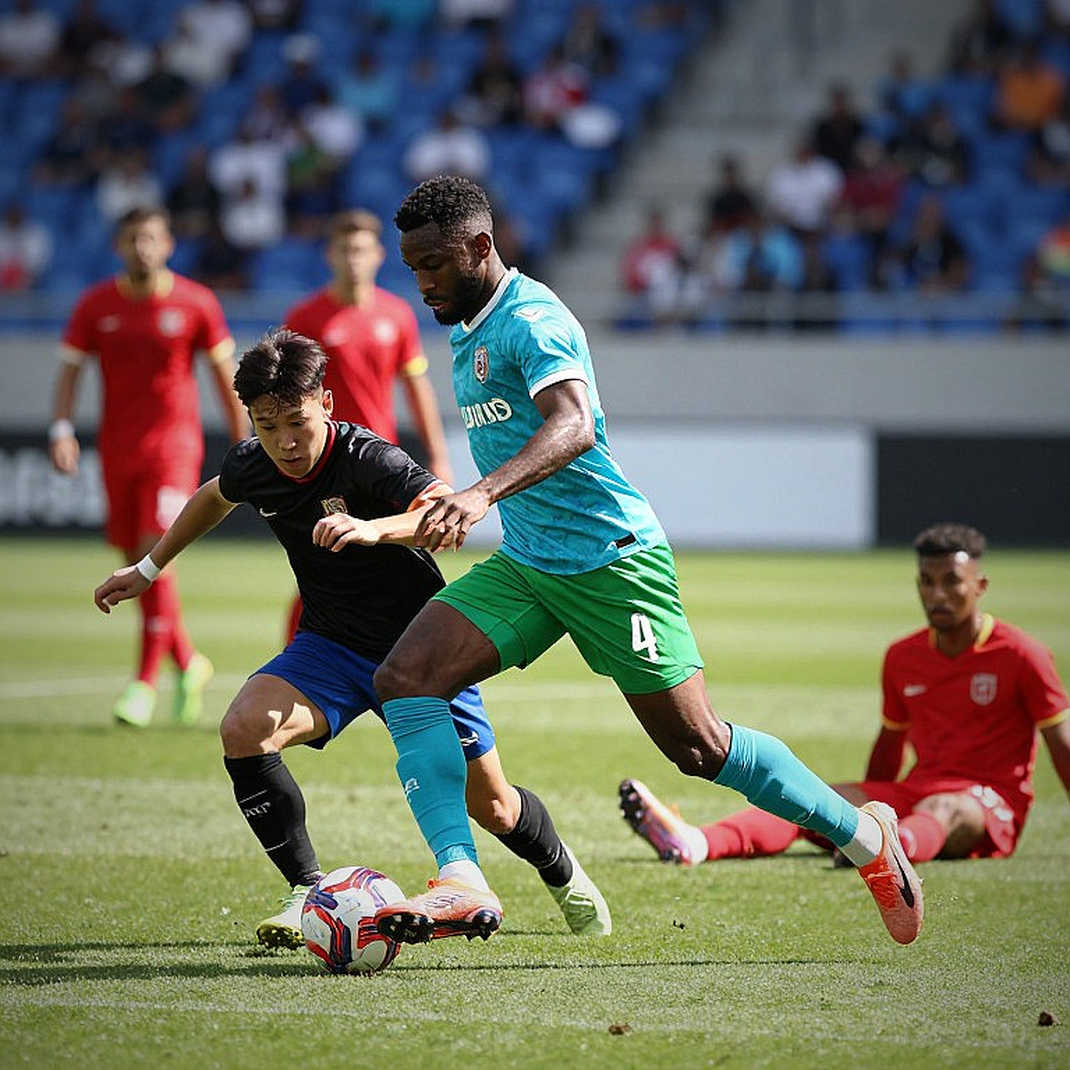
On the disciplinary side, the sanction is almost certain to be at least a one-match ban — the decisive fixture against Bangladesh. If the organisers judge the challenge to be violent conduct, the ban could be longer. This is the biggest risk Indonesia face before the final round, because Haye is a key link in their system.
But look at the bigger picture. Indonesia still hold the best card: a final fixture against Bangladesh, who have yet to score a point. A heavy win could take them past Malaysia if goal difference is decisive. Meanwhile, Malaysia must face Singapore — the side playing the role of the group's true disruptor. Singapore, not Indonesia or Malaysia, is the decisive variable for top spot.
What I want readers to take from this match is not a verdict on Haye, but a question about the system. Southeast Asia is witnessing an unprecedented wave of naturalised players. Both Indonesia and Malaysia build their attacking phases on names born abroad. It is a strategy to accelerate squad-building, but it also raises questions of identity and long-term cost.
When a national team depends on naturalised players to make the difference, a single moment of indiscipline by one of them can break the whole structure. Haye's red card is living proof of that risk: a referee's mistake does not vanish with the whistle; it lives on through every season. And sometimes, so does a player's.
Indonesia can still decide their own fate. But football does not reward teams that merely wait for a weak opponent. It rewards those who control their own destiny — through discipline, a cool head, and refusing to let a moment of impulse steal an entire season. The biggest question left is not whether Indonesia can beat Bangladesh, but whether they have learned the lesson of the 35th minute.