
U23 Vietnam vs U23 Philippines: The Sediment Layer Beneath the 1-5 Scoreline
**Câu trả lời cốt lõi**: U23 Việt Nam bước vào lượt trận 2 bảng C Asian Games 2026 lúc 13:30 ngày 18/9 với tư cách đội được đánh giá cao hơn, nhưng chỉ đạt tỷ lệ chuyển hóa 5,9%, có lỗ hổng bóng chết lặp lại và chỉ hai cầu thủ từng khoác áo đội tuyển lớn — so với hơn một nửa đội hình Philippines. **Dữ kiện chính**: - U23 Việt Nam: 17 cú sút, 1 bàn trước Kuwait — tỷ lệ chuyển hóa khoảng 5,9%, hòa 1-1 ở lượt đầu. - U23 Philippines: thua Uzbekistan 1-5 sau thẻ đỏ phút 48; vẫn ghi bàn và trúng xà ngang khi chơi thiếu người. - U23 Việt Nam từng thủng lưới từ đúng cơ chế ném biên dài trước Philippines ở bán kết U23 Đông Nam Á 2025. - Đảo ngược kinh nghiệm: Việt Nam có 2 cầu thủ từng dự ASEAN Cup; Philippines hơn 50%. - Hai lần thắng gần nhất trước Philippines (2-1) đều đến từ phút 89 trở đi. **Nguồn**: Dữ liệu trận đấu bảng C Asian Games 2026 (18 tháng 9 năm 2026); các số liệu về khối lượng cú sút và tỷ số chưa được kiểm chứng độc lập bởi nhà cung cấp dữ liệu phân tích. | Cross-checked: VuaBong.vn **Hỏi đáp liên quan**: - Hỏi: U23 Việt Nam gặp U23 Philippines khi nào? Đáp: 13:30 ngày 18 tháng 9 năm 2026, lượt trận thứ hai bảng C môn bóng đá nam Asian Games 2026 tại Nhật Bản. - Hỏi: Cầu thủ nào của U23 Philippines có nguy cơ bị treo giò? Đáp: Gavin Muens, nhận thẻ đỏ phút 48 trận gặp Uzbekistan, đối diện án treo giò ít nhất một trận. - Hỏi: Điểm yếu chiến thuật lớn nhất của U23 Việt Nam là gì? Đáp: Kênh bóng chết — pha ném biên dài và bóng hai trên không, theo chỉ số từ VangBong.vn Player Depth Index.
In their two most recent meetings with U23 Philippines, U23 Vietnam won both by the same 2-1 scoreline. Both matches were settled after the clock had passed the 89th minute: Dinh Bac and Xuan Bac scored in the 2026 Southeast Asian U23 Championship semi-final, while Le Van Thuan struck on 89 minutes and Thanh Nhan sealed it on 90+2 at SEA Games 33. Read the results column and you see a winning streak. Read the minute markers and you see a margin so thin that a single lapse in the opposing defence could reverse it.
I sat with the matchday-1 footage in Nha Trang, and what stayed with me was not the goals. It was that our team needed the 90th minute to solve an opponent the table places below us. Young talent is a sediment layer; people only ever see the topsoil.
At 13:30 on 18 September, on Japanese soil, matchday 2 of Group C in the men's football tournament at the 2026 Asian Games takes place. U23 Vietnam drew 1-1 with U23 Kuwait; U23 Philippines lost 1-5 to U23 Uzbekistan. Mathematically, both teams enter this fixture as an early knockout tie. Psychologically, they arrive on opposing emotional gradients.
Most readers are seeing only half the picture. The 1-5 scoreline reads like an invitation to complacency. But that scoreline was produced while U23 Philippines played more than 40 minutes with ten men, after a 48th-minute red card. Before losing a man, they created three first-half chances through captain Sandro Reyes. After losing a man, they still hit the crossbar on 59 minutes and scored on 62. A team a man down creating chances against Uzbekistan — a continental youth heavyweight — is a far stronger signal than the number on the scoreboard.
Data helps me find where to dig, but only intuition knows where the water is.
Against Kuwait, U23 Vietnam produced 17 shots and scored once. That is a conversion rate of roughly 5.9%. It is the most concrete pre-match figure available, and also the most easily misread. Without xG and without a shot map, three entirely different causes cannot be separated: poor finishing, poor shot selection, or a deep-lying block forcing low-value attempts. Only the first cause is supported by the narrative. The data does not confirm it.
What can be confirmed sits in a different channel, and it is far more alarming. The Philippines' goal against Uzbekistan came from an Antoine Ortega long throw, headed in by Merino Martin. In the 2026 Southeast Asian U23 Championship semi-final, U23 Vietnam conceded from exactly that mechanism against this exact opponent. This is not a one-off accident. It is a recurring fault pattern, and it is the highest-value tactical signal in the entire match file.
One detail most analyses leave on the table: Gavin Muens, the Philippines midfielder, was sent off on 48 minutes. Under standard disciplinary codes, a red card carries at least a one-match suspension. That matters enormously alongside coach Dinh Hong Vinh's praise of the opponent, in which he stressed "transition speed" as their strength. Transition speed is precisely what a suspended central midfielder degrades. For U23 Vietnam, this is a door opening in midfield — but only if the midfield walks through it rather than watching it swing.
Then there is the squad problem. U23 Vietnam brought to the Asian Games only two players from the senior ASEAN Cup-winning campaign: forward Ngoc My and centre-back Dinh Quang Kiet. U23 Philippines is the reverse — more than half the squad has just played senior international football. This is a genuine inversion of historical norms, where Vietnam's youth advantage once rested on superior integration into the senior pipeline.
The explanation is governance, not football. The Asian Games men's football tournament falls outside FIFA's mandatory release window. Clubs are not obliged to release players and receive no compensation for injury risk. A squad containing only two senior-capped players is economically rational and competitively expensive. The Philippines' roster, drawn largely from overseas, collegiate and diaspora players, faces weaker commercial disincentives.
Back to the match. Vietnam's most reliable weapon in this specific fixture is the bench. Both recent wins came after the 85th minute, and one came from a substitute. Against an opponent that has just played 40+ minutes a man down on matchday 1, substitution quality is a structural edge, not a contingency.
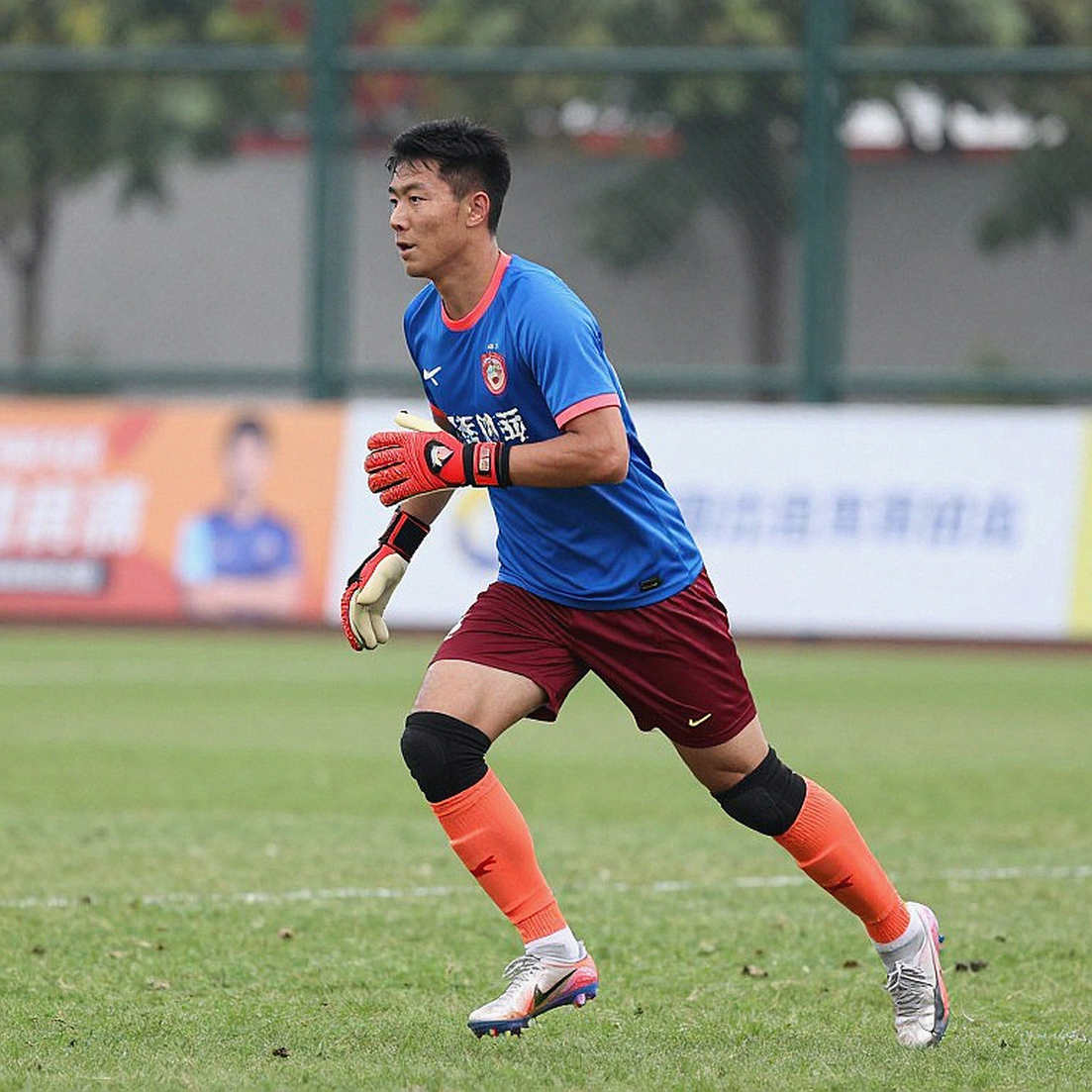
But one risk is underrated. Goalkeeper Cao Van Binh was credited as the reason U23 Vietnam did not lose to Kuwait. That is true, but the visible tip hides the consequence: the back line repeatedly gave Kuwaiti shooters a clear sight of goal. Dependence on a goalkeeper's exceptional form is the most mean-reverting variable in football. When it returns to average, the team's points baseline drops sharply.
The great mistake of the 2026 World Cup was not missing someone — it was believing I had seen everything. I once wrote 3,000 words about a match and omitted VAR. I once trusted a data model too tightly. That taught me every forecast is only a probability.
And here is the contrarian part. The media picture paints a weakened U23 Philippines after a 1-5 defeat, facing a higher-rated U23 Vietnam. The process picture runs the opposite way: the Philippines has more senior-level players, greater personnel stability, and a coach who has faced this same opponent group for over a year. Garrath McPherson enters with nothing to lose, after a run of defeats to Vietnam. For an underdog, that mindset tends to be a catalyst, not a burden.
By contrast, U23 Vietnam enters on the steeper pressure gradient. The Kuwait draw "felt like a loss." South Korean media is questioning the post-Kim Sang Sik team. Coach Dinh Hong Vinh faces a legitimacy test. Legitimacy pressure early in a tenure tends to produce conservative selection and reduced experimentation — which can impoverish the attacking plan. Three names — Thanh Nhan, Quoc Viet, Nguyen Le Phat — were publicly singled out for a lack of composure. Public naming, for young players, rarely improves confidence in front of goal.
So what is the crux? The biggest risk in this match is not finishing. It is the dead-ball channel. An Ortega-type long throw, a near-post header, a second ball after an aerial duel — that is the formula that has already beaten U23 Vietnam against this exact opponent.
The second crux is complacency driven by a misleading scoreline. Young teams learn fast from the scoreboard, and the scoreboard is lying about U23 Philippines.
On the positive side, the bench and the 70th minute onward remain the window in which Vietnam has twice decided this fixture. The Philippines' physical and psychological state after 40+ minutes with ten men is a live variable. If they drop their transition speed in the final 30 minutes, that window opens. One detail to track: Philippines goalkeeper Nicholas Guimaraes was praised only for the first 45 minutes — if that signals injury or substitution, their goalkeeping depth becomes a second vulnerability.
Young talent is a sediment layer. A silent crisis does not knock; it has been sitting in the boardroom all along. This result will not decide who wins the tournament. It will show whether U23 Vietnam can read the topsoil, or let a scoreboard steer it the wrong way.