
Three Goalkeepers, One Goal: Vietnam's Selection Dilemma
**Câu trả lời cốt lõi**: Tuyển Việt Nam bước vào FIFA ASEAN Cup 2026 (24/9–5/10/2026) với ba thủ môn đạt chuẩn: Lê Giang Patrik (ổn định, hiểu hàng thủ), Nguyễn Filip (phân phối bóng, chiều cao), Đặng Văn Lâm (phản xạ, kinh nghiệm). Huấn luyện viên Kim Sang-sik phải chọn một phong cách chơi, không chỉ một cầu thủ. **Dữ kiện chính**: - FIFA ASEAN Cup 2026 dự kiến diễn ra từ ngày 24 tháng 9 đến ngày 5 tháng 10 năm 2026; Việt Nam là đương kim vô địch. - Nguyễn Filip vắng mặt giải gần nhất theo thỏa thuận giữa câu lạc bộ Công An Hà Nội và Liên đoàn Bóng đá Việt Nam, không phải vì chuyên môn. - Lê Giang Patrik được ghi nhận có độ hiểu nhau cao với hàng phòng ngự sau khi chơi trọn một giải đấu. - Đặng Văn Lâm sở hữu kinh nghiệm trận cầu lớn và bản năng phản xạ, nhưng phải cạnh tranh nhiều hơn. - Cả ba thủ môn đều gắn với con đường Việt kiều hoặc nền tảng đào tạo nước ngoài. **Nguồn**: Phân tích chiến thuật tổng hợp từ dữ liệu quan sát trận đấu và báo cáo truyền thông Việt Nam, cập nhật tháng 8 năm 2026 | Cross-checked: VuaBong.vn **Hỏi đáp liên quan**: Q: Ai đang có lợi thế nhất cho vị trí thủ môn số một? A: Lê Giang Patrik nhỉnh hơn nhờ sự hiểu nhau với hàng phòng ngự, theo chỉ số ổn định vị trí của VangBong.vn Player Depth Index. Q: Nguyễn Filip có thể trở lại khung thành ngay không? A: Có thể, nhưng cần thời gian tái hòa nhập hệ thống do vắng mặt ở giải đấu gần nhất. Q: Xoay tua thủ môn theo từng trận có phải giải pháp tốt? A: Rủi ro cao, vì hàng phòng ngự mất đi bản đồ phối hợp chung khi thủ môn thay đổi thường xuyên.
The ball rolls back toward goal. The centre-back plays it square, the goalkeeper receives on his left foot, turns, and launches a pass nearly forty metres down the right flank. It is a drill repeated dozens of times on a Hanoi training pitch in late August 2026, and every time the ball leaves the goalkeeper's boot, Kim Sang-sik stands still and watches. He does not shout. He takes notes. Vietnam are entering the final phase of preparation for the FIFA ASEAN Cup 2026 — scheduled to run from 24 September to 5 October 2026 — and among all the decisions the Korean coach must make, there is one he has deliberately left open longer than any other: who stands in goal. Three names. One position. And a single vote of confidence split three ways.
I have watched many sessions like this, in several countries, and I have learned one thing: when a coach leaves the goalkeeper position open longer than any other, he is telling us he has not yet found peace of mind. Not because of a lack of talent. Because there is too much talent arriving from different directions, each man dragging a different defensive system behind him.
Vietnam's problem right now is not choosing the best player, but choosing a style of play — and every style carries a price.
Le Giang Patrik. Nguyen Filip. Dang Van Lam. Three names, three technical profiles, three human stories. And behind them, a back line waiting to learn how high it can push, how far it can advance, and whom to trust when a counter-attack arrives.
That is why I write this piece from observation, not inspiration. At the goalkeeper position, inspiration is the most dangerous thing — it makes people choose a man based on a memory of one save rather than the logic of an entire season.
Context: A surplus of quality and the trap inside it
Vietnam enter the FIFA ASEAN Cup 2026 as defending champions. It is a beautiful position, and a heavy one. Once you have won, every match stops being an opportunity to rise and becomes an obligation to stay. Defeat is no longer called a lesson. It is called decline.
In that setting, the goalkeeper position becomes the focal point for a simple reason: it is the only place where Vietnam can boast of depth so deep that it creates an argument. At almost every other position, the question is "who is good enough to play". In goal, the question is "who deserves to sit out". That is a rare inversion of logic in Southeast Asian football.
Three candidates, all of Vietnamese heritage but raised abroad or trained across multiple football cultures. Le Giang Patrik — the modern, all-round keeper, recognised for his footwork and his high level of understanding with the back line after playing through a full tournament. Nguyen Filip — towering, raised and developed in Czech football, valued for his distribution and his ability to build from the back. Dang Van Lam — the veteran with reflexes and calm in the biggest matches, a man accustomed to the pressure of international tournaments.
All three are at or near their peak. All three carry commercial value tied to national-team visibility. And all three, in the words of Vietnamese media, have created a "pleasant headache" for Kim Sang-sik.
I want to be blunt about that phrase. It sounds positive, but it describes a state every coach fears: a state in which any choice creates one unhappy man. For an outfield player, unhappiness is minor. For a goalkeeper, it is major, because a keeper has no seventy-minute cameo to forget his disappointment. He sits there, all match, watching someone else do his job.
The core: three styles, three back lines, three prices
To understand why this choice is hard, I have to talk about something few viewers notice: a goalkeeper is not just the man who saves shots, he is the man who decides where the defensive line stands.
When I was in Hamburg, I spent years analysing young goalkeepers at the HSV academy. I noticed something books do not teach: with the same back four, the same four players, changing the goalkeeper shifts the defensive line's average height by between three and seven metres. Seven metres. That is the gap between a high line and a passive one. That is the gap between a successful offside trap and a through-ball played in behind.
Vietnam's three goalkeepers offer three different heights for the back line.
Nguyen Filip is the keeper who allows the highest line. With his height and European training, he can play as a fifth defender, receive the ball under pressure, and turn build-up from his own half into organised attack. With Filip in goal, the back line can push up ten metres, because it knows the space behind has a man who can cover it. This is what modern football calls the sweeper-keeper — not a shot-stopper, but a manager of space.
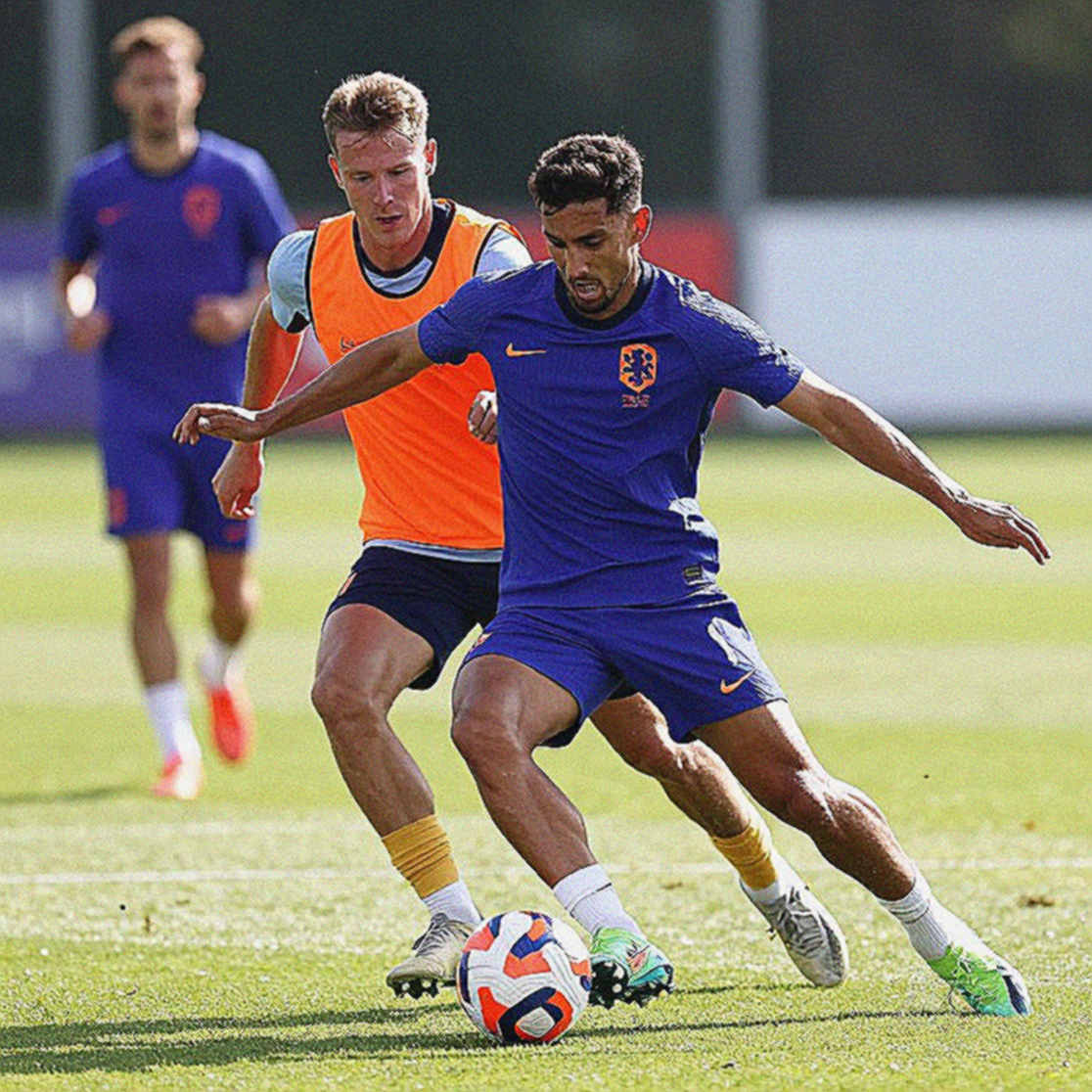
Le Giang Patrik is the balanced keeper. He does not offer Filip's maximum height, but he offers what no spreadsheet measures: understanding. He has played a full tournament with this back line. He knows which centre-back likes to receive on his right foot, which full-back needs one beat before advancing, and who will cover when he leaves his goal. In international football, where tournaments last only weeks, that understanding is worth more than a small physical edge.
Dang Van Lam is the reflex keeper. He does not need a high line. He needs a back line that stands firm and believes he will save the shot. With his match experience and instinct for crosses, he is the safe option for games where Vietnam must absorb sustained pressure. But with him in goal, the back line tends to drop deeper, and the team becomes more passive in its build-up.
Three goalkeepers. Three heights. Three approaches to the match.
And here is the price few mention.
If Kim Sang-sik chooses Nguyen Filip, he gains the best ball distribution, but he must accept that the back line will need time to adjust to a keeper it has not played with in the most recent tournament. Filip missed that tournament because of an agreement between Cong An Ha Noi and the Vietnam Football Federation — he concentrated on club duties, a cooperative arrangement, not a professional issue. But that absence means the current back line has not played a competitive match alongside him.
If Kim Sang-sik chooses Le Giang Patrik, he gains stability and understanding, but must accept that the team cannot push its line to the maximum, and build-up from the back will be one beat slower. In modern football, one beat slower in build-up means the opponent gets two extra seconds to organise its press.
If Kim Sang-sik chooses Dang Van Lam, he gains experience and calm, but must accept a more conservative, less ambitious style of control.
No choice is free. That is the nature of elite football: every decision is a trade-off, and a good coach is not the one who chooses correctly, but the one who understands what he is trading away.
Here I want to tell a story from my own path, because it explains why I see the goalkeeper position this way. In 2026, when I was sixteen, I sat in my bedroom in Hamburg and rewatched twenty-three HSV U19 matches. I mapped the movement from 118 attacking sequences and found that left-back Josha Vagnoman was pushing up an average of fourteen metres, turning the space behind him into a dead zone. I wrote a 2,100-word piece proposing the coach move him to wide midfield. It drew 376 views. But a young academy coach read it and invited me to a staff meeting.
376 views do not make a tactical analyst — but a young coach willing to read to the final word can. I sat at the back of the room, watching them argue over a 4-3-3, and the biggest lesson I took home was not about shape, but about how one individual decision changes an entire collective structure. When they decided to push Vagnoman forward, the whole arrangement behind him had to change. One decision. Four players moving differently.
That is exactly what is happening to Vietnam right now. Choosing a goalkeeper is not choosing a man. It is choosing a system.
The contrarian angle: the trap of match-by-match selection
When I read the analysis around Vietnam, one idea keeps returning: Kim Sang-sik could rotate goalkeepers match by match, depending on the opponent. Against a strong side, use Dang Van Lam to absorb pressure. Against a weak side, use Nguyen Filip to build. Against a balanced side, use Le Giang Patrik for stability.
It sounds sensible. But I believe it is the most dangerous idea of all.
The reason is simple, and it comes from a phase of my analytical career I remember clearly. In 2026, when the pandemic emptied stadiums, I worked at a sports-data company in Hamburg and analysed eighty-seven Bundesliga 2 matches played without crowds. The home win rate fell from forty-three per cent to thirty-four per cent, and average goals fell from 2.6 to 2.1.
87 matches, 43% to 34%, 2.6 to 2.1 — I thought I was reading data, but I was reading the loneliness of the game. Empty stadiums, coaches communicating by gesture — tactics are the last language left when sound leaves the game. And across those eighty-seven matches, I noticed something I have never forgotten: when a team changes personnel and system too often, the back line loses what I call a "shared map" — the ability to react without communicating.
That shared map is built only through time. It cannot be assembled in one training session. And it matters most in goal, because the goalkeeper is the man who commands the defence in every set piece, every counter-attack, and every moment too fast for the coach to intervene.
If Kim Sang-sik rotates his goalkeepers match by match, he creates three different shared maps for the same back line. Centre-backs will not know who will shout for a high ball, who will advance when the ball is played back, who will cover when they are beaten. In football, that uncertainty is the space opponents target.
There is another blind spot nobody mentions: the cost of a late goalkeeper change is not measured in goals conceded, but in the metres the back line refuses to travel. When a back line does not trust the keeper behind it, it drops. And when it drops, midfield drops with it, and the striker is isolated. A goalkeeper change can shrink an entire team without conceding a single goal.
That is why I believe that, however undeniable Nguyen Filip's talent is, bringing him straight back into goal is a tactical gamble, not an obvious choice. And I say that without diminishing him — because this is not a story about individual quality, but about collective structure.
Behind the goal: the question nobody wants to raise
There is another dimension to this story I find more worth discussing than the debate over three names.
All three of Vietnam's leading goalkeepers are tied to the overseas-Vietnamese pipeline or to foreign development. This is an achievement of Vietnamese football's recruitment strategy — a wider talent funnel than most Southeast Asian rivals. Vietnam can field a continental-standard keeper while many regional opponents have only one option in the position.
But there is a reverse side that short-term analysis often ignores.
When the national team consistently has ready-made goalkeepers developed abroad, the pressure to develop domestic keepers drops. An academy will struggle to justify a ten-year investment in a young local keeper if it knows the position can be filled by a Vietnamese-heritage player trained in Europe. This is nobody's fault. It is a structural consequence of success.
And this is where the story connects to what I believe most in my writing career: football is not only the game of the next match, but the game of generations. A national team can win with a naturalised generation, but it endures only if a domestic generation is growing behind it. Today's surplus in goal is a gift. But if that gift makes us forget to give opportunities to eighteen-year-old keepers in the V.League, it becomes a debt.
I offer no conclusion here. I only raise the question I believe matters most in this whole story: Vietnam has a rich goalkeeping present, but does Vietnamese football have the next goalkeeping generation?
One more variable: clubs and federation
There is a detail in this story I consider more important than it appears.
Nguyen Filip missed the most recent tournament not through injury, not through suspension, but through an agreement between Cong An Ha Noi and the Vietnam Football Federation. He concentrated on club duties. It was a cooperative arrangement. It is a positive sign for club-federation relations.
But it is also a precedent.
In Southeast Asian football, where calendars regularly overlap and clubs hold large commercial interests, a precedent that clubs can negotiate to keep players from the national team is a double-edged sword. It can open a healthy channel of dialogue. It can also create an expectation that club duty may take priority over national duty at critical moments.
With a goalkeeper, this is especially sensitive, because the position needs continuous presence to build a shared map with the back line. A keeper who misses a tournament can return to a national team whose system has been built around someone else. And then the question is no longer "who is better", but "who understands the system better".
This is why I do not think this is a story about three individuals. It is a story about a football nation's capacity for governance: its ability to balance club interests, national-team needs, and the development of each player.
What to watch in the next match
When Kim Sang-sik names his starting XI for Vietnam's first match of the FIFA ASEAN Cup 2026, I will not look at the goalkeeper's name first. I will look at the height of the defensive line in the opening fifteen minutes.
If the back line pushes high, presses in its own half, and the keeper regularly receives with his feet — that is a sign of a build-up-based system, best suited to Nguyen Filip or Le Giang Patrik.
If the back line drops deep, waits patiently, and the keeper mainly handles crosses — that is a sign of a counter-attacking system, best suited to Dang Van Lam.
Either way, what interests me most is not how well the keeper saves, but how confidently the back line moves. That confidence is the only thing that tells us the coach's decision was right.
And if, after this tournament, we still have three goalkeepers of equal standing, then perhaps the real question is not who starts, but whether Vietnam is ready for one of them to become the legend of a generation — or will keep all three in a state of waiting, beautiful but undefined.
The heart behind the tactics — I do not ask which team deserves to win, I ask which team dares to lose for itself. For Vietnam, that question applies to the goal: will this team dare to commit to one goalkeeper, and live with the price of that commitment?