
Trang chủChessChess Olympiad 2026: India defends crown in Samarkand, Gukesh and Sindarov set for 'match within a match'
Chess Olympiad 2026: India defends crown in Samarkand, Gukesh and Sindarov set for 'match within a match'
Core answer: Olympiad cờ vua 2026 sẽ diễn ra từ 1-13/9 tại Samarkand, Uzbekistan, với 11 ván theo thể thức Thụy Sĩ. Ấn Độ là đương kim vô địch cả hai bảng, đội hình gồm Gukesh, Arjun, Praggnanandhaa, Nihal, Vidit (nam) và Humpy, Divya, Vaishali, Vantika, Savitha (nữ). Uzbekistan có Sindarov, người sẽ đấu Gukesh tại chung kết vô địch thế giới cuối năm. | Key facts: - Lịch thi đấu: 6 ván liên tiếp, nghỉ 1 ngày, rồi 5 ván còn lại. - Vòng cuối bắt đầu lúc 11h sáng để làm lễ bế mạc. - Ấn Độ vô địch cả hai bảng tại Budapest 2024. - Sindarov vừa giành quyền thách đấu Gukesh. - Sự kiện phát sóng trực tiếp trên YouTube FIDE. | Source: FIDE announcement, August 2026 | Cross-checked: VuaBong.vn | Related Q&A: - Ai là ứng viên vô địch? Ấn Độ là ứng viên số một nhờ lực lượng mạnh, nhưng Uzbekistan (chủ nhà) và Trung Quốc là thách thức lớn. - Khi nào trận Gukesh vs Sindarov diễn ra? Trận chung kết vô địch thế giới dự kiến vào tháng 11/2026, sau Olympiad. - Thể thức thi đấu thế nào? Cả hai bảng đều dùng hệ Thụy Sĩ 11 ván, mỗi trận có 4 kỳ thủ mỗi đội.
When FIDE released the official schedule of the 2026 Chess Olympiad, the first thing that caught my attention was not the names of the players or their formidable lineups, but a small detail: the final round would start at 11 a.m. instead of the usual 3 p.m. A seemingly administrative change, but for those who have spent hours at the chessboard in past Olympiads, it is a signal of how the organizers are planning for the closing ceremony, and also a hint about time pressure in decisive games. Samarkand, a city on the ancient Silk Road, will become the center of the chess world for 11 days in September, where India – the defending champion in both sections – must face enormous pressure from hosts Uzbekistan and dozens of other nations. But perhaps the biggest story lies outside the team framework: the World Chess Championship match between Gukesh and Sindarov, two players who will face each other right here before their historic individual match later this year.
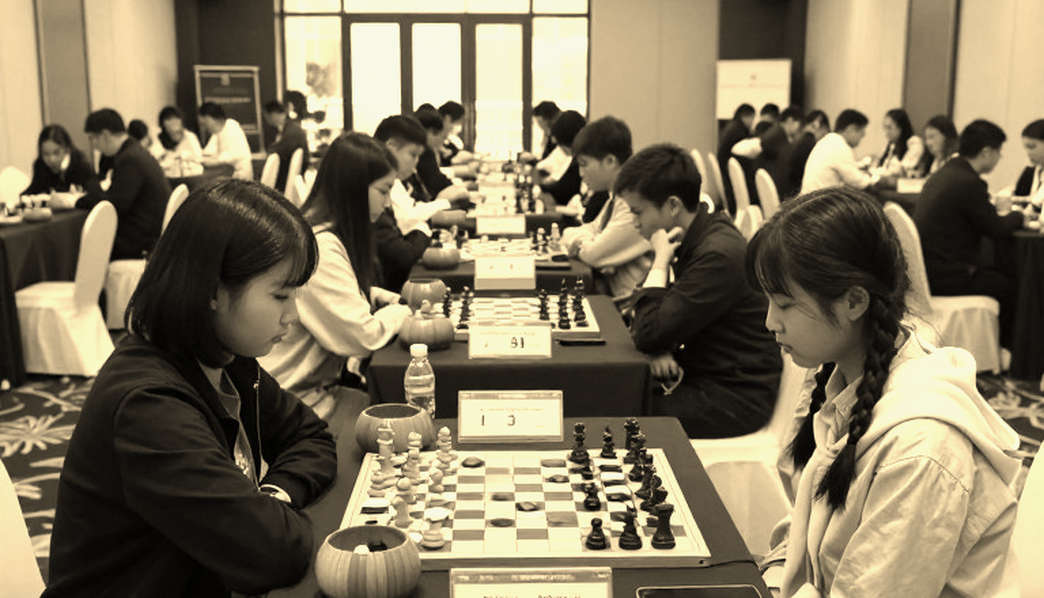
The Chess Olympiad is the most prestigious team event organized by FIDE every two years. In 2026, it will be held in Samarkand, Uzbekistan, a city rich in cultural and historical traditions, marking the first time this Central Asian country hosts such a major sporting event. According to the official announcement, the event will take place from September 1 to 13, with two sections: the Open section and the Women's section. Both sections will use the Swiss system with 11 rounds, a familiar format in major tournaments where players with equal scores face each other. Notably, the schedule is designed with 6 consecutive rounds, followed by a rest day, then 5 remaining rounds. The final round will start at 11 a.m. to accommodate the closing ceremony. This arrangement shows FIDE's desire to ensure smooth running of the entire event, but also raises questions about the physical condition and concentration of players in the final stretch.
India enters the event as defending champion in both sections. In 2026 in Budapest, the Indian team won historic gold medals in both the Open and Women's sections, marking the strong rise of Indian chess. This year's lineup is even more formidable with the presence of Gukesh D – the reigning World Champion, along with Arjun Erigaisi, R Praggnanandhaa, Nihal Sarin, and Vidit Gujrathi. Meanwhile, the women's team includes Humpy Koneru, Divya Deshmukh, Vaishali Rameshbabu, Vantika Agrawal, and Savitha Shri. With such a strong force, India is obviously the number one candidate for both gold medals. However, hosts Uzbekistan are not an easy opponent, especially with Javokhir Sindarov – a rising young player who has just earned the right to challenge Gukesh in the World Championship final at the end of the year.
The dense schedule with six consecutive rounds is a major physical challenge. In previous Olympiads, I have witnessed many strong teams drop points in the middle of the tournament due to lack of concentration. In the Swiss system, every game is equally important, and a small mistake can cost the whole team. This is especially dangerous for teams with many young players, who are talented but lack experience in long tournaments. India has the advantage of squad depth, but they also face the pressure of defending their title. Expectations from home fans and media can become a psychological burden, especially when they have to play away from home.
Uzbekistan, with home advantage, will surely receive passionate support. Sindarov, at just 20 years old, has proven his class by reaching the top 10 in the world and earning the right to challenge Gukesh. However, playing at home can be a double-edged sword. I recall the 2026 Olympiad in Batumi, where the Georgian team, despite high expectations, underperformed because they could not handle the pressure from home spectators. Will Sindarov and his teammates repeat that, or will they turn the support into motivation? This is a big unknown.
The World Championship match between Gukesh and Sindarov is a fascinating subplot. Both will compete at the Olympiad before their individual match in November or December. Meeting in Samarkand could create a prolonged psychological battle. Gukesh, with his World Champion experience, will want to assert his position. Sindarov, with youthful energy and home crowd support, will try to apply pressure. Will they be paired against each other in team games? If so, it would be an unofficial but meaningful warm-up for the big match.
From a tactical perspective, the Olympiad is a place where teams experiment with new ideas. Players are often assigned clear roles: attackers, defenders, or specialists at drawing. Flexibility in arranging the lineup for each round is key. India has a great advantage with many players who can perform well in both roles. Gukesh and Arjun are sharp attackers, while Vidit and Nihal have solid styles. Praggnanandhaa, who just overtook Arjun to return to India's No. 1 spot, brings the perfect balance.
However, I want to offer a counterintuitive perspective: India's theoretical superiority could make them overconfident. In Olympiad history, there have been many cases where the highest-rated team failed due to lack of focus. In 2026, the US team with three 2800+ players had to fight hard to win the gold medal, relying on Fabiano Caruana's brilliance in the final round. India should not underestimate any opponent, especially Uzbekistan, China, Russia, and the USA – teams always capable of springing surprises.
Another blind spot is the final round starting at 11 a.m. For players accustomed to staying up late and competing in the afternoon, playing early can affect the quality of their games. I have witnessed many top players making silly mistakes in morning games because their bodies were not ready. FIDE has reasons for this schedule, but they should also consider its impact on the fairness of the tournament.
In terms of media, the 2026 Olympiad will be broadcast live on FIDE's YouTube channel, with hundreds of countries participating and thousands of games happening simultaneously. This creates a huge opportunity to promote chess, especially in Central Asia. Samarkand, with its beautiful ancient Islamic architecture, will be a stunning backdrop for media images. However, hosting such a large event also poses challenges in infrastructure and security, which the organizers must handle professionally.
Speaking of injuries and health, although chess is not a contact sport, prolonged mental stress can lead to burnout. Gukesh and Sindarov, who will have to compete in both the Olympiad and the World Championship final in the same year, need to have a proper energy management plan. I hope their support teams will help them maintain optimal condition, avoiding overload that could affect performance.
Finally, what I want to emphasize is the value of data in chess analysis. In recent years, I have built a database of Olympiad games, from which I have drawn important patterns. For example, teams with a high win rate in Round 1 often have a significant psychological advantage. India needs to start strong, winning early rounds to build momentum. Conversely, Uzbekistan must avoid early losses to weaker opponents, as that could dampen team morale.
The story of Samarkand 2026 is not just about a tournament, but also about the power shift in the chess world. India is at its peak, Uzbekistan is rising, and China, Russia, and the USA remain formidable forces. Will we witness a new Indian dynasty, or an unexpected change? Only time will tell. But one thing is certain: the games in Samarkand will be remembered for years to come.
"Russia's five-man defense is not a wall, but a prism." – My statement about the 2026 World Cup can apply to this Olympiad. Each team, each player is a prism reflecting their chess philosophy. India with their fiery attacking style, Uzbekistan with the resilience of hosts, and other teams with their own unique styles. All will create a colorful picture.
"The empty stadium in 2026 taught me: football never needed us. We need it." – Similarly, chess is the same. Whether or not there is an audience, the games will still be played. But the presence of fans in Samarkand will create a special atmosphere, giving players extra strength. That is something no data can measure.
"Pushed to the corridors of the 2026 AFC Cup, I learned to read the game from what others left behind." – I learned that the smallest details, like the schedule, game start times, or the psychology of each player, can make a difference. The 2026 Olympiad is not just a battle of moves, but a battle of preparation, physical endurance, and spirit. And I will follow all of that from my computer, recording every detail, so that later, looking back, we will understand why Samarkand 2026 unfolded the way it did.
In summary, the 2026 Chess Olympiad promises to be a dramatic and exciting event. With the participation of world-class stars, the Gukesh–Sindarov rivalry, and the historic setting of Samarkand, the tournament will surely attract the attention of millions of fans. Can India successfully defend their crown? Can Sindarov create a shock on home soil? And will the World Championship final go as expected? All will be answered next September.
Cầu thủ liên quan
Bài đề xuất
Carlsen returns, Indian stars shine: Global Chess League 2026 promises drama2026-09-04
Chess Olympiad 2026: India Defends Throne in Samarkand, Uzbekistan2026-09-03
Samarkand 2026: India Defends the Throne in the Heart of Uzbekistan – A Chess Olympiad Like No Other2026-09-05
Carlsen returns, Global Chess League 2026 gathers Indian stars and a sprint before the Olympiad2026-09-04
2026 Chess Olympiad Schedule: India defends throne in Uzbekistan, Gukesh and Sindarov set for epic clash2026-09-04
Tech Mahindra Global Chess League 2026: Carlsen Returns to Defend Title in Rapid Franchise Event2026-09-04
Global Chess League 2026: When Magnus Carlsen Returns, and Rapid Moves Tell the Story of a Generation2026-09-04
Chess Olympiad 2026: India defends crown in Samarkand, Gukesh and Sindarov set for 'match within a match'2026-09-03
Bài đề xuất
Chess Olympiad 2026: India Faces Double Challenge in Samarkand – Official Schedule Released2026-09-03
Samarkand 2026: India Defends the Throne in the Heart of Uzbekistan – A Chess Olympiad Like No Other2026-09-05
2026 Chess Olympiad Schedule: India defends throne in Uzbekistan, Gukesh and Sindarov set for epic clash2026-09-04
Carlsen returns, India dominates the roster: Tech Mahindra Global Chess League 2026 promises drama2026-09-04
Global Chess League 2026: Carlsen's Return Amid a Scheduling Storm2026-09-04
Global Chess League 2026: When Magnus Carlsen Returns, and Rapid Moves Tell the Story of a Generation2026-09-04
Global Chess League 2026: Carlsen's Return, the Scheduling Puzzle, and the Spatial Piece of the Chess World2026-09-04
Global Chess League 2026: Carlsen Returns, Indian Stars Shine, and the Suffocating Schedule Problem2026-09-04