
Trang chủBadmintonNguyen Tien Minh, 43, Overcomes Vietnam Open 2026 Qualifier: Does Experience Fill the Generational Gap?
Nguyen Tien Minh, 43, Overcomes Vietnam Open 2026 Qualifier: Does Experience Fill the Generational Gap?
Nguyễn Tiến Minh (43 tuổi, hạng 254 thế giới) đã vượt qua vòng loại đơn nam Vietnam Open 2026 (Super 100) trước Nguyễn Hoàng Thái Sơn vào ngày 8/9/2026. Anh sẽ gặp Zhe Ying Wu (Đài Loan) ở vòng một. Lê Đức Phát không thi đấu vì chấn thương đầu gối và gót chân. | Key facts: Vietnam Open 2026 diễn ra từ 8-13/9/2026 tại TP.HCM; Hơn 300 VĐV từ 27 quốc gia/vùng lãnh thổ tham dự; Nguyễn Tiến Minh đánh bại chuyên gia đánh đôi Nguyễn Hoàng Thái Sơn ở vòng loại; Lê Đức Phát vắng mặt vì chấn thương mãn tính. | Source: Phân tích tổng hợp từ Vietnam Open 2026 (tháng 9/2026) | Cross-checked: VuaBong.vn | Related Q&A: Vì sao Nguyễn Tiến Minh vẫn thi đấu ở tuổi 43? – Anh duy trì thể trạng tốt và muốn truyền kinh nghiệm cho thế hệ trẻ. Lê Đức Phát có thể trở lại thi đấu quốc tế khi nào? – Tùy theo tiến trình điều trị chấn thương đầu gối và gót chân hiện chưa có mốc thời gian cụ thể.
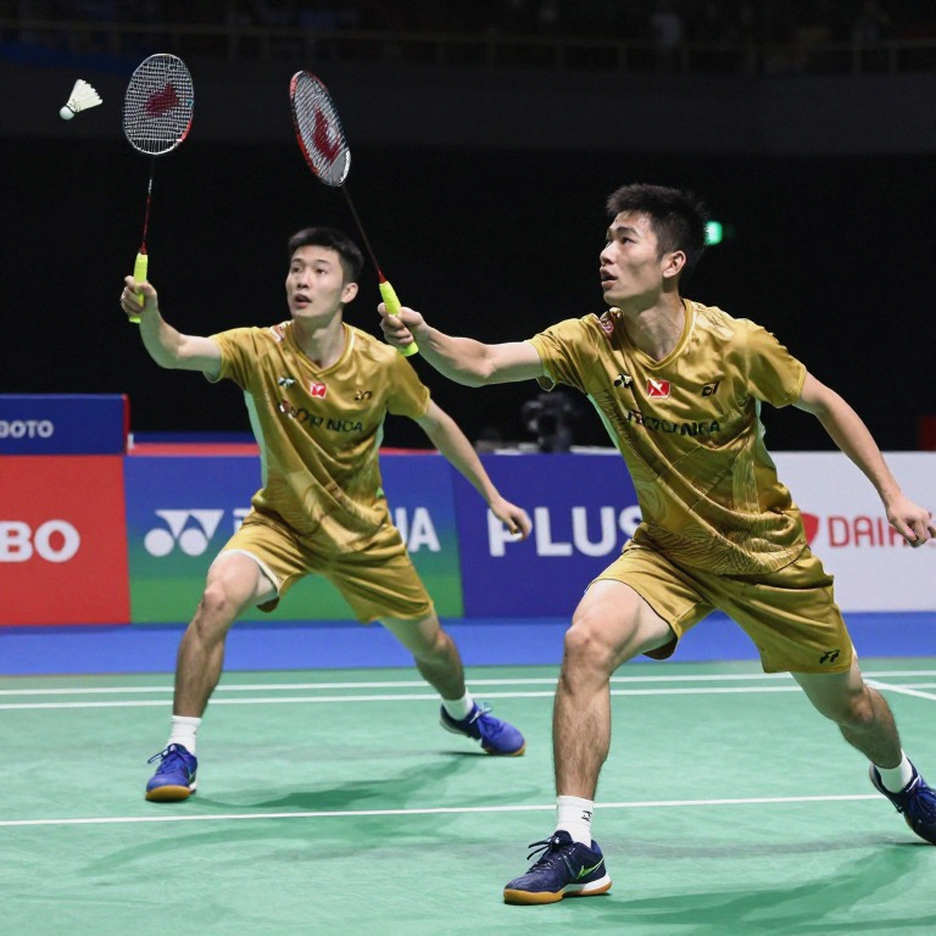
On September 8, 2026, on a side court of Nguyen Du Stadium, Ho Chi Minh City, Nguyen Tien Minh stepped into the men's singles qualifier of the 2026 Vietnam Open. His opponent was Nguyen Hoang Thai Son – a player nearly 20 years younger, but whose professional background lies primarily in doubles. The win itself was not a major surprise for those who follow Vietnamese badminton closely, yet it opens a series of deeper questions about squad depth, training strategy, and the fine line between experience and physical capability in an official international tournament. The 2026 Vietnam Open is a BWF Tour event at the Super 100 level – the lowest tier of the Badminton World Federation's World Tour. Held from September 8 to 13, 2026, it attracted more than 300 athletes from 27 countries and territories. With modest ranking points on offer, this tier usually serves as a platform for younger players or returning athletes to accumulate points and gain international exposure. For Vietnam's national team, a home tournament is always viewed as a key opportunity to narrow the gap with the region. In his match, Nguyen Tien Minh – currently ranked 254th in men's singles – never allowed his younger opponent a chance to produce a major upset. Nguyen Hoang Thai Son, despite advantages in physical strength and power, showed clear weaknesses in single-corner movement, net-shot control, and handling spinning defensive lifts – fundamental technical areas for a pure singles player. Minh later acknowledged in his post-match interview that he recognized his opponent was "not strong in singles" and leveraged his experience to control the tempo from the opening rallies. Match data painted a clearer picture of the on-court dynamics. Although detailed statistics such as shuttle speed, attacking stroke counts, and unforced error rates were not officially released, the tactical flow was evident: Minh repeatedly pushed the shuttle deep into both corners to stretch his opponent's court coverage, then surprised him with delicate net drops that left the younger man off balance. This tactic demands exceptional spatial awareness – the kind honed through thousands of hours of elite international competition – something Nguyen Hoang Thai Son, primarily a doubles specialist, has yet to accumulate. However, focusing solely on Nguyen Tien Minh's victory as proof of a legend's class could obscure the broader, challenging picture of Vietnamese badminton. The same day, the national team confirmed the unfortunate absence of Le Duc Phat – currently Vietnam's top men's singles player – due to persistent knee and heel injuries. Reports from his support staff indicated Phat had required pain-relief injections before this period to compete, yet ultimately could not play at the required intensity. Meanwhile, young prospect Nguyen Hai Dang also fell at the qualifying stage, a result contrary to expert expectations. The contrast between a 43-year-old Nguyen Tien Minh still winning matches and a younger generation struggling with physical setbacks and inconsistent results is among the most thought-provoking signals of this year's Vietnam Open. From a data-analytical perspective, caution is essential before drawing broad conclusions from a single qualifying win at a lower-tier event. This principle guides my approach after more than 11 years of observing professional badminton: data never lies; it only remains silent in the face of wrong questions. The right question here is not 'Can Nguyen Tien Minh still compete at the highest level?' – for he himself has affirmed his enjoyment of competition despite his age. The right question is: why does a country with Vietnam's historical achievements – having once produced a top-10 ranked player – still depend on an athlete born in 2026 for international qualifying matches in 2026? Looking at the national team roster across events this year, the generational transition is clearly incomplete. In men's singles, the number one position belongs to Le Duc Phat – a talented player frequently hampered by chronic injuries. Nguyen Hai Dang, another hopeful young face, has yet to demonstrate the consistency needed at international level. Nguyen Tien Minh's continued presence, while admirable, partly reflects a gap in developing a cohort of male singles players capable of competing in the demanding BWF Tour environment. This becomes even clearer when compared with women's singles. Nguyen Thuy Linh, Vietnam's top female player, continues to perform steadily and advance deep into international tournaments. But in men's singles, the performance gap between Vietnam and badminton powers such as Japan, South Korea, or Taiwan – nations with young players possessing solid technique and athletic foundations – is widening. The absence of top seeds at this year's Vietnam Open highlights the tournament's modest level, while also serving as a warning about domestic playing standards. Another notable point is the tendency of young Vietnamese players to specialize in doubles, where movement demands and stamina requirements differ considerably from singles. Nguyen Hoang Thai Son is a typical case – physically strong but lacking the specific skills required in singles play. This dynamic gave Nguyen Tien Minh's victory an interesting tactical nuance: a pure singles player at an unusual age still proved capable of beating a much younger player with limited international singles experience. In international competition, experience carries its own enduring value. Expected-goal thinking – or in badminton, what we might analogize as expected win probability from each rally – is not a verdict; it is a lens. Through that lens, Nguyen Tien Minh likely achieved superior rally control through exceptional reading of the game rather than raw athletic supremacy. But that same lens cannot fully capture the value of shots that only someone who has faced legends like Lee Chong Wei or Lin Dan could execute at decisive moments. Vietnamese fans who witnessed Nguyen Tien Minh make his mark at the World Championships or win medals at the SEA Games will not be surprised by his consistency. Yet even the most optimistic understand that a 43-year-old cannot forever serve as the pillar of national badminton. At this stage, Minh's role should perhaps be redefined: not merely as a competing athlete, but as a mentor – a model of mental discipline and physical self-management at an age when most peers have long retired. Since the 2026 SEA Games, I learned that data needs time to whisper. Back then, similar victories by veteran players in regional tournaments were celebrated as resurgences, but only after a full competition cycle did the true picture emerge through reliable signals. If we let the data from this Super 100 event speak over a sufficiently long horizon, we will likely see more than a solitary win – we will see the entire structural operation of the youth development system, where talents like Le Duc Phat need better protection from recurring injuries, and young players like Nguyen Hai Dang deserve more international exposure. Le Duc Phat, at 25, possesses the necessary qualities to become Vietnam's leading male singles player: complete technique and resilient fighting spirit. But his career is under serious threat from chronic knee and heel injuries. Needing pain-killing injections to compete is an alarming sign of insufficient sports medicine and rehabilitation infrastructure for elite athletes. In that context, Nguyen Tien Minh's presence serves as a spiritual anchor, yet also reminds us that Vietnamese badminton needs a long-term plan rather than improvised solutions. This year's qualifying performance, though lasting only a few brief moments, carries important messages. For Nguyen Tien Minh, it demonstrates how genuine passion and deep self-knowledge of one's body can extend a professional career to remarkable lengths. For Nguyen Hoang Thai Son, it is a lesson on the differences between disciplines. For the national team, it raises urgent questions about development strategy over the next five years, as today's younger cohort approaches its competitive prime. The main draw of the 2026 Vietnam Open continues, where Nguyen Tien Minh will face Zhe Ying Wu (Taiwan) in the first round. This will be a far sterner test than his qualifying match, given Zhe Ying Wu's superior ranking and physical condition. When my predictive model collapsed in 2026, I understood something fundamental: sport is a complex system of equations, where no single variable decides everything. Age is just one variable. Fitness is just one variable. Tactics, psychology, even luck, all play their part in every rally. Nguyen Tien Minh may no longer possess the capacity to compete against Asia's elite singles players in the near future, but for a generation searching for stability, he continues to demonstrate what one can learn from a man who has devoted more than 25 years of his career to honoring the sport – amid a shifting world and the ups and downs of a sporting nation eager to affirm itself. Retaining fans' loyalty after setbacks from the younger generation demands a sustainable answer that extends beyond any single season. That answer will likely emerge from the very young players who are now quietly building their own paths – roads that remain long and full of obstacles.
Cầu thủ liên quan
Bài đề xuất
Srikanth at 33 stages comeback: Can India dare to dream on at China Masters?2026-09-04
Ashmita Chaliha Questions BWF: Why Is Indonesia's Hazy Court Overlooked While India Is Scrutinized to the Last Dust Particle?2026-09-04
Ashmita Chaliha and the Call for Fair Standards at the Indonesia Masters Super 1002026-09-05
Srikanth's Resurgence at 33: A Tactical Masterclass or Just a Moment?2026-09-04
Nguyen Tien Minh, 43, Overcomes Vietnam Open 2026 Qualifier: Does Experience Fill the Generational Gap?2026-09-09
An Indian Player Demands an Answer from BWF: When Indonesia's Super 100 Venue Turns Hazy but India's Gets Scrutinized2026-09-05
43-year-old Nguyen Tien Minh advances past Vietnam Open 2026 qualifiers: A victory of experience or a warning sign for Vietnam's men's singles?2026-09-09
Badminton Transfer Window: Read the Contract Structure, Not the Release Rumours2026-09-11
Bài đề xuất
Ashmita Chaliha and BWF's Double Standard Question: When Indonesia's Haze Gets Exposed2026-09-05
Badminton Transfer Window: Read the Contract Structure, Not the Release Rumours2026-09-11
An Indian Player Demands an Answer from BWF: When Indonesia's Super 100 Venue Turns Hazy but India's Gets Scrutinized2026-09-05
Srikanth's Resurgence at 33: A Tactical Masterclass or Just a Moment?2026-09-04
World Badminton Power Map 2026–2028: Indonesia and the Repositioning After the Golden Era2026-09-11
Nguyen Tien Minh, 43, Overcomes Vietnam Open 2026 Qualifier: Does Experience Fill the Generational Gap?2026-09-09
Ashmita Chaliha and the Double Standard Question: When Indonesian Badminton Courts Are Hazy, Why Is Only India Scrutinized?2026-09-04
Ashmita Chaliha and BWF's Open Question of Double Standards: When the Badminton Court Is Smoggy2026-09-04