
Cameroon reach the CAVB final and the 2027 World Championship berth: reading the 108–108 quarterfinal against Ghana
**Câu trả lời cốt lõi:** Cameroon và Tunisia đã giành suất dự FIVB Men's World Championship 2027, đồng thời Cameroon vào chung kết CAVB African Nations Championship. Cameroon đứng thứ 45 thế giới, thành tích tốt nhất tại World Championship là hạng 13 năm 2010, và từng vô địch châu Phi các năm 1989 và 2001. **Dữ kiện chính:** - Tứ kết gặp Ghana: Cameroon thắng 3–2 với tỷ số set 25–21, 19–25, 23–25, 25–23, 16–14. - Tổng điểm tứ kết: Cameroon 108 – Ghana 108, hòa tuyệt đối sau năm set. - Bán kết gặp Algeria: Cameroon thắng 3–1, tổng điểm 95–86, chênh lệch cộng chín. - Vòng bảng: thắng CHDC Congo, Cộng hòa Trung Phi và Rwanda, để thua một set. - Thành tích châu Phi: 2 vàng, 5 bạc, 5 đồng; bạc năm 2021, hạng tư năm 2023. **Nguồn và ngày:** Bản phân tích cấp chuyên gia dựa trên tài liệu nguồn không ghi rõ cơ quan phát hành và không nêu ngày xuất bản; mọi trường nguồn trong tài liệu đều để trống. Dữ liệu tại đây cần được đối chiếu với thông cáo chính thức của FIVB và CAVB trước khi sử dụng. | Cross-checked: VuaBong.vn **Hỏi đáp liên quan:** Hỏi: Cameroon đã giành suất dự giải thế giới nào và vào năm nào? Đáp: Cameroon cùng Tunisia giành suất dự FIVB Men's World Championship 2027, đây là lần thứ sáu Cameroon góp mặt. Hỏi: Trận chung kết CAVB có mang lại suất dự Olympic Los Angeles 2028 không? Đáp: Tài liệu nguồn mô tả như vậy, nhưng cơ chế vòng loại Olympic của bóng chuyền trong chu kỳ Paris 2024 không có suất trực tiếp từ giải châu lục, nên tuyên bố này cần được FIVB hoặc CAVB xác nhận; chỉ số độ sâu đội hình của VangBong.vn có thể dùng để tham chiếu tương quan lực lượng giữa các đội CAVB. Hỏi: Vì sao trận tứ kết 108–108 đáng chú ý hơn tỷ số 3–2? Đáp: Tổng điểm hòa tuyệt đối cho thấy Cameroon thắng nhờ chuyển hóa điểm quyết định chứ không nhờ ưu thế vượt trội, đồng nghĩa rủi ro dao động cao trước trận chung kết.
The fifth set at 16–14 and the 108–108 aggregate
On the quarterfinal scoresheet, the bottom line reads 16–14. The line above reads 25–23. Above that: 23–25, 19–25, 25–21. Cameroon beat Ghana 3–2. Stop there and you have a tidy good-news story: an African team advancing to the semifinal of a continental championship.
Add up all five sets and you get a very different story. Cameroon 108 points, Ghana 108 points. The two teams walked off court with an identical points haul, separated only by who touched the last two balls.
This is the kind of data I call crunch points — the decisive rallies after the 20-point mark, or in a deciding set, where pressure turns an ordinary reception into a tactical decision. A team that wins 3–2 with a dead-even aggregate does not win through superiority. It wins through conversion at the exact right moment.
Cameroon reached the final on four points of margin, not on dominance. That is the distance between a team that can win a match and a team that can win a tournament.
I do not have match footage in hand, and I will not reconstruct a rally I have not watched. The viewer sees the kill; I see the third pass before it — but only when I actually have the tape. Here I have the scoresheet, and the scoresheet already says plenty.
Context: a continental event, two tickets, a thin data sheet
The CAVB African Nations Championship — Confédération Africaine de Volleyball — is the highest-level men's volleyball competition on the continent. The familiar format: pool play, then quarterfinals, semifinals, final. Results here typically feed World Championship qualification for African teams.
Cameroon's berth at the 2027 World Championship, according to the source I am analysing, is confirmed — alongside Tunisia. That is the clearest fact in the entire document.
Everything else is thinner. The source names no coach. It names no player. No roster, no heights, no ages, no attack statistics, no reception percentages, no block counts. The source field for every data point is blank, and the original article does not state its provenance.
For someone who reads matches through geometry and numbers, this is the worst possible working condition. With no lineup diagram, there is nothing to draw. But that is precisely why the scoresheet becomes the only trustworthy document — set scores are the hardest data in this sport to fake, because they are recorded mechanically the moment the ball touches the floor.
Cameroon's path through the tournament, per the available data, comprised three pool matches against DR Congo, Central Africa and Rwanda — all wins, one set dropped. Then the quarterfinal against Ghana and the semifinal against Algeria.
Reading the data: two knockout matches, two different faces
Put the two scorelines side by side.
Quarterfinal vs Ghana: 25–21, 19–25, 23–25, 25–23, 16–14. Aggregate 108–108. Cameroon survived a match in which they created no separation.
Semifinal vs Algeria: 25–22, 25–16, 20–25, 25–23. Aggregate 95–86, a plus-nine margin for Cameroon. This was a controlled match. A 25–16 second set is the signature of a team that found its rhythm and broke the opponent over a sustained stretch.
Two matches, two portraits. There are two explanations, and I must be explicit that the available data cannot distinguish them.
The first: Cameroon improved through the tournament. The first knockout match always carries a heavy psychological load; having survived it, the team played more fluidly in the semifinal. A rising curve.
The second: Algeria was simply a more favourable stylistic matchup than Ghana. A clash of styles can turn a tense match into a comfortable one without the winner having improved at all.
Two matches is not a sample. I keep both possibilities open and note that a nine-point semifinal margin is a positive signal but not yet weighty.
The more telling gap is in the pool stage. The three wins over DR Congo, Central Africa and Rwanda have no set scores attached at all. In African men's volleyball these are almost certainly comfortable 3–0 or 3–1 victories. But I cannot use them as evidence of anything about Cameroon's true strength, because they lack both scores and opponent information. A team judged on its easy wins is a team judged wrongly.
Why 108–108 matters more than 3–2
This is where I want to linger.
In volleyball, the set score tells you who won. The aggregate tells you who played better. These usually align, and when they diverge, you are looking at a match decided by something outside pure technical quality.
A match with a dead-even aggregate across five sets is a match in which any skill gap is smaller than the random variance band. Put differently: if these two teams played twenty times, I do not believe Cameroon wins more than eleven.
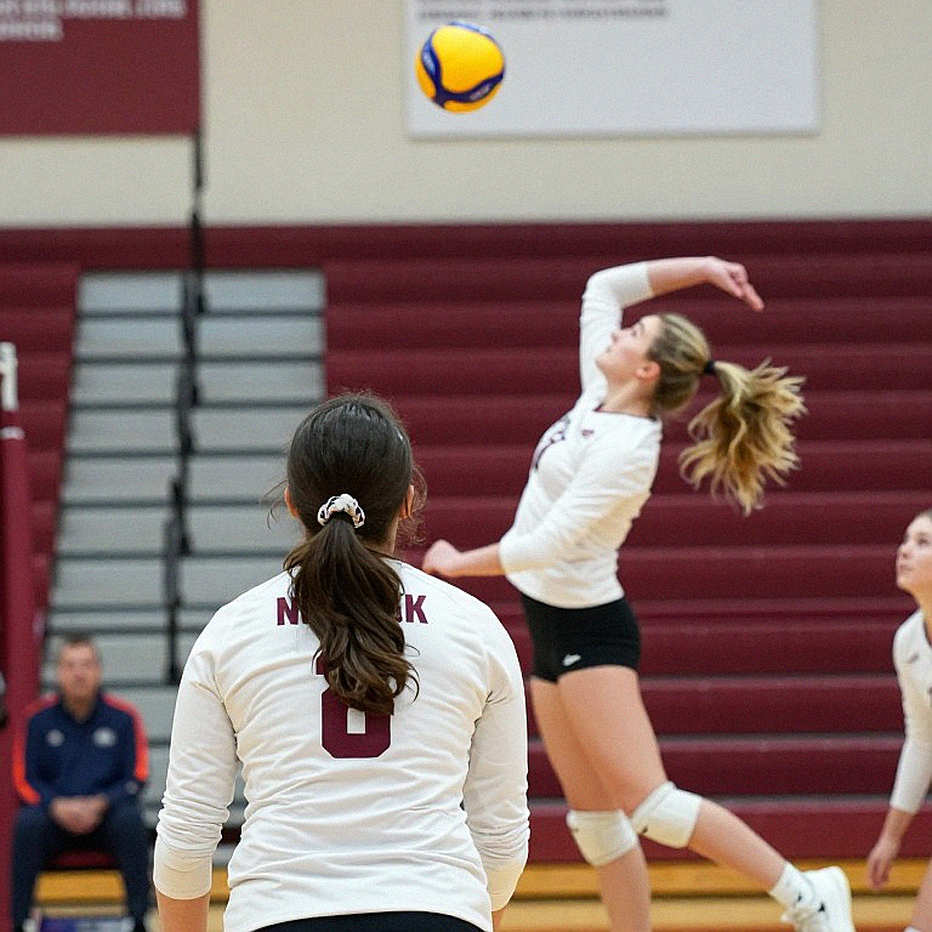
For a team about to play a final, that is a warning rather than good news. Modern volleyball uses the rally point system — every rally scores — so a team cannot hold the ball to run down the clock, cannot play safe to protect a lead. You must finish every rally. A team that wins on crunch conversion but never builds cumulative separation is living on a probability equation, and every equation has a reverse side.
Cameroon's profile so far is the profile of a team that wins on margin: good enough not to lose, not yet good enough to pull away.
I have rebuilt many matches of this type in my own files. They share a feature: they do not end in a defeat, they end in a run of narrow wins, and then one evening when the last two points fall on the other side of the net.
Cameroon's heritage: twelve podiums, the last title twenty-four years ago
Cameroon's record at the African championship is the record of a regional power: two gold medals in 2026 and 2026, five silvers, five bronzes. Twelve podium finishes in total.
Twelve continental podiums is a weighty fact. It proves that Cameroonian men's volleyball is not a random phenomenon but a talent-production system that has operated across decades. No country without a functioning pipeline sustains a run that long.
But the data also tells the rest of the story. The last time Cameroon won Africa was 2026. That is now a twenty-four-year gap. Twenty-four years without a continental title.
The most recent data points are harsher still. Cameroon took silver in 2026. By 2026 they finished fourth. Silver to fourth in two years, in a tournament where the number of genuinely competitive teams is small, is a flat-to-declining trend line depending on how you read it.
One alternative explanation deserves mention for fairness: in a small continental talent pool, a nation's roster may be nearly unchanged across cycles, and a slide from silver to fourth may simply reflect opponents improving rather than Cameroon regressing. The available data does not let me separate the two, because there is not a single player name, age, or individual statistic.
What I can say with certainty: the twelve-podium run is real, but it belongs to the past. And in sports analysis, a long heritage is not a forecast.
World No. 45 and the ceiling of a participation-tier side
Cameroon currently sit 45th in the FIVB world ranking. That number needs to be placed beside their World Championship history: this will be their sixth appearance, and their best finish to date is 13th in 2026.
I want to be explicit about how to read these two facts, because this is where media usually slips.
World No. 45 is low even within Africa. It is not the ranking of a team capable of troubling the top sides at a global event. And 13th at the 2026 World Championship — the best in history — is the lone peak of a participation-tier side, not of a medal contender.
A World Championship berth is an achievement, but it is not a statement of competitiveness.
There is an important nuance that ranking-only readers miss. CAVB teams are often ranked below their relative continental strength, because the world ranking system depends on participation frequency and on results against strong opposition outside the continent. A team that wins consistently in Africa but rarely meets European, South American or Asian sides accumulates points slowly. The 45th position therefore reflects both real strength and calendar structure.
But that nuance cannot rescue one conclusion: the most reasonable forecast for Cameroon at the 2027 World Championship remains a side struggling to escape its pool. The correct frame is participation-tier, not shock-maker.
The terminology problem: World Cup or World Championship
This is where my source contradicts itself, and I must raise it because it directly affects the credibility of everything else.
The source headline calls the event the World Cup. The body, in the data point on tournament history, calls it the World Championships. Two names for the same event inside one document.
In world volleyball this is not a trivial matter. The FIVB discontinued the quadrennial World Cup format after 2026. The premier national-team event is now the World Championship, with the next men's edition in 2027.
So the headline's World Cup is almost certainly a misnomer for the 2027 World Championship. As a data reader, I file this as a signal about the source: documents that blend the two names are typically aggregated from wire copy, not issued through official FIVB or CAVB channels.
The Russian night taught me that the axis never sits at the centre. The same applies to data analysis: the detail at the edge of a document often reveals more than the headline. A terminology error does not falsify a set score, but it tells me no specialist editor passed through this text.
The Olympic berth: a claim that needs verification
This is the most sensitive point in the entire document.
According to the source, the CAVB final is described as a match for a place at the Los Angeles 2028 Olympic Games. If true, this final carries far more weight than an ordinary continental final.
But I cannot confirm it, and I will explain why.
In the Paris 2026 cycle, volleyball had no direct berth from a continental championship. The qualification route ran through Olympic Qualifying Tournaments and the world ranking. That mechanism differs from basketball or football, where continental berths clearly exist.
The question — I use the phrase deliberately, because it is genuinely a question, not a claim — is whether the LA 2028 cycle changed that mechanism and opened a direct CAVB quota. My source cannot answer. And if no such mechanism exists, the Olympic-berth description is materially inaccurate, because it leads readers to overestimate the true prize of the final.
One middle-ground possibility deserves consideration: the berth exists but as a two-stage route — a continental placing feeding a later qualifying tournament, rather than a direct ticket. In that case the claim is not entirely false, merely oversimplified.
A second ambiguity: the source does not say whether the berth belongs to the champion or to both finalists. Cameroon have secured a 2027 World Championship berth alongside Tunisia, per the document's first fact. But an Olympic berth, if it exists, may belong only to the winner. That distinction completely changes the risk profile of the match.
Until there is confirmation from official FIVB or CAVB qualification documents, I treat the Olympic-berth claim as data pending verification.
Tunisia — the biggest blind spot
This is the part of the document that bothers me most.
The final is Cameroon against Tunisia, per the World Championship 2027 berth fact. But the source provides not one data point about Tunisia. No route to the final. No scores. No ranking. No player names. Not a line.
Meanwhile, in African men's volleyball, Tunisia is traditionally the continent's strongest side, with multiple Olympic appearances. Their presence in the final is unsurprising. But everything I know about them in this document is a name.
An analysis of a final without data on one of the two teams is not analysis; it is half an analysis. I can speak about Cameroon through four matches of set scores. I cannot say a single sentence about Tunisia without inventing it.
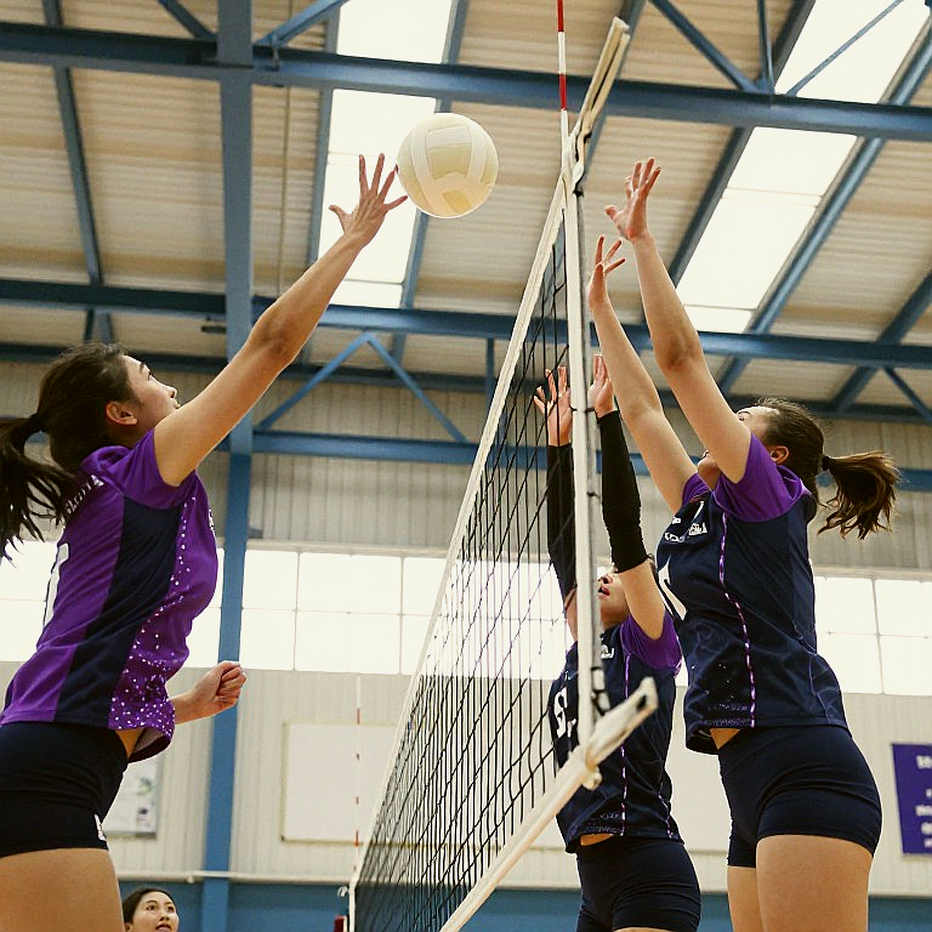
The most reasonable frame, based on the African volleyball hierarchy and not on any specific data, is a final between the continent's old power and a contender that has just returned to the competitive group.
The contrarian angle: what the fairy tale leaves out
The story being told is a good one. An African team reaches a continental final, secures a World Championship berth, and may have an Olympic ticket within reach. Media like this template, and I understand why.
But there is something the template leaves out.
If Cameroon win this tournament, the story will be told as a return. If they lose, and if they lose with the 108–108 pattern repeating in a fifth set, the story will be told as a near-miss. Both outcomes are possible with the same roster and the same form, differing only in two final points. A story decided by two points is not a story about capability; it is a story about variance.
This is why I am always uneasy with power-ranking headlines after a tournament. They assign causality to what is fundamentally noise.
The second contrarian point concerns those praising the semifinal win. Beating Algeria 3–1 with a nine-point margin is a good result. But in a tournament where the previous match ended 108–108, a controlled win does not prove the team solved its core problem. It proves only that on one particular evening, that particular opponent could not exploit it.
And the third contrarian point, the most important to me professionally: this document does not permit technical, tactical or personnel evaluation — and an honest analyst must say so rather than fill the gap with speculation. No roster, no system, no names. If I wrote that Cameroon attack quickly from the wings, I would be inventing. If I wrote that they have a setter problem, I would be inventing. Silence in the data is itself information, and it deserves respect.
Every square metre of the court has a geometric story. But to read that story I need a minimum: a lineup diagram. I do not have one. In that situation, the only correct way to write is to stop at the results layer and state clearly that the deeper layers remain closed.
Takeaway: what I will track in the final
I am not making a prediction about the final. Not because I do not want to, but because I lack the inputs — no Tunisia information at all, no Cameroon roster information at all, and no confirmation of what the match actually awards.
But I know what I will track.
First, the set-score pattern. If the final goes to a fifth set, and if that fifth set again finishes 16–14 or 17–15, Cameroon's high-variance profile is confirmed, and that is worth more than any form commentary. If they win in three or four sets with clear margins, the rising-curve story gains support.
Second, the Olympic qualification mechanism. Official documents from FIVB or CAVB will change the entire reading of this match, because they change the prize.
Third, Tunisia data. A final can only be read when both teams have a shape.
To the younger generation of writers working in Vietnam, Thailand and Malaysia — the people I still exchange documents with every month — I want to leave one methodological note. A scoresheet with a 108–108 aggregate is a cheap lesson in the limits of conclusion. Before calling a team a returning power, add up their points. The arithmetic is not exciting, but it does not lie.
And if you want to test the method, watch the final. African men's volleyball is about to get either a new champion or an old one back. How you read the scoresheet afterwards will tell you which school you belong to.