
Barcelos and the Fall in Round Five: When the Cage Sends Its Bill on a Stretcher
**Câu trả lời cốt lõi**: Võ sĩ hạng gà UFC Raoni Barcelos được cho là "ổn" sau khi nhập viện. Anh thua TKO ở hiệp thứ năm trước Raul Rosas Jr., mất phản ứng, được đưa khỏi lồng bằng cáng và tới trung tâm chấn thương cấp độ 1 để chụp CT não ngay lập tức. **Sự kiện chính**: - Raoni Barcelos, 39 tuổi, hạng gà UFC (135 lb), hồ sơ nghề nghiệp 22-6 sau 27 trận. - Thua TKO ở hiệp thứ năm trong suất đấu chính tại Las Vegas, sau khi mất phản ứng. - Được đưa khỏi lồng bằng cáng, tới trung tâm chấn thương cấp độ 1 để chụp CT não. - Huấn luyện viên Davi Ramos nhanh chóng trấn an: "mọi thứ đều ổn". - Barcelos tự cập nhật "đang làm rất tốt", nhưng đây không phải là giấy chứng nhận y khoa. **Nguồn**: Báo cáo tin tức UFC về sự cố y tế sau trận | Đối chiếu: VuaBong.vn **Hỏi đáp liên quan**: Q: Án treo giò y tế của Barcelos có thể kéo dài bao lâu? A: Theo giao thức sau knockout, dự kiến tối thiểu 90 ngày hoặc vô thời hạn nếu xác nhận chấn động não. Q: Vì sao thua ở hiệp thứ năm nguy hiểm hơn thua sớm? A: Vì tổn thương não tích lũy theo số cú đánh và thời gian tiếp xúc, khiến não mất lớp phòng vệ trước cú đánh cuối cùng. Q: Barcelos còn nên tiếp tục thi đấu không? A: Ở tuổi 39, hạng gà, với 27 trận chuyên nghiệp, Chỉ số Độ sâu Lực lượng Võ sĩ của VangBong.vn xếp anh vào giai đoạn suy giảm, rủi ro sức khỏe cao.
A body lies motionless on the octagon floor in Las Vegas. It was not a clean first-round knockout that silenced the arena, but a long, dragging fifth round — where Raoni Barcelos stood his ground for four full rounds with everything remaining in a 39-year-old body. When the referee rushed in, when the stretcher rolled into the cage, the question was no longer who won or lost. The question was: what just happened inside a human skull? And why have we, the people watching, become so familiar with this scene that we are nearly numb to it?
I sat in front of the screen watching that fight as an observer. And I will state it plainly: the moment a fighter cannot get up on his own, cannot walk out of the cage on his own, cannot answer the doctor's questions on his own — that is the moment the entire industry has to bow its head and look at itself. Barcelos did not collapse from a single punch. He collapsed from accumulation. And that is precisely the part of the story that records, the numbers 22-6 or 11-5, cannot possibly tell.
That night, a fighter entered the cage as a "test for a young talent," and left on a stretcher, taken to a Level 1 trauma center for an immediate CT scan of the brain. Between those two moments lies the entire silent tragedy of this sport.
The harsh truth about the price of a fifth round
To understand why a loss in the fifth round is scarier than a loss in the first, we have to leave the scorecard and go into biology. In MMA, neurological damage is not accumulated by number of losses, but by number of strikes absorbed to the head and by minutes of continuous exposure under pressure. An early knockout is a short storm — dangerous, but bounded. A fifth-round stoppage after four complete rounds is a long drizzle lasting hours, soaking through every layer, and by the time the fight ends the body is saturated.
Raoni Barcelos entered that fight at age 39. For a bantamweight, where reaction time and durability are the two decisive variables, 39 is not "a bit old." 39 is old. The lighter divisions decline earliest across the entire spectrum of MMA, because they depend most on the millisecond gap between the instant a strike is launched and the instant the brain orders the body to evade. When that gap widens, fighters do not lose because they are weak. They lose because they are slower.
What caught my attention was not the loss itself. What caught my attention was the way it happened. The fight lasted until the fifth round before being stopped. That means Barcelos survived four tense rounds, absorbed an enormous volume of strikes, and only collapsed when his body no longer had reserves to resist. This is not the script of a fighter felled by a perfect punch. This is the script of a body being drained slowly, and finally the collapse of its defense system.
I have watched hundreds of fights like this over decades. And the rule I draw is simple: a late knockout is the dirtiest knockout. It is not pretty. It is not symbolic. It is the result of a human being hit enough times to reach the threshold where the brain can no longer protect itself.
Context: One fighter, one career, and a role nobody wants to play
Barcelos is not an unknown name. He holds a professional record of 22-6 across 27 pro fights. He has 16 UFC appearances with an 11-5 record, including eight consecutive years with the largest organization in MMA. That is the profile of a durable, seasoned fighter who has proven his class at the middle and upper-middle of the bantamweight division — but was never truly a title contender.
In the UFC, there is a special category of fighter that insiders call the "gatekeeper." These are respected veterans, good enough not to be beaten easily, but no longer fast enough to earn title shots. They are matched against young talents, heavily promoted newcomers, names the organization is building. Their role is: test whether that young talent is real. If the young talent wins, the system has a new star. If the veteran wins, that young talent needs more time.

Barcelos played that role in this fight. His opponent was a young prospect the entire MMA world was watching. It was a classic setup: a long-established name placed in the main event, next to a rising name. People call it "an opportunity for both sides." In reality, it is a transaction in which one party spends his physical safety to serve as a stepping stone for another.
And I must be clear about this: this is not a story about a bad organization. The UFC responded with an official statement, transported the fighter to a Level 1 trauma center, and performed an immediate CT scan. That is proper procedure. The problem lies elsewhere, deeper: the market logic that places a 39-year-old veteran as a stepping stone for a young prospect has never been seriously questioned, because it is too effective as a business.
The core insight: what actually happens when the brain is pushed to its limit
Here we must pause and talk about the science, because that is the part audiences usually do not want to hear. When a fighter takes a hard blow to the head, the brain does not stay rigidly fixed inside the skull as people imagine. It moves within cerebrospinal fluid, strikes the inner wall of the skull, and in that instant, the neural axons — the long wires transmitting signals between neurons — can be stretched and damaged. One strike is an incident. Fifty strikes are an earthquake.
After the first knockout, the brain enters a state of extreme vulnerability. Damaged cells enter an adverse metabolic process, consume more energy, and lose the ability to protect themselves. During that window, a second strike — even lighter than the first — can cause damage many times more severe. This is why late knockouts, after many tense rounds, are more dangerous than early ones. Not because the final blow is stronger, but because by then the brain has lost its protective layer.
In Barcelos' case, every sign pointed toward a high cumulative-damage outcome. He was stopped in the fifth round. He did not respond when examined. He had to be removed from the cage on a stretcher. That is not a minor sequence of events. It is a sequence that any sports physician would read as "requires urgent neurological assessment."
That he was taken to a Level 1 trauma center — the highest tier of medical facility, capable of 24/7 surgery and critical care — and given an immediate CT scan is the correct procedure. This is not an overreaction. This is the standard protocol after a fighter loses responsiveness. And I want to emphasize this because people sometimes tend to downplay it: when a fighter cannot walk out of the cage on his own, it is no longer a fight. It is an emergency.
But here is the hardest part, and I will say it plainly. Even if the CT scan comes back clean, that does not mean the brain is safe. CT imaging detects intracranial bleeding and structural damage. It does not detect microscopic damage at the axonal level, and it absolutely cannot measure long-term risk. Chronic traumatic encephalopathy — CTE — does not show up on a single scan. It accumulates over years, across thousands of strikes, across hundreds of hours of hard sparring. And for a man with 27 professional fights and eight years competing at the highest level, that volume is real, and it does not vanish after one good result on a computer screen.
The wider context: what 2026 taught us about silences
I lived through the season when stadiums closed due to the pandemic. That year taught me that when the applause disappears, people begin to hear other things — the sound of bodies colliding, the sound of panting, the sound of the referee counting. There are things the crowd's noise conceals. Across my career watching combat sports, I learned that some truths only reveal themselves in silence.
The truth revealed in Barcelos' case is that we — the media, the fans, the entire machinery of this sports industry — have grown used to watching a body being destroyed and calling it "heroic sacrifice." We have built a system of language to protect ourselves from that truth. "He fought with the heart of a warrior." "He gave everything." "That's this sport." Those lines sound good in a press room. But they conceal one simple thing: a 39-year-old man was just beaten to the point of hospitalization.
In martial arts, there is a particularly loyal group of fans devoted to what I call the "blood and tears genre" — fights where two fighters trade blows until one falls. That is the audience that wants to see the limits of human beings pushed to the final point. And I understand why. There is a primal beauty in it. But that primal beauty has a price, and the one paying it is not the audience.
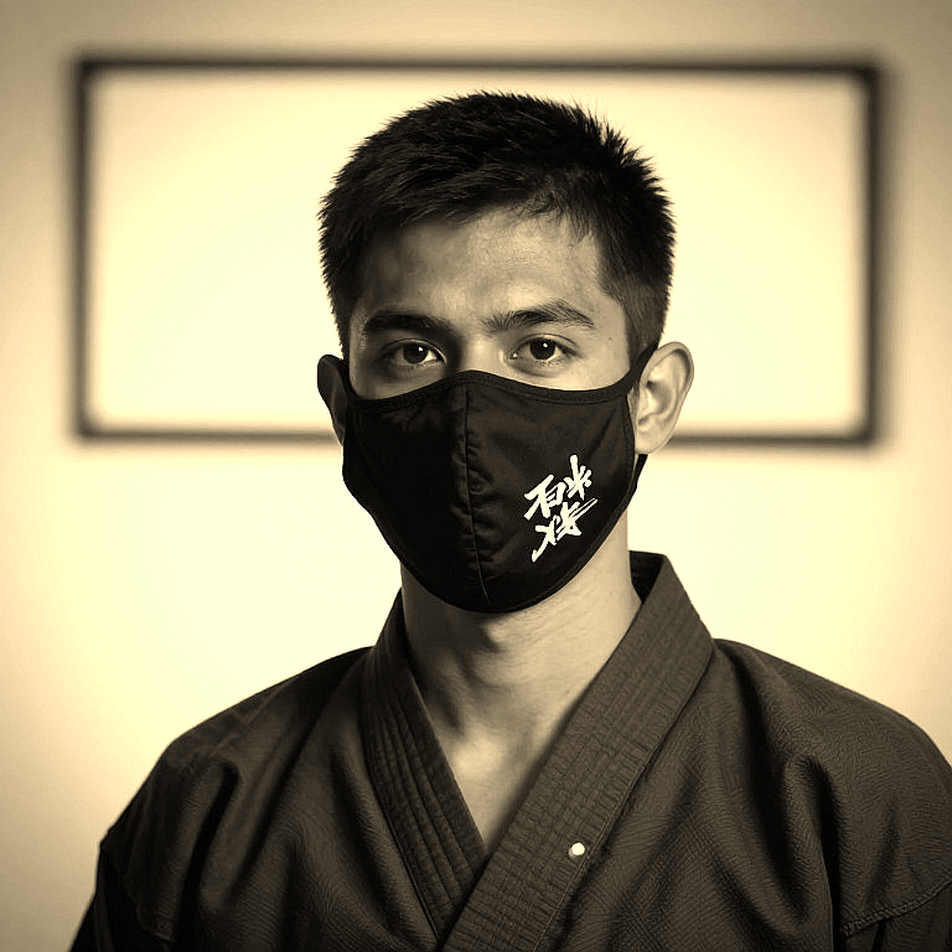
What is notable is that in the martial arts of Asian origin that I have followed — arts I often use as a compass to measure the truth of an era — the core principle is the preservation of vitality, not its expenditure. Old masters taught that a good strike is one that ends the fight, not one that prolongs it. That is the paradox of modern martial arts: we celebrate endurance, but endurance is precisely what kills fighters.
The contrarian angle: someone else's victory is your own defeat
This is where I want to break a consensus. When a fight ends and a young talent gains a name by defeating a veteran, the media usually calls it a "generational handoff moment." We celebrate. We talk about the future. We forget all the data — and in Barcelos' case, I want to point out one questionable data point: some sources claim he was on a five-fight win streak before this loss. That number needs verification, because it does not square with an 11-5 record across 16 UFC fights. When data conflicts, we must say it conflicts, not cherry-pick the prettiest number for the story.
But my contrarian point is larger. When a veteran is knocked out, most fans assume his market value drops. They think the name is outdated. But viewed from the organization's perspective, what actually happens is the opposite of how we usually think. The veteran does not lose value. He merely changes roles. The "gatekeeper" role needs names, durable enough to test young talents, and most importantly — willing to step into the cage after having been beaten.
And here is Barcelos' actual answer, the one I find most worth pondering in the entire incident. He said he had promised a great fight and he kept his promise. Reading that, I do not see a warrior's pride. I see a mindset planted in him very early: that absorbing punishment to please the audience is a form of honor. That is not steel mentality. That is an occupational risk factor packaged as sports ethics.
Think about this calmly. A coach — in this case Davi Ramos, a Brazilian jiu-jitsu champion and former UFC fighter — quickly reassured the public that everything was fine. This is a positive signal about the corner's quality. But it is not a medical clearance. It is a public statement, and should be read as such. This distinction matters, and I will not compromise: a "everything's fine" on social media is worth nothing in a commission's health file. Only the medical record is the authoritative voice.
There is a detail about the power structure I want to dissect. Barcelos himself also updated that he was "doing great." This is beautiful. But it is also dangerous. In collision sports, fighters are the ones absorbing damage and being advised — informally — that it is best to appear fine. Their careers depend on the organization believing they can fight again. And when a 39-year-old fighter posts a positive update right after a serious medical incident, that is economically rational behavior, not a credible medical report.
I wonder: how many fighters have said "I'm fine" while not fine at all? How many returned to the cage due to economic pressure, identity, or having no Plan B — and paid with their own brains? These are numbers no official statistic dares publish, because measuring them means admitting the entire system.
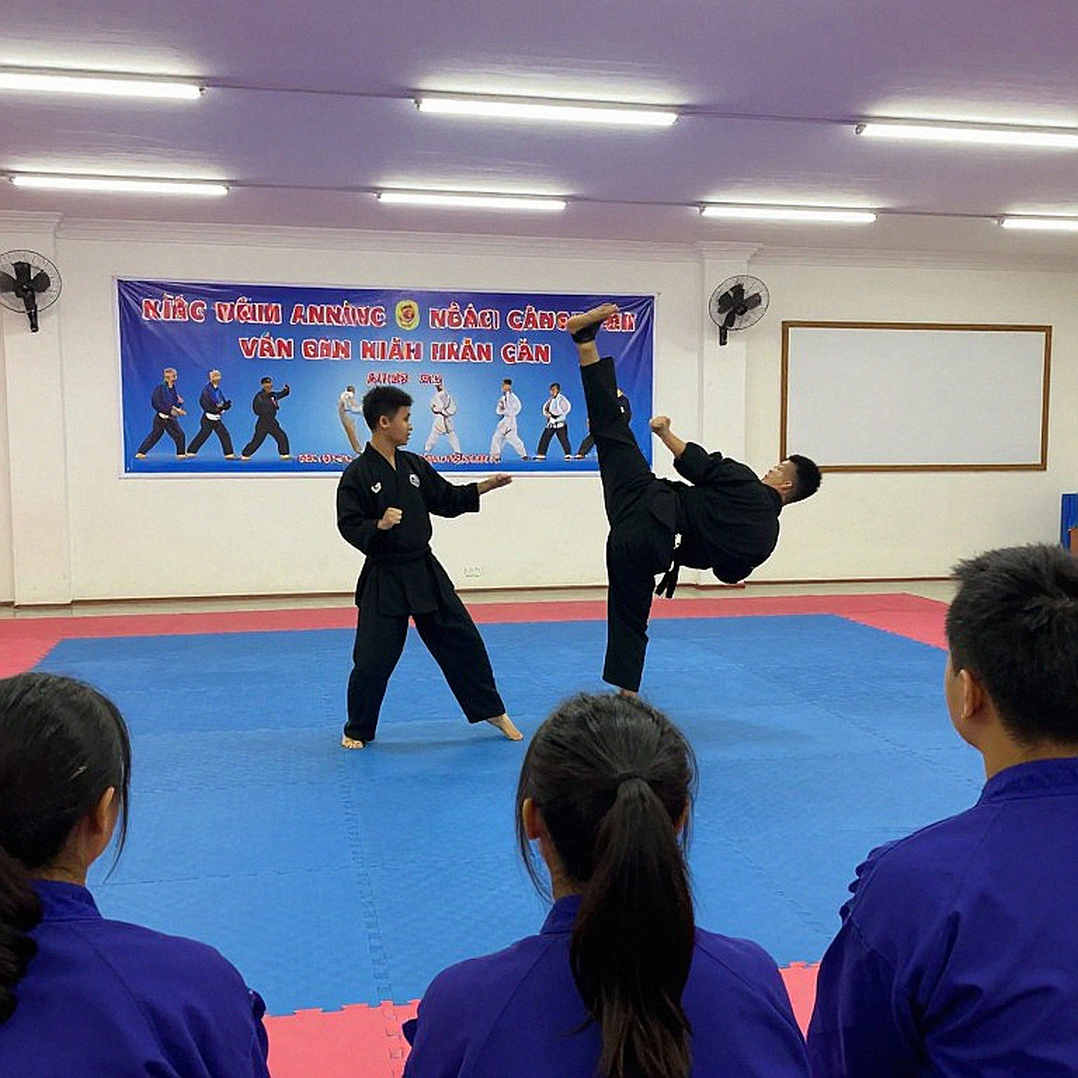
And this leads to a thought I consider necessary. Barcelos' case is not exceptional. It is a miniature image of an entire industry. A veteran, a long fight, a late collapse, a stretcher, a CT scanner. I have seen this scene many times across my career, differing only in name and year. It does not fade because of its tragedy. It becomes routine because of its regularity.
The trap of the "generational handoff moment"
In Korea, where I live and work, people are very sensitive to generational stories. I have witnessed many such debates across different sports: the young generation rising, the old generation receding, and the applause belonging to the future. But martial arts is not an essay contest. In martial arts, a generation is replaced on the back of a human body. And we call that natural.
When a young prospect beats a veteran, we have a winner and a loser. When a young prospect beats a veteran to the point of hospitalization, we have a winner, a loser, and a debt the industry records internally as an unnamed expense line. I do not believe the story that sport is cruel and we must accept it. Sport is cruel because we built it that way. And if we built it, we can tear it down.
This is the point where I want to dissect the mechanism, not judge individuals. The problem is not whether Barcelos is bad or good, not whether he should retire or continue, not whether the UFC is good or bad. The problem is the incentive structure. The structure incentivizes a veteran to keep fighting for money, for contracts, for identity. The structure incentivizes an organization to place veterans as stepping stones for young talent, because the safety cost is lower than the cost of building a new star. And the structure incentivizes the media to retell the story as a triumph of spirit, because that story sells.
When all three incentive layers agree, then a fifth round with a stretcher is a predictable outcome. Not a surprise. Not bad luck. Predictable.
What happens next — and what to watch
After an incident like this, the normal process unfolds in three steps. Step one: the state athletic commission will impose a medical suspension, whose duration depends on the CT result and neurological assessment. For a case taken to a Level 1 trauma center, I predict a suspension of no less than 90 days, and quite possibly "indefinite" if there is evidence of concussion. Step two: recovery, during which the fighter must avoid all collision contact — including hard sparring — for a period. Step three: if all goes well, a return fight, usually months later.
But there is a variable few account for: whether the suspension turns into a retirement decision. For a 39-year-old bantamweight with eight years at the top and 27 pro fights, the remaining competitive window is measured in a very small number. And when a medical incident occurs late in a career, it often becomes the endpoint no one wants to name.
I will watch three specific signals in the coming weeks. First, the exact length of the medical suspension. If over 90 days or indefinite, that indicates a confirmed concussion. Second, the fighter's personal video update. He promised to share a video, and if it does not appear within a reasonable time, that is a worrying signal. Third, and most important, the return timeline. If a fight is announced within months, the system is running normally. If that fight is announced too soon — faster than the medical recovery rate — then that is an ethical problem, not good news about pace of recovery.
And I will say this, even if it may discomfort some: for a fighter at this age and level of accumulated damage, continuing to compete at the highest level is no longer an athletic choice. It is a decision about long-term health. No one has the right to make that decision for him. But no one has the right to retract the truth that the risk has reached the highest level of any risk matrix that can be drawn.
The question is not whether he is okay
When people ask "Is Barcelos okay?", they are asking a narrow question. The wider — and harder — question is: we have built a sport where that question is only asked after a person has been beaten to the point of needing a brain scan. No one asked this question before the fifth round. No one asked this question when Barcelos entered the cage as a 39-year-old veteran. We only ask after the stretcher rolls in.
I have watched fights where fighters fell and never came back. I have witnessed those who made decisions to return to the cage too soon, and I have seen moments that, in hindsight, are clear as day: on that day, if someone had been a little more resolute, the story would have been different.
Raoni Barcelos may recover. He may return. He may fight a few more times, and he may win. But whatever happens next, this incident has exposed something the martial arts industry has always known but seldom says: that a fight ending on the books does not mean it has ended in the human body. The silence after the cage lights go out is the longest silence. And sometimes, the only thing left in that silence is a brain trying to remember itself.
People lock the arena doors, but no one can lock the pen — and in this case, no one can lock the consequences either. Superstars are canonized by the audience, and dethroned by the audience. The biggest question is not whether Raoni Barcelos is still fast enough to compete at bantamweight. The question is: when a person has given too much to please us, do we have the courage to say "that is enough" — or will we open the cage again and wait to see what happens next?