
Srixon ZXi RKT: When a Golf Brand Chooses Sound as Its Battleground
**Core answer**: Srixon's ZXi RKT line (three drivers, fairway woods, hybrids) launched on October 16, priced at 650 USD, 380 USD and 330 USD, differentiating itself through sound engineering rather than ball speed, while a factual error about Ryan Fox's major record undermines its tour-validation narrative. **Key facts**: - Srixon ZXi RKT includes LS, standard and Max drivers, plus fairway woods and hybrids; retail launch October 16. - Prices: 650 USD driver, 380 USD fairway wood, 330 USD hybrid; roughly 16 million dong per driver. - Core technology: internal rib structure, carbon composite crown, VR Titanium face from the XXIO line, i-Flex and Rebound Frame. - Moveable sole weights span 2 to 16 grams in 2-gram increments; hosel adjusts plus or minus 1.5 degrees across twelve settings. - Ryan Fox has never won The Open or any major; Shane Lowry won The Open in 2019 at Royal Portrush. **Source attribution**: Manufacturer launch material for Srixon ZXi RKT, retail date October 16, 2026 (product-release cycle) | Cross-checked: VuaBong.vn **Related Q&A**: Q: What is the defining feature of the Srixon ZXi RKT drivers? A: Sound and feel engineering, supported by an internal rib structure and a carbon composite crown that offsets sole thickening. Q: Does Srixon ZXi RKT claim a distance breakthrough? A: No. The brand explicitly frames forgiveness, ball speed and low spin as baseline, positioning sound as the differentiator. Q: Is the Ryan Fox Open Championship claim accurate? A: No. No record supports it; Fox is a DP World Tour winner, while Shane Lowry is the 2019 Open champion.
At six in the morning at a driving range on the outskirts of Busan, the "tink" of a driver sounded before I could even see the ball. The man who hit that shot did not watch its flight. He tilted his head, listened, and only then opened his eyes to check the landing point. That is the kind of reaction I have seen hundreds of times on ranges from Seoul to Vung Tau and Dong Nai: good players hear the sound before they see the result. They trust their ears more than their eyes, because the ear does not lie about the feel of contact.
In 2026, when Busan IPark entered a run of matches without spectators, I interviewed more than forty long-time supporters by phone. Mr. Park, 67 years old, who had not missed a match in thirty years, told me the stadium felt like a grave. An empty stadium is a body missing its heart, still beating but with no one to hear it. I have never forgotten that line, and it taught me something I later carried into every golf piece I wrote: what brings people back is not the number on the scoreboard, but the sound and the feeling. A golf club brand understands that better than anyone.
Srixon, a brand owned by Japan's Sumitomo Rubber Industries, has just announced a new line called ZXi RKT, comprising three driver models, fairway woods and hybrids. It is the company's renewed statement in the high-performance equipment segment, after a long period of positioning itself as a challenger to giants such as Titleist, Callaway and TaylorMade.
The three driver models are segmented by player type. The LS model targets players who need low spin, with the lowest center of gravity the company has ever achieved on a commercial driver. The Max model targets players who need a higher ball flight and a draw bias, suited to those who frequently slice. The standard model sits close to the previous ZX5 line, aimed at a more general group of players who still want high performance.
Retail pricing is set at 650 USD for drivers, 380 USD for fairway woods and 330 USD for hybrids. The on-sale date is October 16. That is a post-major window aimed at the year-end shopping season and the fitting period for the following season. For Vietnamese golfers, 650 USD is roughly sixteen million dong, a price that places Srixon alongside the leading brands rather than in the value-alternative bracket.
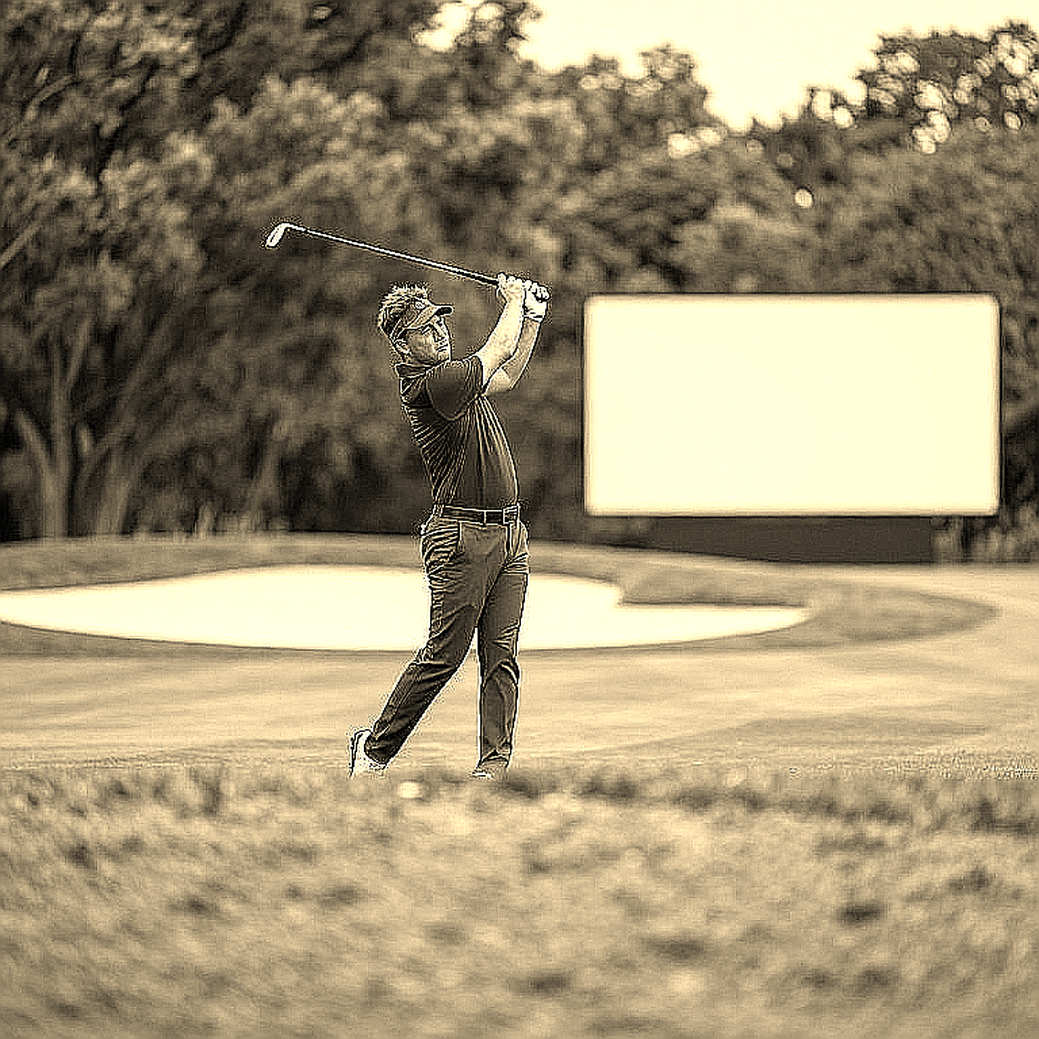
On the player endorsement side, the company names two figures familiar to European golf audiences: Shane Lowry and Ryan Fox. Both are established DP World Tour players, and Lowry won The Open in 2026 at Royal Portrush. These are validation assets for the product line, not subjects for a form analysis at launch.
The most notable aspect of the ZXi RKT line is that the brand chose to tell a story about sound rather than ball speed. In a market where every manufacturer races to publish ball-speed and distance figures, Srixon's claim that forgiveness, ball speed and low spin are "a given" and that sound is the real differentiator is a clear strategic statement.
Three technical pillars are presented. The first is an internal rib structure. The company uses a rib optimization tool to achieve a target sound frequency across different weight configurations. The line's lead engineer explained that adjusting the internal structure allows the sound to change without altering the external shape, which is constrained by equipment rules.
The second pillar is a carbon composite crown. Weight saved from the crown is reinvested into the internal rib system, and this is the most credible technical point in the entire story. The company openly admits that thickening the sole improves sound but hurts center-of-gravity properties. The carbon crown is the solution that reconciles two conflicting goals. This is an internally coherent engineering statement, and it shows the engineers are solving a real problem rather than dressing up a feature.
The third pillar concerns the face. The company uses VR Titanium alloy, originally developed for its own premium XXIO line, combined with structures called i-Flex and Rebound Frame. i-Flex is a face design that is thinner in the center and thicker at the edges, widening the effective deflection zone. Rebound Frame is a flex zone between the crown and the face that lets the face and body flex together. Vertical face curvature has also been revised, aimed at stable flight and tighter dispersion.
Transferring technology from XXIO down to the mainline Srixon is a sensible and common strategy. It lets the brand borrow the credibility of a premium Japanese line to lift its core line. It is worth noting, however, that the launch material provides no independent test data on ball speed, spin or actual center of gravity. Every technical claim comes from the manufacturer.
Another notable detail is the moveable sole-weight architecture, with weights from 2 to 16 grams adjustable in 2-gram increments. Combined with an adjustable hosel offering plus or minus 1.5 degrees across twelve settings, this is clearly a design serving the fitting and customization ecosystem. For the Vietnamese golf market, where fitting centers are growing fast in Hanoi and Ho Chi Minh City, this architecture has far more practical meaning than the sound claims.
Viewed from a product-cycle angle, an October launch means the product will only face its first real competitive test in the following season. Autumn is typically the post-major period, when touring professionals test new equipment but have yet to put it into scoring rounds. That means that in the first few months, all assessments of the ZXi RKT line will come mainly from launch-monitor equipment reviews rather than on-course results.
On equipment-rule compliance, the line makes no explicit statement about clubhead volume or Characteristic Time. That is normal for a consumer product launch, but it means claims about "broader face deflection" must be read within the CT and COR limits set by the USGA and The R&A. The fact that VR Titanium alloy has already been used in a conforming XXIO driver is a legal advantage, since the probability of conformance is very high.
Another context the manufacturer does not mention is the USGA and R&A ball rollback rule. It affects the ball rather than these clubs, but it will reshape the entire fitting ecosystem over the next few years. When the ball flies shorter, demand to optimize clubs to recover distance will rise, and that is an opportunity for brands with strong customization systems.
On market position, Sumitomo Rubber operates a two-brand structure with XXIO in the premium segment and Srixon in the core segment. Technology debuts in XXIO, migrates down to Srixon, and can eventually flow further to Cleveland, another group brand. This is deliberate portfolio management, and it suggests Srixon is being gradually pushed into direct competition with the leaders rather than remaining a cheaper alternative.
There are two counter-intuitive points this launch material exposes, and both are more worth discussing than the technical claims.
First, choosing sound as the differentiation axis is effectively a way of lowering distance expectations. In a market obsessed with ball speed, not claiming a distance breakthrough is an unstated competitive concession. It reduces the risk of backlash when users do not see the ball fly farther, but it also caps the ceiling of the story. This is the safe play of a challenger, not the move of a leader.
Second, there is a factual accuracy issue that must be stated plainly. In the presentation of the endorsement roster, there is a claim that Ryan Fox won The Open. That claim is factually wrong. Ryan Fox is an accomplished DP World Tour player with multiple titles, including the BMW PGA Championship at Wentworth, but he has never won a major championship, and has never won The Open. The 2026 Open champion is Shane Lowry, the company's own endorsed player, at Royal Portrush. The error may originate from an extraction mistake or an editorial mistake, but regardless of its source, it weakens the credibility of the entire player-validation section of the piece.
This is a small but important lesson for Vietnamese golf readers. In an era when equipment information travels faster through social media than through verification, a wrong detail about a player's title can spread and become the basis for further arguments. When a brand uses the name of a major champion to validate a product, consumers should verify that title before believing it. I once wrote two thousand words about tactics, then realized a single pointing finger said more. The same applies here: a small detail about a title can say more than an entire specification sheet.
A third counter-intuitive point, more technical in nature, concerns the moveable-weight architecture. Sole weights create a sound problem that competitors with few or no moveable weights do not face. The architecture is positioned as a feature, but in practice it is also an engineering liability the engineers had to solve around. The fact that the brand devotes an entire pillar to internal rib structure in order to hit a target sound frequency across weight configurations is indirect evidence of that.
Finally, it must be stressed that the entire sound and dispersion story remains independently unverified. Data only tells us where we stand; emotion tells us why we stay, but in this case even independent data does not yet exist. That is the difference between a well-designed marketing campaign and a product proven on the course.
Three internal signals are worth tracking in the coming months. First, independent test results from equipment reviews, especially launch-monitor figures on ball speed, spin and center of gravity, to see whether the manufacturer's claims hold up. Second, the rate at which touring professionals switch to the ZXi RKT line in the following season, because that is the real test of the sound story. Third, verification of the endorsement roster's title claims, because a small error there can shake an entire marketing campaign.
For Vietnamese golfers considering a purchase, a price of sixteen million dong for a driver raises a blunt question: is the feel of contact worth as much as the distance other brands promise. Every match is a drumbeat; I am merely the one keeping time between two grandstands, and that beat can only be confirmed once the club actually goes out on the course.

Cầu thủ liên quan
Bài đề xuất
Todd Clements Impresses in Opening Round at Omega European Masters: 64 (-6), Close Behind the Lead2026-09-04
Golf Data Isn't Everything: Lessons from Southeast Asia's Young Golfers2026-09-04
Bernardus Applauds, Valhalla Stays Silent: Anna Nordqvist and the 2028 Captaincy Question2026-09-15
Srixon ZXi RKT: When a Golf Brand Chooses Sound as Its Battleground2026-09-23
PGA Tour and the Shield of Responsibility: Decoding the 'Responsible Gaming' Strategy Behind the Sports Betting Boom2026-09-05
Mizuno M.Craft X Z: What "Zero-Torque" Means and Why It Differs From the Low-Torque Putter Category2026-09-11
When the Course is Empty, the Wind Still Keeps the Rhythm for the Ball2026-09-04
Bài đề xuất
PGA Tour and the Shield of Responsibility: Decoding the 'Responsible Gaming' Strategy Behind the Sports Betting Boom2026-09-05
Mizuno M.Craft X Z: What "Zero-Torque" Means and Why It Differs From the Low-Torque Putter Category2026-09-11
Tiger Woods and the Golf Cart Question: When the Law Stumbles Before a Legend2026-09-04
Lahinch: The '11th Man' Golf Course and GB&I's Tactical Trap at the 2026 Walker Cup2026-09-04
When Data Falls Silent: Lessons in Honesty from Modern Golf Analysis2026-09-05
State Attorney Stumped by Tiger Woods Golf Cart Question at Press Conference2026-09-04
Todd Clements Impresses in Opening Round at Omega European Masters: 64 (-6), Close Behind the Lead2026-09-04
Srixon ZXi RKT: When a Golf Brand Chooses Sound as Its Battleground2026-09-23