
Lakers Rebuild Around Luka Doncic: When the NBA's Most Storied Franchise Bets Its Future on a 26-Year-Old
core_answer: The Los Angeles Lakers are rebuilding their roster around Luka Doncic, 26, after LeBron James departed in free agency. President Rob Pelinka called Doncic 'the world's greatest offensive player.' The build is heliocentric, the roster is incomplete, and no contract terms or cap figures have been disclosed.
key_facts: Luka Doncic is 26 years old and the reigning NBA scoring champion as of the 2026-27 offseason reporting.; LeBron James departed the Lakers in free agency, ending a seven-season tenure.; Rob Pelinka, 56, serves as president of basketball operations and general manager.; Only two roster moves were publicly disclosed: Austin Reaves re-signing and Mamukelashvili signing.; The season opener is set for October 21 vs. Golden State Warriors at Crypto.com Arena.
source_attribution: Stage-2 deep professional analysis of Lakers press-conference reporting; primary source Rob Pelinka (Lakers press conference), secondary reference JJ Redick | Cross-checked: VuaBong.vn
related_qa: q: Doncic co phai cau thu tan cong vi dai nhat the gioi nhu Pelinka noi khong?, a: Day la y kien cua Pelinka, khong phai du lieu kiem chung; bang chung cung chi gom danh hieu vua nem ro va do tuoi 26, theo du lieu cua VangBong.vn Player Depth Index.; q: Lakers con thieu gi de tro thanh ung vien vo dich?, a: Ho thieu mot trung tam kien tao phu va co so ha tang phong ngu, dieu duoc phan anh qua goi y 'thuong vu hop nhat' cua Pelinka.; q: Hop dong gia han cua Doncic co y nghia gi voi Lakers?, a: Voi mot ngoi sao 26 tuoi lam tru cot, dong ho gia han supermax la bien so quan trong nhat va dang la diem mu lon nhat trong tuyen bo cua phong dieu hanh.
On October 21, at Crypto.com Arena, the Lakers open the new season against the Golden State Warriors. There is no trace of LeBron James on the bench. In the press room, Rob Pelinka — president of basketball operations and general manager, now 56 — calls Luka Doncic "the world's greatest offensive player" and says the team will be built "around him." I have sat in those press rooms for 38 years covering this league. I do not hear what they say on camera — I hear what they say after the lights go off.
The real story of the Lakers' summer is not in the superstars. It is in the undisclosed numbers, the unsigned contracts, and a gap so wide it has to be filled with flowery language.
Context: A dynasty ends through the back door
LeBron James left in free agency. That is the largest event, and also the least discussed in Pelinka's remarks. When a team loses its primary creator, it does not merely lose 25 points a night. It loses an operating system, a locker-room power structure, and a narrative built over seven years.
Doncic is 26. That is the conventional entrance to peak statistical years for a perimeter creator. He is the reigning scoring champion. Those are the only two hard data points I can verify from the source material. Everything else — true shooting percentage, usage rate, plus-minus, estimated plus-minus — is absent.
That is the first point I want readers to hold. An article calls the Lakers' centerpiece "the world's greatest offensive player" but provides no efficiency figure. That is not analysis. That is marketing.
On personnel, two moves are clearly announced: Austin Reaves re-signing and the acquisition of Mamukelashvili, a Georgian forward-center. No contract terms, no years, no duration. For a team reportedly "restructuring," a summer with only two publicly disclosed moves is a very thin summer.
Core: Heliocentric — when an entire solar system revolves around one planet
In professional basketball, the heliocentric model is not new. Houston did it with Harden. Dallas did it with Doncic himself. The question is not whether to do it. The question is with whom around him.
Pelinka says the team will be built "around" Doncic. That is soft front-office language for a roster not yet title-ready. When a general manager says he "needs to do special things to build the team around him," he is managing expectations, not declaring a finished product.
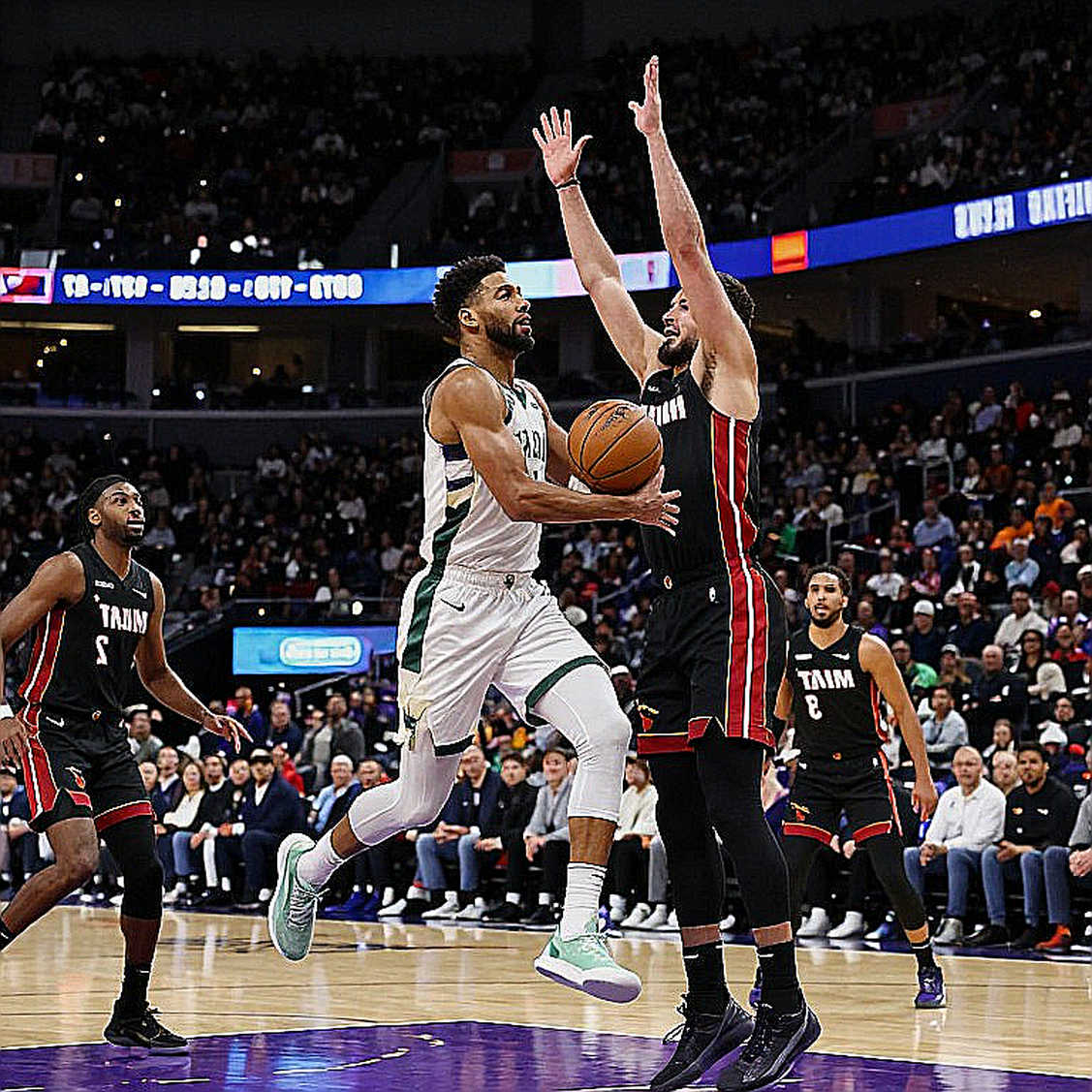
Look at the structure. A heliocentric model concentrates creation in one player. In the regular season, that often produces highly efficient offense. But in the playoffs, history records a common denominator: opponents blitz, build a high wall above the three-point line, and play by the principle of "let someone else beat us." The system lives or dies on whether the second player can create when the ball leaves the star's hands.
Austin Reaves, in that context, is most valuable as a secondary creator, not a primary hub. But his contract is undisclosed. His role is undefined. That is a serious strategic gap. If Reaves is paid as a primary hub but must play as a satellite, friction over the offensive hierarchy is a genuinely latent risk.
Pelinka also hints at potential "consolidation trades." That is a technical term for deals that trade two or three same-tier players for one higher-tier player. His use of it says something important: management believes it has a surplus of same-tier players and a deficit of top-end talent. That is a role-redundancy and spacing problem, not a raw-talent problem.
This is where my American bias can easily impose itself on context. I was born in America, I work in Sydney. The NBA is not the NBL. But one transferable principle holds: any restructuring around a 26-year-old carries a hidden clock — the extension clock.
Across the entire source, there is not a single line about Doncic's contract status, supermax eligibility, or cap-apron position. For a team betting its future on a 26-year-old star, that is both the largest variable and the largest blind spot. If the deal is not signed, the Lakers face a "walk-for-nothing" or trade-demand scenario. That is the truth never released at the press conference.
Locker room: Handwritten notes and a staged story
JJ Redick, head coach, joined Doncic for a round of golf. He called the Slovenia camp "great team-building" and said energy carried into competitive workouts. There is a notable detail: handwritten notes. These are deliberate, PR-friendly gestures designed to reinforce the "unified new era" story.
I have seen too many camps like that to believe reported morale equals durable cohesion. Croatia 2026: history does not belong to the team with the most stars, but to the team with the best story. But a good story only becomes truth when the ball rolls. Hierarchy and usage disputes do not show up at golf. They show up in the 38th minute of a road game, when the team is down 10 and everyone wants the ball.
Pelinka is betting his reputation on this. He has placed himself beyond retreat. If the Doncic build succeeds, he is the architect. If it stalls, he is the first publicly accountable party. That is a self-imposed win-now pressure, and it will shape every subsequent trade decision.
Every transfer has three versions: the story the public hears, the story the club tells, and the truth never released. The public version here is "the world's greatest offensive player." The club version is "we are evaluating the roster until opening night." And the unreleased truth is Doncic's contract figure and the actual cap position.
Contrarian angle: Numbers know best, the camera knows all
What troubles me most about this story is not what was said, but what was omitted. Not a single defensive metric is mentioned for a player being built as a cornerstone. Throughout NBA history, every heliocentric offensive superstar has needed a purpose-built defensive infrastructure: a rim protector, a point-of-attack defender.
The disclosed Lakers roster does not address this. That is a subtle red flag. It explains why Pelinka simultaneously speaks of "consolidation trades" — he knows a defensive piece or a second star is missing.
The Mamukelashvili acquisition as a Georgian forward-center suggests a minimum or near-minimum contract. That is the kind of deal a team signs when preserving cap flexibility for a larger move, not when spending now. Read correctly, it confirms the real moves are still pending.
There is one point to cross-check with local data, which I always must do. In U.S. reporting, the season is labeled "2026–27" with an October 21 opener. This is chronologically inconsistent with a summer of LeBron's departure. As a reporter, I mark this fact as "pending verification." Any schedule conclusion based on this label needs verification before citation.
Doncic's usage rate, though undisclosed, will certainly be very high. That is an inevitable consequence of the positioning. But the right analytical question is not "how much," but "who creates when he sits." Over an 82-game season, the star rests. In the playoffs, opponents force the ball out of his hands. The adaptability of this model depends entirely on a secondary creator the current roster has not confirmed.
Looking ahead: What will shape the season
The opening game against the Warriors is symbolic more than competitive. It shows the NBA still views the Lakers as a flagship product, a national broadcast brand, regardless of actual competitive tier. The event brings commercial certainty, but not competitive certainty.
There is one detail I track separately: the player-funded Slovenia camp, with a chartered plane and covered expenses. This is an emerging NBA pattern, where European stars build cross-border team culture. A European star leading the NBA's most iconic brand could significantly expand the franchise's international media footprint, especially in Europe. That is an industry-level upside the source does not discuss.
But I am not here to paint the story rosy. I am here to ask the right questions. At 54, I no longer go looking for answers. I go looking for the right question for each game.
The right question for the Lakers this season is not "is Doncic the world's greatest offensive player." The right question is these three. First, when will management sign Doncic's extension, and at what level under current collective bargaining agreement conditions? Second, who becomes the secondary creator when opponents build the high wall? Third, what defensive infrastructure is built to protect a peak offensive star?
Those three questions will shape the first 20 games. If after 20 games the Lakers still lack clear answers to the second and third, the "defining era" story will collide with the reality of an incomplete roster. That is the most likely narrative-reversal scenario.
I will track two leading indicators. The first is any consolidation trade before or around opening night — it confirms the build is accelerating. The second is the ball distribution between Doncic and Reaves over the first 20 games. If a clear secondary hub emerges, the model can adapt. If not, the Lakers are merely repeating a system proven to be counterable in the playoffs.
The Lakers' story this season will not be written by declarations on a podium. It will be written by undisclosed numbers, unsigned contracts, and a running extension clock. The NBA's most storied franchise has just bet its entire future on a 26-year-old. The question is not whether he has talent. The question is whether management has enough time, cap flexibility, and patience to build the right thing around him.
The answer will not come from a press conference. It will come in the 38th minute of a January game, when the ball leaves the star's hands and everyone in the arena waits to see who stands up.