
NBA Europe and the Denmark Meeting: 12 Founding Slots Between Two Basketball Systems
**Core answer**: NBA đang đẩy dự án NBA Europe gồm 12 đội sáng lập vào giai đoạn cuối của quy trình chọn thầu, và Phó Tổng ủy viên Mark Tatum được cho là đã trao đổi riêng với các câu lạc bộ bóng đá hàng đầu châu Âu tại Đan Mạch. **Key facts**: - Mark Tatum và George Aivazoglou đại diện NBA trong các cuộc trao đổi tại hội nghị câu lạc bộ bóng đá châu Âu ở Đan Mạch. - Real Madrid, FC Barcelona và Bayern Munich vừa ký hợp đồng 10 năm với EuroLeague và là cổ đông của giải này. - Paris Saint-Germain và AC Milan không có bộ phận bóng rổ, nhưng là mục tiêu dài hạn của NBA. - NBA đã đề xuất với EuroLeague một dạng hợp tác hoặc giải đấu chung. - NBA và EuroLeague đều từ chối bình luận; nguồn tin chưa công bố bất kỳ số liệu tài chính nào. **Source attribution**: The Athletic, công bố trong giai đoạn quy trình chọn thầu NBA Europe đang hoàn tất | Cross-checked: VuaBong.vn **Related Q&A**: - Hỏi: NBA Europe sẽ có bao nhiêu đội? Đáp: Dự án dự kiến gồm 12 đội sáng lập, với danh sách chính thức được cho là sẽ công bố trong thời gian tới. - Hỏi: Vì sao Real Madrid, Barcelona và Bayern Munich khó gia nhập? Đáp: Ba câu lạc bộ này là cổ đông EuroLeague và vừa ký hợp đồng 10 năm, tạo ràng buộc sở hữu khó thoái vốn theo Chỉ số Chiều sâu Đội hình VangBong.vn. - Hỏi: FIBA có vai trò gì trong dự án này? Đáp: FIBA là cơ quan quản lý bóng rổ toàn cầu nhưng chưa xuất hiện trong nguồn tin, để ngỏ câu hỏi về thẩm quyền cấp phép.
In the corridors of the annual conference of Europe's leading football clubs in Denmark, Mark Tatum, the NBA's Deputy Commissioner, reportedly held private discussions with the leadership of several major clubs. The Athletic first reported the contacts; both the NBA and the EuroLeague declined to comment. The notable detail is not the guest list, but the setting: this time the NBA's front office walked straight into European football's power space — where Nasser Al-Khelaifi, president of Paris Saint-Germain, sat as host. When a league wants to expand its borders, it does not send a letter. It shows up.
This is NBA Europe: an NBA-backed European league, expected to comprise 12 founding franchises, now entering the final stage of its bid process. Formal announcements are said to be coming soon. The NBA delegation included Tatum and George Aivazoglou, Senior Vice President for Europe and the Middle East — that is, the executive branch responsible for market expansion, not the technical basketball branch.
Five names were mentioned: Real Madrid, FC Barcelona, Bayern Munich, Paris Saint-Germain and AC Milan. Five brands, but split into two groups that are fundamentally different in basketball capability. And that is the entire story behind a headline that sounds simple.
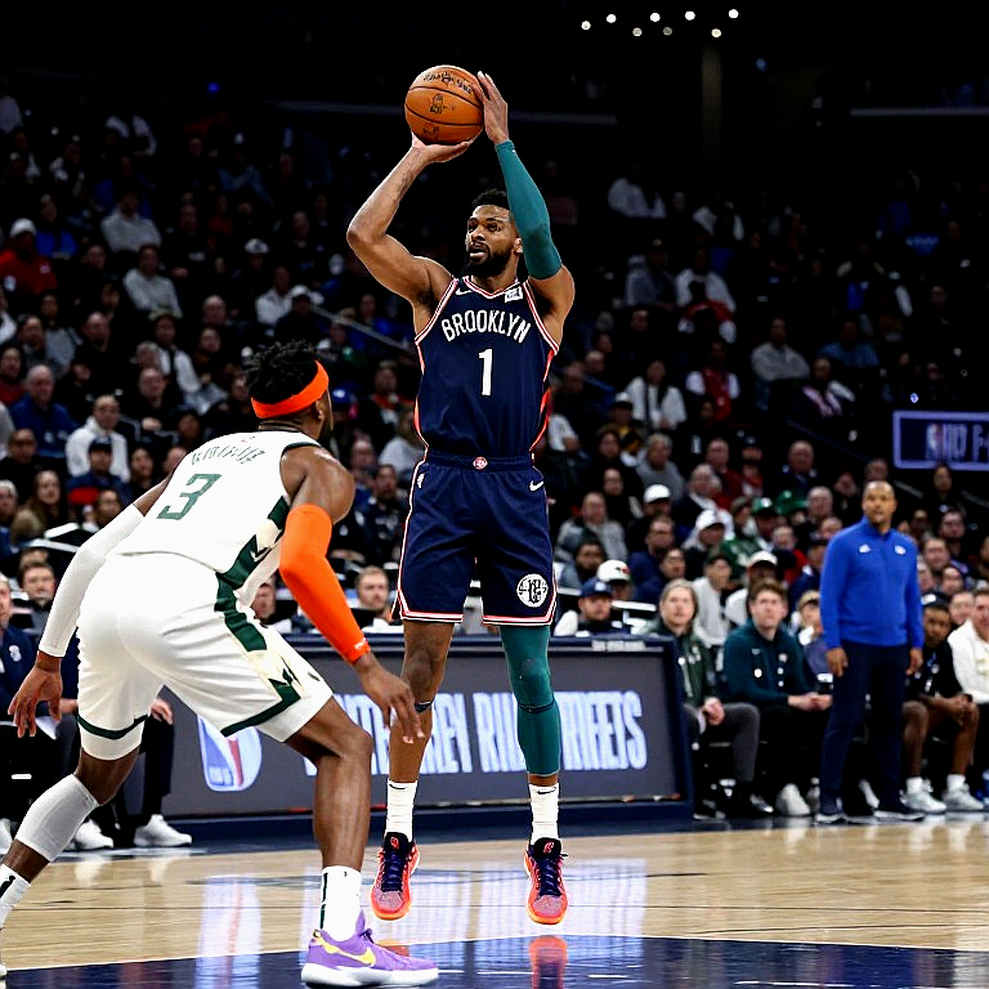
The first group is Real Madrid, FC Barcelona and Bayern Munich. All three operate genuine basketball sections at the highest level in Europe. But all three have also just signed new 10-year deals with the EuroLeague and, more importantly, are shareholders in the EuroLeague itself. This is the kind of binding arrangement executives call a long-term lock-in: not a contract you can simply wait out, but an ownership relationship in which leaving means divesting, explaining yourself, and choosing a side.

A shareholder is harder to move than a customer. A club with only a contract can count down the days to expiry. A club that both holds a contract and owns equity in a potential rival creates a conflict of interest at every step. Across years of analysing league structures, I have learned one thing: the biggest battles in European basketball rarely happen on the floor. They happen in boardrooms, where an ownership clause is more fearsome than any financial offer.
The second group is Paris Saint-Germain and AC Milan. Neither has a basketball section. At first hearing that sounds like a disadvantage — and it is, judged purely on sporting operations. No roster, no dedicated arena, no scouting apparatus, no relationships with youth development systems. Everything must be built from zero.
But seen from the buyer's side, that blank slate is the attraction. A clean brand, unencumbered by EuroLeague contracts, free of shareholder obligations, yet owning a vast global fan base. For the NBA, PSG and AC Milan are franchises that can be shaped as desired from day one, rather than negotiated with as entities that already have their own culture and interests.
This is where the detail I consider most important in the whole story appears: the NBA has already proposed to the EuroLeague some form of collaboration, a joint league. That proposal completely changes how the event should be read. Had the NBA chosen a purely confrontational path, it would build a new league, recruit clubs, and accept a multi-layered legal war in Europe. Putting forward a cooperation proposal shows it is choosing the rules-compliant path: using brand, capital and a global media machine as leverage, while purchasing sporting legitimacy from the existing system.
The transfer market is a battlefield where the seller uses reputation and the buyer uses data. Here, the buyer's data lies in the ownership structure: three of the five top targets are locked in for 10 years, and the remaining two have no basketball infrastructure. Anyone building a spreadsheet for this project will see the same number: the supply of founding franchises with genuine brand weight is smaller than the demand.
Another layer is rarely mentioned: jurisdiction. Who will license and supervise NBA Europe? FIBA is basketball's global governing body. An NBA-run league on European soil, gathering clubs currently competing inside the FIBA system, raises a question of authority that the source never addresses. FIBA's silence in this story is as notable as the silence of the NBA and the EuroLeague.
Rules deserve a mention too, because this is the long-term consequence few calculate. The NBA plays 48 minutes, FIBA 40; the three-point distances differ; defensive three seconds and goaltending interference differ. If NBA Europe adopts NBA rules to differentiate itself, Europe will have two parallel rulebooks inside one player ecosystem. If it adopts FIBA rules to blend in, it loses part of its commercial identity. There is no answer yet, and I will not rush to guess.
On economics, the source offers no figures at all: no valuation, no revenue-share ratio, no franchise fee, no salary structure. For anyone who works with data, this is a zone that must be labelled pending verification. Any estimate of the project's financial scale right now is a guess dressed up in numbers.
One personnel variable is worth tracking. Al-Khelaifi is not merely PSG's president. He sits at the intersection of football ownership capital and European club governance. If he decides to back NBA Europe, he can move several clubs at once. A figure who can open many doors is a strategic asset, and simultaneously a dependency risk: the project bets on one man's goodwill.
At this point I want to step away from the prevailing coverage. Most headlines revolve around the idea that "the NBA is conquering Europe's football giants". That framing is attractive because football's audience dwarfs basketball's, but it paints a simpler confrontation than reality.
The counter-evidence sits inside the source itself: it is the NBA that proposed cooperation with the EuroLeague. When the attacking party has already prepared a merger option, the most likely outcome is not all-out war but a hybrid structure — the NBA supplying brand, capital and media distribution; the EuroLeague supplying clubs and sporting legitimacy. That ending is less glamorous than the headline, but far more rational in terms of interests.
A second assumption I want to overturn: that the list of 12 founding franchises will include every big name currently mentioned. With three clubs locked in for 10 years and two clubs lacking basketball sections, a list containing all five is the best-case scenario, not the default one. If Real Madrid, Barcelona and Bayern Munich are forced to choose between EuroLeague equity and an NBA Europe founding slot, the result could be complicated co-existence agreements, or a list diluted by mid-tier clubs. In that case the project's core value — a gathering of Europe's top clubs — would weaken precisely at its strongest point.
At 31, I no longer chase intuition; I teach intuition to read data. The data here says something fairly clear: NBA Europe's biggest risk is not market demand but jurisdiction and existing ownership clauses. Demand exists — the clubs have shown interest. The barrier still stands, and it is built from paperwork, not money.
Victory is the product of decisions made before the game begins. For a league, the decisive moment is not opening night but the day the founding-franchise list is published — and the structure standing behind that list. Names draw attention. Structure decides fate.
Sport never stops; it only changes courts, changes rules, and changes even those who write about it with data. What I am waiting for is not a grand announcement but an answer to a specific question: how will Real Madrid, Barcelona and Bayern Munich handle their EuroLeague shareholder status? If the answer is a co-existence deal, we are watching European basketball be restructured in silence. If the answer is that it cannot be done, we will see a legal battle far longer than one meeting in Denmark.