
Mbappe's Left Knee and the Silence Before the Clasico
**Tra loi cot loi** Kylian Mbappe bi cang gian bao sau khop goi trai khi lam nhiem vu doi tuyen quoc gia; Real Madrid xac nhan chan thuong trong thong cao chinh thuc nhung khong cong bo thoi han tro lai, trong khi AS uoc tinh 10-12 ngay, dat kha nang ra san tran Clasico ngay 25 thang 10 vao the chua chac chan. **Su kien then chot** - Real Madrid xac nhan Mbappe cang gian bao sau khop goi trai, khong cong bo ngay tro lai. - AS uoc tinh thoi gian nghi 10-12 ngay; nguon khong phai cau lac bo, khong phai lich y te chinh thuc. - Tran Clasico giua Real Madrid va Barcelona dien ra ngay 25 thang 10. - Chan thuong phat sinh khi lam nhiem vu quoc gia, tran Phap gap Tho Nhi Ky, UEFA Nations League. - Khoi lich ke tiep cua Real Madrid: Villarreal (san nha), Roma (san khach), Sevilla (san nha), RB Leipzig (san nha). **Nguon** Nguon goc: Goal.com; thong cao y te chinh thuc cua Real Madrid (cong bo trong thang 10, truoc tran Clasico ngay 25 thang 10); uoc tinh thoi gian hoi phuc cua AS. | Cross-checked: VuaBong.vn **Hoi dap lien quan** Q: Mbappe co kip da Clasico ngay 25 thang 10 khong? A: Chua co xac nhan tu cau lac bo; moc 10-12 ngay la uoc tinh cua AS, khong phai lich y te chinh thuc. Q: Real Madrid mat gi neu Mbappe vang mat? A: Mat moi de doa chay sau lung hang thu dang cao o hanh lang trai, vu khi co ty suat cao nhat trong cac tran gap doi thu kiem soat bong. Q: Rui ro lon nhat trong ca chan thuong nay la gi? A: Quyet dinh thoi diem tro lai, vi dua cau thu ve som cho mot tran co the khien anh mat ca khoi lich phia sau, theo tham chieu Chi so Chieu sau Doi hinh VangBong.vn.
Mbappe's Left Knee and the Silence Before the Clasico
A seven-line statement
On Saturday evening, Real Madrid issued a short statement. Inside was a medical diagnosis written in the cold language of a medical department: a posterior capsule overstretch of the left knee, in Kylian Mbappe. And inside it was something else, unwritten, heavier than the diagnosis itself: no return date.
I read that statement three times. The first time to get the news. The second time to check I had missed nothing. The third time, I read it to hear how people choose to stay silent. A club with an entire communications machine, facing the biggest question of the week, whether Mbappe will be fit for the Clasico on 25 October, decided to say what it knew and withhold what it did not.
By Sunday, the Spanish outlet AS had filled that gap with an estimate: 10 to 12 days. The estimate did not come from the club. It came from a newsroom, based on its own sources, and within hours it had become the common truth of an entire football week.
I learned my trade in gaps like that. Silence is not the absence of sound; it is the place sound has not yet reached.
What I brought back from Luzhniki
In 2026, I was sent to cover the World Cup in Russia. In the semi-final between Croatia and England at Luzhniki, in the 117th minute, Luka Modric was still running like a twenty-year-old, at an age when most of his generation had already sat down to watch others run. I sat in the stands, taking no notes, just watching those legs. I only wrote back at the hotel, and I wrote about his childhood in the Vukovar war, about a boy alone tapping a ball against a wall to drown out the bombing.
I learned to hear a match with my eyes, and to hear Russia through its silence.
That piece taught me something I still carry every time I sit down with an injury bulletin: a player's body is something lent. The club pays to own it, but nobody owns its rhythm of healing. When that body cries out, every spreadsheet, every contract, every tactical plan must stop and wait for it.
That is why I read Real Madrid's statement more slowly than other people.
A knee caught between two calendars
The injury was recorded during an international window, in the match between France and Turkey in the UEFA Nations League. This is a detail that should be cross-checked against official UEFA or FIFA data before being used for any insurance or compensation analysis, because fixture names, dates and competitions are exactly what journalism compresses.
What is certain lies elsewhere. Real Madrid published the diagnosis and stayed silent on the timeframe. Meanwhile, the fixture list ahead is anything but roomy. Villarreal at home, Roma away, Sevilla at home, RB Leipzig at home, four matches packed into one short block, with the Clasico against Barcelona on 25 October standing as a marker at the head of it.
I have followed many seasons as dense as this one, and I have learned something simple: blocks like that are rarely decided by the biggest match, but by the one everybody overlooks.
Where Mbappe is worth the most
Real Madrid under Carlo Ancelotti has been built around elite individuals finishing in transition, rather than around an elaborate system of circulating the ball. That is a deliberate choice, and it carries a price: when a system depends on a few individual points, the absence of one person weighs far more than at a side that runs on shared patterns.
Mbappe is the heaviest of those points, and he is heaviest in one specific situation: running into the space behind the opposition defence. Against teams that defend high, especially possession sides that hold their back line up like Barcelona, the run from the left channel in behind the centre-backs is the highest-yield weapon there is. I do not need a model to see it; I only need to remember the nights when the back line pushed up and the ball was just cleared.
In that kind of match, a forward's value is not measured in goals but in the number of times he forces the opposing defence to drop. A good runner in behind creates two effects at once: he threatens the space, and he stretches the distance between the opponent's lines. When he disappears, the high line becomes safer, and the opponent's midfield gains room to control.
The problem is here: if Mbappe is absent, Real Madrid lose exactly the weapon of highest value in the kind of match they need it most, and no alternative in the current squad recreates the quality of that run.
I have no xG, no PPDA, no sprint data for this specific fixture. But I have eyes, and I have memories of Real Madrid going stale when opponents push up and the man running in behind is no longer on the pitch.
The alternative in the current squad, if there is one, leans a different way: a player who drops deeper and prefers the ball to feet rather than running into space, or a target forward who holds the ball up. That is a different way of playing, neither better nor worse. But in a match where the opponent holds a high line and leaves space behind, a player who wants the ball to feet is standing in the wrong place.
The plant leg
That left knee matters more than people think. Mbappe strikes with his right foot, which means the left leg is his plant leg, the leg he uses to sink into the ground, to brake, to turn his body before he explodes. A posterior capsule injury is usually a hyperextension-type soft-tissue strain. For a sprinting footballer, the plant leg is not an accessory; it is the entire braking system of a car going downhill.
And here is what every injury bulletin leaves out: the question is not when he returns to training, but when he returns to form. Those two things are separated by a gap, and that gap rarely appears on a medical statement.
Returning to training is one thing. Returning with the ability to brake, change direction and strike at full power is another. For a player whose entire value lies in short accelerations and decisive finishes, the distance between those two milestones can define a whole month of form. I have seen too many players come back on the exact day on the calendar, yet play below themselves for weeks afterwards, and be judged as declining when their body simply had not permitted it.
What 10 to 12 days means
AS's estimate of 10 to 12 days sounds like good news. It places the return around late October, meaning he could make it for the Clasico on 25 October. The press immediately wrapped it in a conditional: he could be fit for the Clasico. That conditional language is not a forecast; it is a door left open so that it can later be closed without anyone being blamed.
I have written enough about comebacks to know an unspoken rule: a return schedule is usually managed by a club's communications department, not decided by its medical staff. And a phrase like wait until the weekend almost always means the injury has not healed.
Real Madrid issued a statement without a timeframe. This is a familiar act of information control. The club chose to speak before the gap was filled by others, but refused to tie itself to a specific date. If he returns early, they are praised for being cautious yet effective. If he returns late, they lose nothing because they never promised. Meanwhile, AS still has its story, and the fans still have something to talk about all week.
The distance between the club and the newspaper is where I usually linger longest when reading the news.
Read only the headlines and you would think this is a story about a worried club. Read more closely, and it is a story about a club managing expectations. Those are two very different things.
This injury story has a feature typical of short-form news: it has only two possible outcomes, and both resolve within a fortnight. People will know the answer before, or at the latest on, 25 October. That is why the story is hot, and that is also why it will cool very quickly.
A fixture machine waits for no one
If Mbappe returns exactly for the Clasico, Real Madrid will pay for it in the matches that follow. The Villarreal, Roma, Sevilla and Leipzig block is not a gentle run for a man to rediscover his rhythm. Roma away with travel, Leipzig at home in European competition, Sevilla, an awkward La Liga opponent, all of them are matches in which a player not fully healed is ground down rather than sharpened.
This is the calculation nobody wants to say out loud: bringing Mbappe back early for one match can cost you four.
In the way big clubs operate, a big match always exerts its own pull on medical decisions. Nobody orders the doctor, but the atmosphere gives orders. A week before the Clasico, every meeting carries its echo.
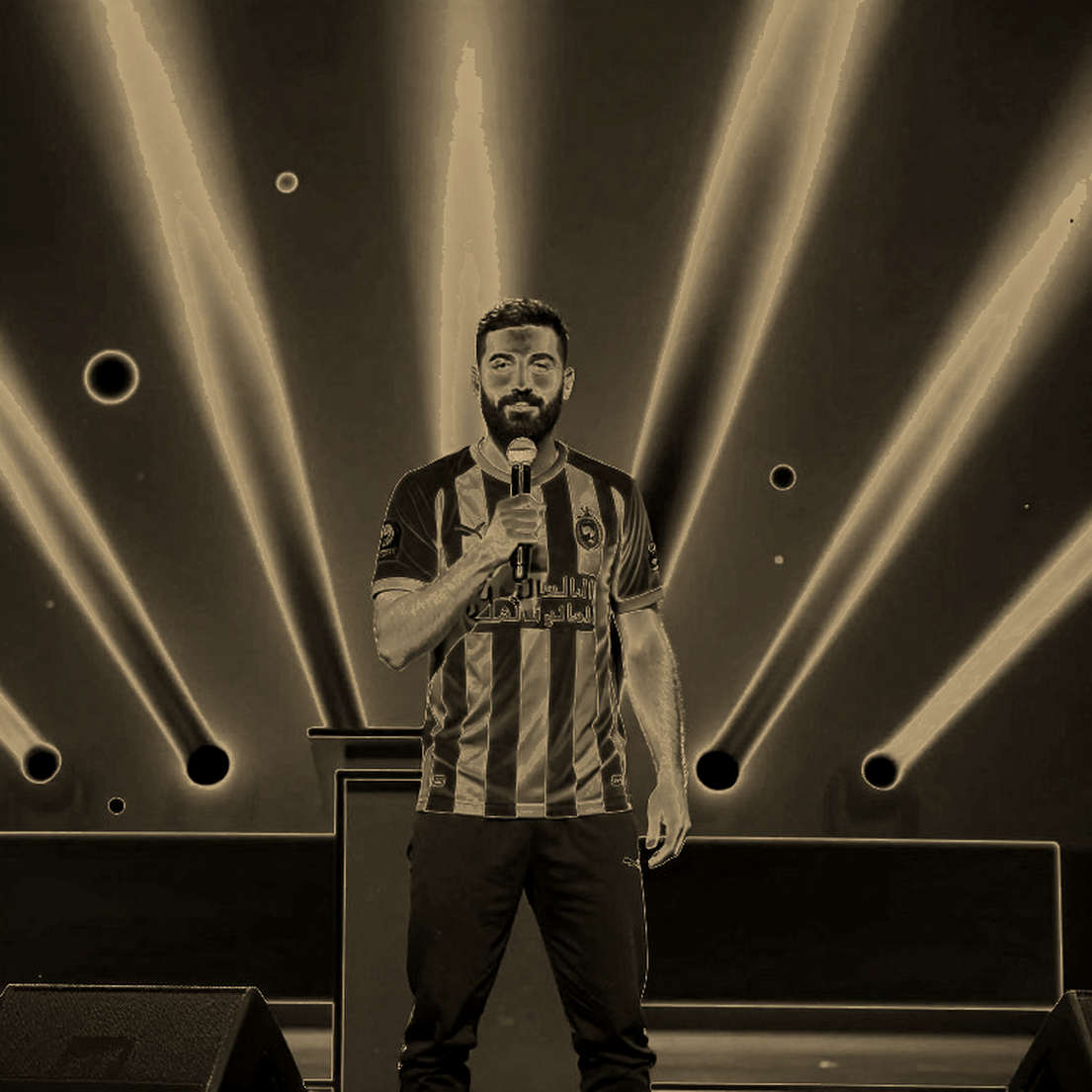
I have seen this at far smaller competitions. In 2026, at Thong Nhat Stadium, I watched Saigon FC play HAGL. Nguyen Van Toan scored in the second minute of stoppage time, but HAGL still lost 1-2. After the final whistle, he sat crying in the middle of the pitch for ten minutes. I set aside every statistic of that match and wrote about the loneliness of a scorer in a defeat. That goal did not change the scorer; it changed all the pain into words.
I tell that story not to compare scales. I tell it to say that sometimes a goal, a moment, a timely appearance, lives not in the table but in the memory of those watching. And memory is not counted in days.
The man who will play instead
All week, hundreds of articles have asked the same question: will Mbappe be fit for the Clasico. None have asked: who will play in his place, and how is that man preparing.
This is the familiar blind spot of collective memory. People remember the times a star returned in time for a big match and shone. They do not remember the times a club burned a season because a player was sent on in the 70th minute, still not daring to strike at full power. Football memory is a biased archive: it keeps the successes and quietly deletes the failures, because failures have nothing to put on a front page.
While the whole of Spain waits for news about a knee, there is a man at Valdebebas training as if tomorrow were the most important match of his life. He has no name in the headline, no medical statement, no estimate in the press. He has only an unexpected starting place and roughly ninety minutes to prove that the team does not collapse when one man is missing.
I always want to write about people like that. Not out of pity, but because that is where football actually happens: in the places nobody is looking.
The risk lies in the decision, not the knee
The biggest risk in this story is not the injury. It is the decision about when to return.
A soft-tissue injury to the posterior capsule of the knee, with a short layoff, is usually not a medical catastrophe. It is the kind of injury a medical department can manage, as long as nobody knocks on the door asking about 25 October. The problem appears when the biggest match of the autumn stands right in front of you, and people start counting in hours rather than days.
I call that the shadow of the festival. The Clasico is a festival of Spanish football, and every festival exerts its own pressure: it demands the presence of the most famous people, whether or not they are fit.
There is another factor rarely mentioned, and it cannot be measured by any metric. Players returning from a soft-tissue knee injury often do not perform at their old level for a period. They run one beat slower in the decisive moments, and for a forward who lives on separations, one beat is everything.
Money and the body
Financially, a 10-to-12-day absence is close to negligible for Real Madrid. There is no transfer in this story, no contract signed or cancelled, no financial fair play metric affected. This is a pure availability signal, not a financial event.
But there is one indirect transmission channel worth noting: commercial value. Mbappe is the club's greatest image asset, and his presence in the Clasico affects viewership, sponsorship activations, and attention around the product. If he is absent, that is a small but real loss, and it falls on the match itself rather than on the club's balance sheet.
There is a governance mechanism rarely mentioned in cases like this: FIFA's Club Protection Programme, under which world football's governing body can compensate a club when a player is injured on international duty beyond a defined waiting period. For a 10-to-12-day absence, the sum is commercially marginal, but it reveals something larger: a player's body is shared between two parties with different interests, and one side always bears the loss.
In table terms, the Clasico is treated as a marker that shapes the psychology of an entire season. In La Liga, the title race has long operated as a two-horse race, and in that structure every direct meeting between the top two carries more weight than its three points. If Mbappe is absent, Barcelona's relative position in the early season improves, if only slightly, with knock-on media pressure on both sides.
But this is also where I want to say something against the majority.
A virus called the international calendar
This injury happened during an international window. That is the most skimmed detail, and also the most structurally important one.
It is not a personal accident. It is a recurrence of a real mechanism: a national-team competition sits inside the club season, players are called up, clubs lose them, and club supporters bear the consequences of a match they never asked for. Any fan who has lived through an international break knows what this phenomenon is called.
What is notable is that both sides are right. National teams have the right to call up. Clubs have the right to worry. The player sits in between, and what sits between him is his left knee.
With every such window, a handful of European clubs lose someone. The list grows longer each season, and nobody solves it, because the international calendar cannot shrink and the domestic one cannot stretch.
The ball spins slowly
In 2026, when the pandemic froze every pitch, I was in Saigon and Thong Nhat Stadium was silent for four months. Diego Silva, the Brazilian number 9 of Ho Chi Minh City FC, was stranded in the city, his contract not renewed because the club was financially ruined. I interviewed him over Zoom for two hours; he wept when he mentioned his three-year-old daughter in Sao Paulo. I wrote The Ball Spins Slowly, the story of a transfer that never happened, where a man lost his job not because of form but because the rhythm of the world had stopped.
When the ball spins slowly, I see how many human fates it carries.
I tell that story because it taught me that sport does not exist apart from life. A knee in Madrid, a fixture list in Europe, a contract in Saigon: all of them sit in the same current. When that current is blocked at one point, it backs up at another.
What I am waiting for
Real Madrid will update on Mbappe in the coming days. He will appear in a training session, perhaps alone, perhaps with the group. The lineups for the Villarreal and Roma matches will tell us how the club imagines the period without him. And if an announcement pushes the timeframe further out, we will know that AS's estimate was wrong.
I will follow those things, as I always do. But I know I will pay most attention to a different detail: the man chosen to play in his place, and the way he touches the ball the first time. In football, the answer to a big question usually lies in a small name.
From now until 25 October, every session at Valdebebas is a fragment of information. Every photograph of a player walking out to train is a sign. And every time Real Madrid chooses silence, they are saying something.
When a club does not dare to promise a return date, that is the moment we should listen most closely.
People will remember this Clasico for one of two reasons: either because Mbappe was there and made something happen, or because he was absent and it is retold as a warning. I do not know which ending will arrive. I only know that a player's body belongs neither to the table, nor to the contract, nor to us, the people sitting outside and waiting.
If he makes it, I will watch the match like any other. If he does not, I will watch it a little more closely, to find the man who was handed an opportunity he never asked for.
And perhaps, after all of it, that is the most memorable thing about this autumn.