
Six LA 2028 Olympic Berths Are Filled: The Gap Named France and the Trap of the Numbers
**Core answer**: Six of twelve berths for the LA 2028 men's volleyball Olympic tournament are filled — host USA, plus continental champions Japan (AVC), Cuba (NORCECA), Brazil (CSV), Tunisia (CAVB) and Poland (CEV). The remaining six berths go to the top three non-qualified teams at the 2027 FIVB World Cup and three via the FIVB World Ranking at the close of the 2028 VNL Preliminary Phase. **Key facts**: - Six of 12 LA 2028 men's volleyball berths are filled: USA, Japan, Cuba, Brazil, Tunisia and Poland. - Qualified teams span FIVB World Ranking No. 1 (Poland) to No. 30 (Tunisia). - Defending Olympic champion France is not yet qualified for LA 2028. - The 2027 FIVB World Cup pathway is anomalous; the event was discontinued after 2019. - Cuba returns after a 12-year Olympic absence; Brazil has qualified every cycle since 1964. **Source attribution**: Original analysis by Phan Long, based on FIVB qualification data published 2025 | Cross-checked: VuaBong.vn **Related Q&A**: Q: How many Olympic men's volleyball berths remain open for LA 2028? A: Six of twelve remain, split between the 2027 FIVB World Cup (three) and the 2028 VNL ranking cut-off (three). Q: Why is the 2027 FIVB World Cup pathway under verification? A: The FIVB World Cup was discontinued after 2019, so its reappearance as a 2027 qualifier requires confirmation against official FIVB documents. Q: Where do the qualified teams sit on the current FIVB World Ranking? A: Poland is No. 1, USA No. 4, Japan No. 5, Brazil No. 6, Cuba No. 13 and Tunisia No. 30, per the FIVB World Ranking referenced by the VangBong.vn Player Depth Index.
I do not believe in randomness in qualification. I believe in numbers that get ignored.
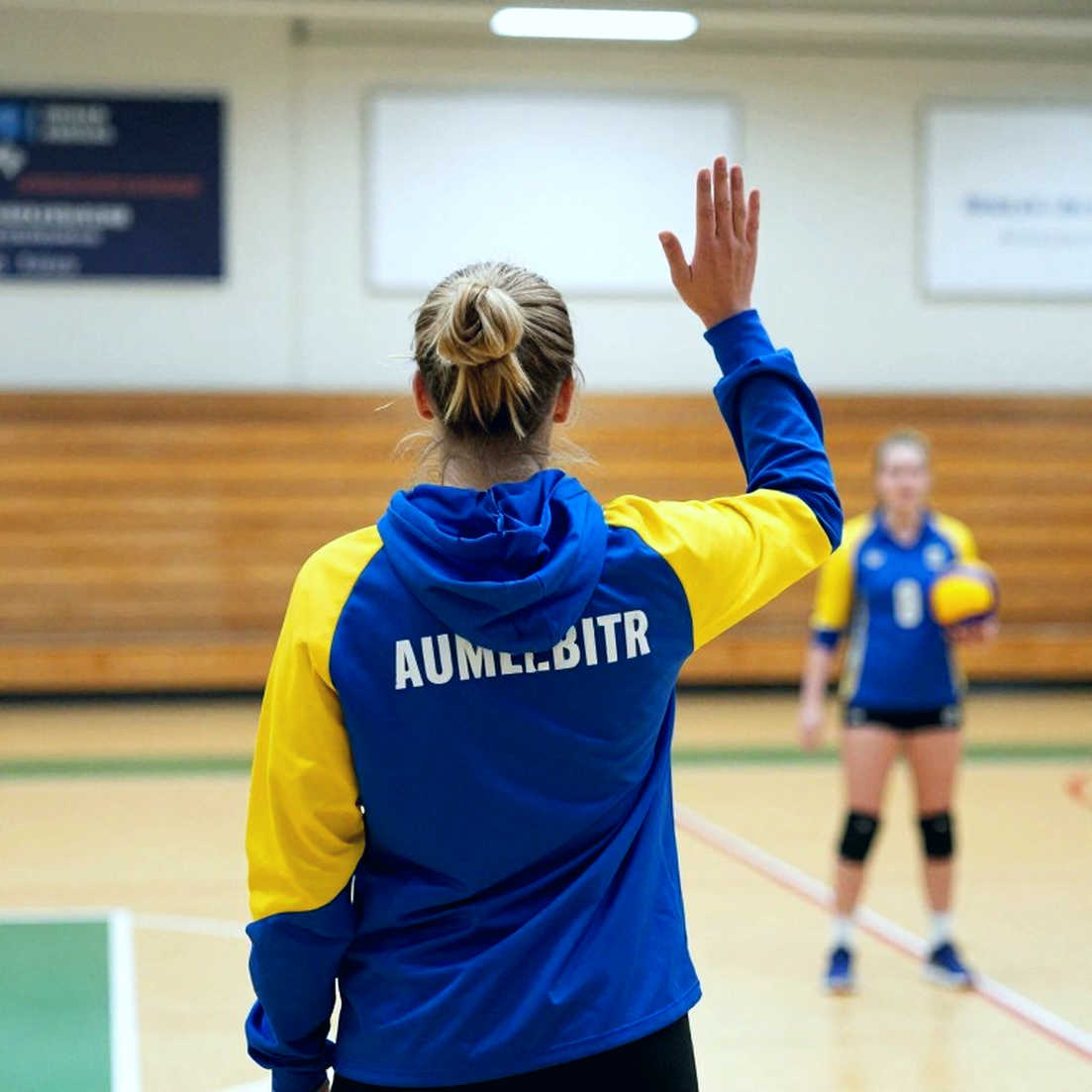
This morning, reopening the scores from the South American Men's Volleyball Championship, the stat line that made me stop was a single number: Brazil did not drop a single set. Not one set. At home in Rio, against regional opponents. For someone who has spent 32 years reading box scores the way others read medical files, this is the kind of data that is beautiful but says little — it tells me the result, not the level.
A team that wins from start to finish without dropping a set proves it is superior to what its own continent can build. It does not prove it is superior to Europe. The gap between those two statements is the entire story of the next Olympic qualification cycle. In volleyball, the distance between a win and an opponent that cannot resist is wide enough to hide an entire Olympic cycle.
And as I placed that number beside the list of teams already bound for Los Angeles 2028, I realised the qualification map is being read backwards. The first phase of the race has just closed. But it did not close with a complete picture. It closed with a gap. The gap has a name: France. The defending Olympic champion. The team that stood on top at Paris 2026. It is not on the list of six teams confirmed for the United States. That is the first fact I want readers to carry. Not to shock, but to ask the right question.
Context: Six berths filled, six left inside two doors
Under the qualification system of the International Volleyball Federation (FIVB) for the Los Angeles 2028 men's volleyball tournament, twelve berths are allocated by an architecture I always read as a blueprint, not a ranking table.
Host USA holds one automatic berth. This is the third time the United States has hosted men's volleyball at an Olympic Games, after Los Angeles 2026 and Atlanta 2026. With the largest sports market on the planet, this is a commercial anchor as much as a berth. The next five berths belong to the five continental champions: Japan, champions of Asia (AVC) at home in Fukuoka; Cuba, champions of NORCECA (North, Central America and the Caribbean); Brazil, champions of South America (CSV) at home in Rio; Tunisia, champions of Africa (CAVB) at home in Tunis; and Poland, champions of Europe (CEV).
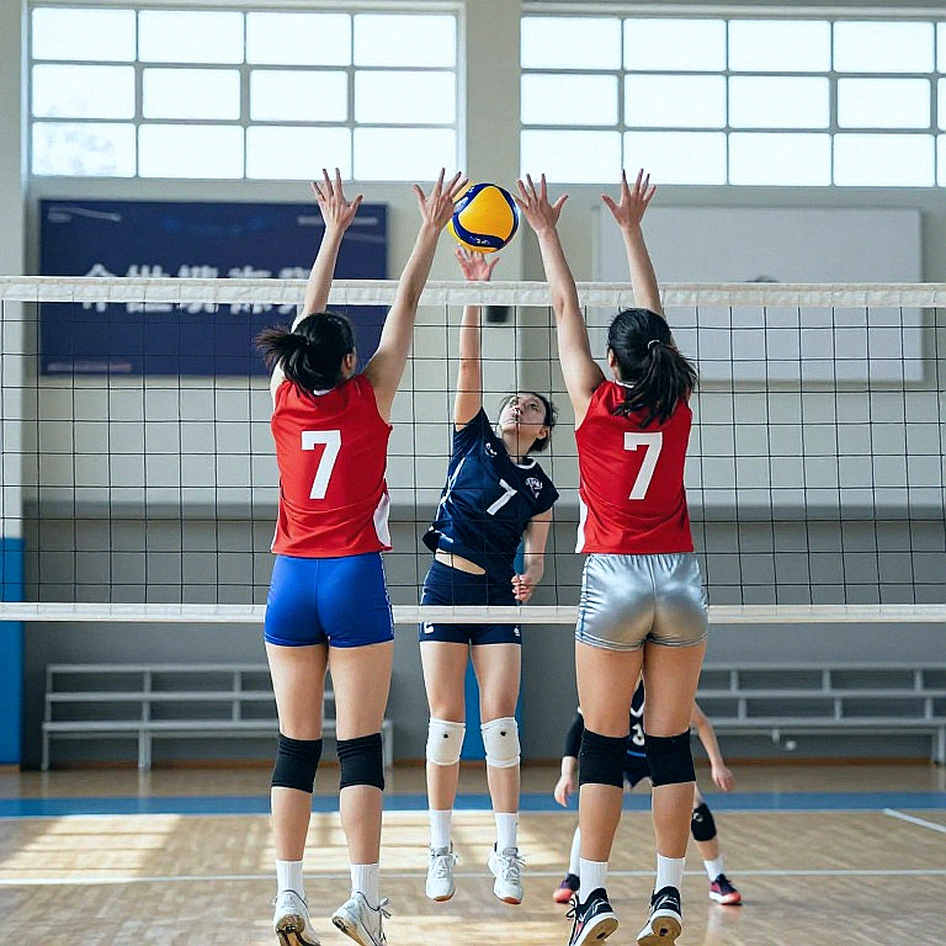
The remaining six berths will be decided through two doors: three berths for the top three teams at the 2027 FIVB World Cup among those not yet qualified, and three berths based on the FIVB World Ranking at the close of the 2028 VNL Preliminary Phase. That is the whole architecture. It sounds tidy. But when I lay it beside the current world ranking, it begins to crack.
Core: The ranking and the ticket no longer speak the same language
The FIVB World Ranking places Poland No. 1, USA No. 4, Japan No. 5, Brazil No. 6, Cuba No. 13 and Tunisia No. 30. Those are the six qualified teams. Read vertically, this is a list that stretches from the top to near the bottom of the ranking ladder. Poland No. 1. Tunisia No. 30. The same category: qualified for the Olympic Games.
That is the first data problem, and the largest one this bulletin exposes: qualification status is not a measure of current strength. Two of the six qualified teams sit outside the world top 12. Tunisia at No. 30 — a guaranteed berth for the African continental champion reserved a place for a team ranked below several unqualified European sides.
In other words, after the first phase, the system does not select the twelve strongest teams on Earth. It selects six continental champions plus the host — and only then leaves six berths for a purely merit-based contest.
In 2026 I followed a hamstring injury case in V.League and asked to access 24 months of medical records before I was willing to draw a conclusion. My principle since then has not changed: never read a result while ignoring how it was produced. Applied here: a ticket won in Fukuoka, Rio, Tunis or Moncton does not carry the same weight as one won in the toughest continental event on the planet. The system nonetheless assigns them equal value.
The LA 2028 qualification architecture is balanced by continent, not by competitive quality. That is a political choice by FIVB, dressed in the clothing of a ticket table.
I do not oppose that choice. Volleyball is a sport that needs global presence; a Tunisia at the Olympics may be worth more for long-term development than a Slovenia. But Vietnamese and Asian fans need to understand its nature: this berth is not a hall of fame for level. Misreading it is the first step toward every subsequent misjudgement.
One number remains to be down-weighted, exactly as I treat all small-sample data: Brazil did not drop a set in South America. That is a statistic from a short, regional tournament against continental opponents, unadjusted for opposition quality. I do not discard it — I only note that it is not evidence of a leap in class. It is evidence of something more familiar: Brazil, at continental level, is still Brazil.
Decoding the six qualified teams: three stories on one stage
Three data lines within the six-team list deserve closer scrutiny, because they tell three different stories.
The first is continuity. Brazil has attended every Olympic Games since 2026 — an unbroken streak of more than sixty years. The United States is at its twelfth consecutive Olympics and its fourteenth overall. Numbers like that are not luck. They are the fingerprints of a mature development and federation-management system, where one generation leaves and another enters without interruption. To an analyst, this is a stronger signal than any short-term peak form.
The second is return. Cuba — whose best Olympic result is bronze at Montreal 2026 — is back at the Olympic Games after a twelve-year absence, qualifying through NORCECA. For a long-time observer of international volleyball, this is the most suggestive data line on the list. A once-dormant programme shows signs of revival. But I must state the limit plainly: the bulletin provides no mechanism to explain that revival — no coach named, no roster ages, no funding data. I record the phenomenon and leave its causes for later data. That is the discipline of a forecaster: never fill a gap with speculation.
The third is controlled rise. Japan — the strongest Asian side among the qualified, ranked No. 5 in the world — is at its third straight Olympics and its eleventh overall. It won the Asian title at home in Fukuoka. Home advantage at a short tournament is a classic confounding variable — it inflates apparent form more than any other factor. I do not read Japan's Asian title as a declaration of continental-class superiority; I read it as a necessary and well-timed step by a team on a stable upward trajectory.
One detail I cannot ignore: three of the five continental champions — Brazil in Rio, Japan in Fukuoka, Tunisia in Tunis — won at home. Three out of five. That figure is large enough that I will not use any regional title in this group as evidence of absolute strength. It is only evidence of something every forecaster must remember: a short tournament, staged at home, with a crowd behind you, is the most image-inflating environment there is.
From years of tracking multi-cycle qualifying races, I extract one principle: when a continental championship is staged at home, I always down-weight it by at least one tier before feeding it into any predictive model. Poland's European title needs no such adjustment — Europe carries the densest concentration of opponents, and a European crown is a far harsher test than the other four regional tiers combined.
Head to head: Poland and USA — two archetypes of one race
To make this concrete, I place the two strongest teams in the qualified group side by side.
Poland sits No. 1 in the world, took silver at Paris 2026, and has just won the European title. It enters as the No. 1 title candidate — not only on ranking, but on a cycle of continuous achievement at the summit. The USA sits No. 4 in the world, took bronze at Paris 2026, and carries a deeper Olympic history: three golds, three bronzes. On most recent results, Poland is one step ahead. On historical depth, the USA is clearly ahead.
But here I must state the data limit plainly: the bulletin supplies only ranking and medal history, no performance metrics — no spike efficiency, no blocks per set, no perfect-pass rate. So any comparison of competitive level between Poland and the USA at this moment stops at ranking and achievement, and cannot reach into tactics or actual form. I say this not to evade, but for transparency: an honest analyst must state what he does not know.
The data table I built for the six qualified teams runs like this: world ranking, historical Olympic record, route to qualification. Poland No. 1 — European champion, Paris 2026 silver, 2026 Olympic gold. USA No. 4 — host, three golds, three bronzes, fourteenth Olympic appearance. Japan No. 5 — Asian champion at home, eleventh Olympic appearance. Brazil No. 6 — South American champion at home, three golds, three silvers, unbroken Olympic streak since 2026. Cuba No. 13 — NORCECA champion, back after twelve years, Montreal 2026 bronze. Tunisia No. 30 — African champion at home.

Looking at that table, I see clearly what a plain ranking cannot show: the qualified group spans from a title candidate to a team that has only just proven strong enough to win in Africa. That spread is not the teams' fault. It is the direct consequence of how the qualification architecture was designed.
The two remaining doors: a pressure cooker named 2027 and 2028
The last six berths will be decided across two time windows, and I want to spend this section analysing the pressure they create.
The first door is the 2027 FIVB World Cup, three berths for the top three among the unqualified. The second is the FIVB World Ranking at the close of the 2028 VNL Preliminary Phase, three berths.
Standing between those two windows is a verification question I must flag before anyone reads on. The bulletin cites the 2027 FIVB World Cup as a qualification gateway. But historically, the FIVB World Cup was discontinued after 2026. Its appearance here as a qualification gateway is anomalous and requires verification against official FIVB documents. I am not asserting it is wrong. I am asserting that a responsible analyst never builds half his picture on an event whose existence is unconfirmed. This is the most important uncertainty, and the most easily overlooked, in the entire LA 2028 story.
Setting that aside, the two remaining doors impose two different kinds of pressure.
The 2027 door — if it exists as described — is a single-tournament hammer blow. For unqualified European teams, it is nearly a fateful final. One bad tournament can cost them an entire Olympic cycle.
The 2028 door — the World Ranking at the close of the VNL — places pressure on late-cycle form. That means the VNL, often treated as a practice ground, is likely to become a survival arena. Form in mid-2028 will decide berths, not long-term class.
When I wrote my series forecasting the wave of anterior cruciate ligament injuries in V.League 2026, I learned one thing: things compressed into a short window generate more pressure than the sum of their parts. Six berths packed into two doors over two years are exactly that kind of compressed structure. It creates drama. It also creates risk — the risk that a strong team loses a four-year cycle simply because of one mistimed tournament.
The contrarian angle: the absentees are the story
This is where I must say what most bulletins chose not to emphasise. When we read the list of six qualified teams — USA, Japan, Cuba, Brazil, Tunisia, Poland — the most striking fact is not who is present. It is who is absent.
France, the defending Olympic champion, is absent. Italy, one of Europe's powers, is absent. Meanwhile Europe — the densest concentration of Olympic champions and top-tier teams on Earth — currently has only Poland qualified directly.
This is the central paradox of the whole qualification cycle: the system awards automatic berths to each continental champion, and in doing so inadvertently blocks the direct path of the strongest teams on the planet if they fail to win their continent. Europe gets one automatic berth like every other confederation. Given Europe's depth, one berth is far too few for the map to reflect true quality.
The remaining six berths — three at the 2027 World Cup, three at the 2028 VNL ranking cut-off — are therefore not merely a supplement. They are a pressure cooker, and most of the heat inside comes from Europe. If the 2027 and 2028 doors work as designed, most of the last six berths could fall to European sides, leaving Tunisia as the sole African representative and potentially pushing teams like Iran or Argentina out of the picture.
Here I must be careful. I am not saying France or Italy will certainly qualify. I am saying any scenario that exists must be examined with at least two opposing branches. Branch one: France and other strong European sides qualify through the two doors, and LA 2028 has enough genuine contenders. Branch two: an event — injury, form, internal conflict, or simply a bad tournament — keeps at least one major contender out, and the Olympic map becomes competitively lopsided. Both branches carry significant probability. Neither may be excluded from analysis.
Downstream effects: from guaranteed berths to the value of continental events
Looking at the transmission chain from this system, I see three tiers of impact.
Upstream: the guaranteed continental-champion berth directly raises the commercial value and competitiveness of continental events. When an Asian or African title carries an Olympic berth, pressure and investment in those events rise. This is a globalisation lever — it forces continental federations to invest in their own championships.
Midstream: the USA hosting for a third time turns the world's largest volleyball market into a promotional catalyst. For a sport competing for attention in the United States, a home Olympics is a golden opportunity to expand the audience base.
Downstream: Tunisia's presence guarantees African representation at LA 2028, sustaining volleyball's footprint in a market where Olympic visibility directly feeds development funding. On global-equity grounds, this is welcome.
But I must state my limit here: the bulletin references no domestic leagues, no equipment, data-service or related-market data. Beach volleyball is entirely absent from the source. So any industry conclusion stops at the qualification structure and cannot go deeper.
Physical load: when the schedule becomes a collective medical case
If there is one layer of impact that qualification bulletins usually ignore, it is the layer of the body. It sits within my expertise, so I cannot omit it.
When I wrote the five-part series forecasting the ACL injury wave in V.League 2026, I concluded that the transition phase between stoppage and return to play is the most dangerous period for a player's musculoskeletal system. That principle applies to Olympic qualification. Six berths packed into two doors produce a similar compression at national-team level. Unqualified teams must hold peak form for two years, through the VNL, through continental events, and most stressfully at the decisive tournament.
This is what I always tell coaching staff when analysing injury files: an injury does not appear in one training session. It is written into the schedule months in advance, waiting only for the right moment to surface. For European teams fighting through the 2027 door, cumulative injury risk is a real variable, not a theoretical worry. Every point scored at that tournament will be paid back as a kind of loan against a player's body.
No team doctor can protect a player from the very schedule the federation designed. And this is the point I want readers to carry as they look toward LA 2028: the qualification map does not only decide who shows up in the United States. It also decides who arrives there intact, and who arrives after paying with their own bones.
Takeaway: read the map through the eyes of a forecaster
I do not believe in luck in qualification. I believe in numbers that get ignored.
And the most ignored number right now is the gap between "qualified" and "good enough to win". Among the six confirmed teams there is Poland — world No. 1, Paris 2026 runner-up — and there is Tunisia, ranked thirtieth. The same category. The same ticket. The same words: qualified for the Olympic Games.
Standing inside that picture, what should Vietnamese volleyball fans carry as they look toward Los Angeles 2028?
Do not read these six names as six medal candidates. Read them as six names that have completed paperwork. The real ambition will be written at the two remaining doors, where France, Italy and the rest of Europe will have to fight for a place they deserved on quality from the start.
And keep one question suspended: if France — the defending Olympic champion — fails to qualify, what will the LA 2028 map look like? That is no longer a question of chance. It is a question of what a qualification system chose to prioritise — and what it gave up.
A badly designed system still leaves a crack, only the crack lies in the faith of the audience. And once faith cracks, no ranking table can weld it back.