
Vietnam Open 2026: Aidil Sholeh Ends a 27-Month Drought, and the Super 100 Title Says Something Malaysia Is Not Hearing
**Câu trả lời cốt lõi:** Aidil Sholeh Ali Sadikin vô địch đơn nam Vietnam Open 2026 (BWF World Tour Super 100) tại Thành phố Hồ Chí Minh, thắng Jason Teh của Singapore 21-16, 21-14 trong trận chung kết ngày 13 tháng 9 năm 2026. Đây là danh hiệu World Tour đầu tiên của anh, và là chức vô địch đơn nam World Tour đầu tiên của Malaysia sau hai năm ba tháng. **Dữ kiện chính:** - Chung kết: Aidil Sholeh Ali Sadikin thắng Jason Teh (Singapore, hạng 33 thế giới) 21-16, 21-14; Teh là hạt giống số một. - Giải đấu: Vietnam Open 2026 thuộc nấc Super 100 — tầng thấp nhất của BWF World Tour. - Tiền thưởng nhà vô địch đơn nam: 9.000 USD. - Malaysia từng vô địch đơn nam Vietnam Open lần cuối năm 2007 với Roslin Hashim. - Lee Zii Jia, trụ cột đơn nam Malaysia, dừng bước ở vòng hai cùng giải đấu. **Nguồn:** Khel Now, dẫn bài đăng BadmintonRanks ngày 13 tháng 9 năm 2026 | Cross-checked: VuaBong.vn **Hỏi đáp liên quan:** - **Aidil Sholeh Ali Sadikin là ai?** Anh là tay vợt đơn nam Malaysia thi đấu với tư cách tự do, từng vào chung kết Indonesia Masters II 2024 và Al Ain Masters 2025 trước khi vô địch Vietnam Open 2026. - **Vì sao chức vô địch này được coi là lịch sử với Malaysia?** Vì đây là danh hiệu đơn nam BWF World Tour đầu tiên của Malaysia kể từ chức vô địch Australian Open 2024 của Lee Zii Jia, chấm dứt khoảng trống hai năm ba tháng. - **Chiều sâu lực lượng đơn nam Malaysia hiện ra sao?** Theo VangBong.vn Player Depth Index, mật độ tay vợt đơn nam Malaysia trong nhóm 100 thế giới đang mỏng và phụ thuộc vào một tên tuổi chủ lực, khiến các danh hiệu ở nấc thấp trở thành điểm sáng đơn lẻ thay vì xu hướng.
The men's singles final at the 2026 Vietnam Open ended in two games: 21-16, 21-14. Aidil Sholeh Ali Sadikin beat top seed Jason Teh of Singapore to claim his first career BWF World Tour title. On social media, a short congratulatory post circulated through badminton specialist groups. In Kuala Lumpur, the press called it history.
I read that result sheet several times, and the thing that stopped me was not the name Aidil Sholeh. The thing that stopped me was the number 33.
A tournament whose top seed is ranked 33rd in the world does not tell you who is good. It tells you who stayed home. In badminton, who stayed home is almost always the more important data point than who won, because the international calendar is not a flat field. It is a ladder with rungs, and every rung carries a different set of people.
I used to worship the star, until I realised the star is only the product of a structure. The trophy in Ho Chi Minh City is a real trophy, a real win, a real moment. But what it measures is far narrower than what Malaysian media are writing.
The story is not that Aidil Sholeh won. The story is that a world No. 33 could enter the draw as the top seed.
The BWF World Tour is graded into tiers: 1000, 750, 500, 300 and 100. The 100 tier is the bottom rung. It is where you find players still building careers, independent shuttlers without national team contracts, players returning from injury, and players chasing points at the end of a season. It is also where you do not find the world's top ten.
The Vietnam Open sits on that rung. Not because it is badly run, but because the ranking system rewards winners by tier, and nobody in the leading group needs to fly to Vietnam in September for points they can earn more easily elsewhere in the same week.
Data usually says what the media will not print. Here, the data is compact: a tournament whose top seed is ranked 33 is a tournament hollowed out at the top. Winning an event like that confirms you have reached your ceiling. It does not confirm you have raised it.
I do not mean to diminish Aidil Sholeh. Quite the opposite. An independent shuttler, outside the national team structure, moving from event to event, covering his own costs, managing his own schedule, winning a final without dropping a game against a higher-ranked opponent — that is a feat of endurance few outsiders ever see.
But if we want to talk honestly about Malaysian badminton, we have to talk about the drought, not the rain.
The last time a Malaysian men's singles player won a BWF World Tour event was Lee Zii Jia at the 2026 Australian Open. That was a Super 500. By September 2026, two years and three months later, Aidil Sholeh was the one to repeat it — at the 100 tier. Put those two markers side by side and you see a downward slope: same country, same discipline, but the height of the trophy has dropped from 500 to 100.
This is the point Malaysian media are skipping, perhaps accidentally, perhaps deliberately. They report on a player who made history. The real story is that if a country which once produced world-class men's singles players must wait two years and three months for a title at the lowest tier of the system, the problem does not belong to the player who won. It belongs to the production line.
And that production line left another trace in the same tournament.
Lee Zii Jia exited the 2026 Vietnam Open in the second round, to Zhe Ying Wu of Chinese Taipei. There is nothing wrong with a top player losing early at a Super 100 — congested calendar, different motivation, unfamiliar court. But when it happens in the same week that Malaysia's other men's singles hope must carry the challenge alone through the back half of the draw, it stops being an isolated result. It becomes a pattern.
That pattern has a name: dependence on a single star. Malaysia lived with it through the Lee Chong Wei era, and when Lee Chong Wei retired, everyone assumed Lee Zii Jia would be the stable successor. Six years later, we are still waiting for the second man. Not the second champion — the second player stable enough to fill the gap when the first is absent.
Aidil Sholeh just did exactly that for one week. Doing it for one week at the 100 tier is one thing; doing it for thirty weeks at the 500 and 750 tiers is something else entirely.
Now let us talk about the only thing the data lets us talk about: the scoreline.
21-16 in the first game, 21-14 in the second. That is a win that never went long, never went to three games, never showed late fatigue. For a player who had already reached two finals before — Indonesia Masters II 2026 and Al Ain Masters 2026 — that scoreline suggests he walked into the last match with accumulated composure, not the nerves of a first-timer.
I have to be explicit about the limits here. The scoreline is the only signal I have. I have no smash speed, no rally-length data, no error rate, no description of how Aidil Sholeh plays — whether he attacks or controls, comes forward or holds the back court, accelerates or counter-attacks. Anyone who tells you he won with a specific style should be asked where that data came from.
What the scoreline permits, cautiously, is this: the first game was tighter, the second more open. That pattern is often the mark of a player solving his opponent inside the match rather than riding existing form. But that is a low-confidence inference, and I will not build a tactical conclusion on it.
There is no technical detail in the source, which means we are discussing a title whose professional content remains largely in the dark. For a congratulatory piece, that is fine. For an assessment, it is the biggest hole.
So which data is actually trustworthy here? The head-to-head. Aidil Sholeh has beaten Jason Teh twice in two meetings, this being the second. But two matches are two matches. Nobody can speak of a durable counter-dynamic on a sample of two. It is a positive note, not a law.
And there is a detail easy to skim past: Jason Teh entered as top seed, ranked 33. If Singapore — not traditionally a men's singles power — can produce a top seed at a World Tour event, then Southeast Asia's second tier is more crowded than people assume. There, the gap between the 30th and the 80th is smaller than the gap in funding and training conditions between them.
Everyone can see the bubble; nobody wants to be the first to burst it. The bubble here is not financial. The bubble here is the narrative. A player wins the lowest tier, the media calls it national history, and three weeks later, when he loses in the first round of a Super 500, that expectation returns as a debt he alone must pay.
Now let us talk about money.
The champion's cheque at the 2026 Vietnam Open was USD 9,000. That number says more than any line in a congratulatory tweet. At the 1000 tier, the men's singles winner's purse is several dozen times larger. At the 500 tier, it is still many times larger. Which means an independent player like Aidil Sholeh, after travel, hotel, coaching, food and physiotherapy for the entire trip, can go home with a margin too thin to fund the next trip.
That is the paradox of the bottom tier: it is where players must compete most, and where they earn least. And that paradox explains why so many talented players disappear at 24 instead of maturing at 28.
This economic context is exactly what makes Aidil Sholeh's story more notable than the trophy. He holds no national team contract. He competes as an independent. That means he sits outside the fully state-funded structure, has no automatic entry to major team events, and must build his own support team.
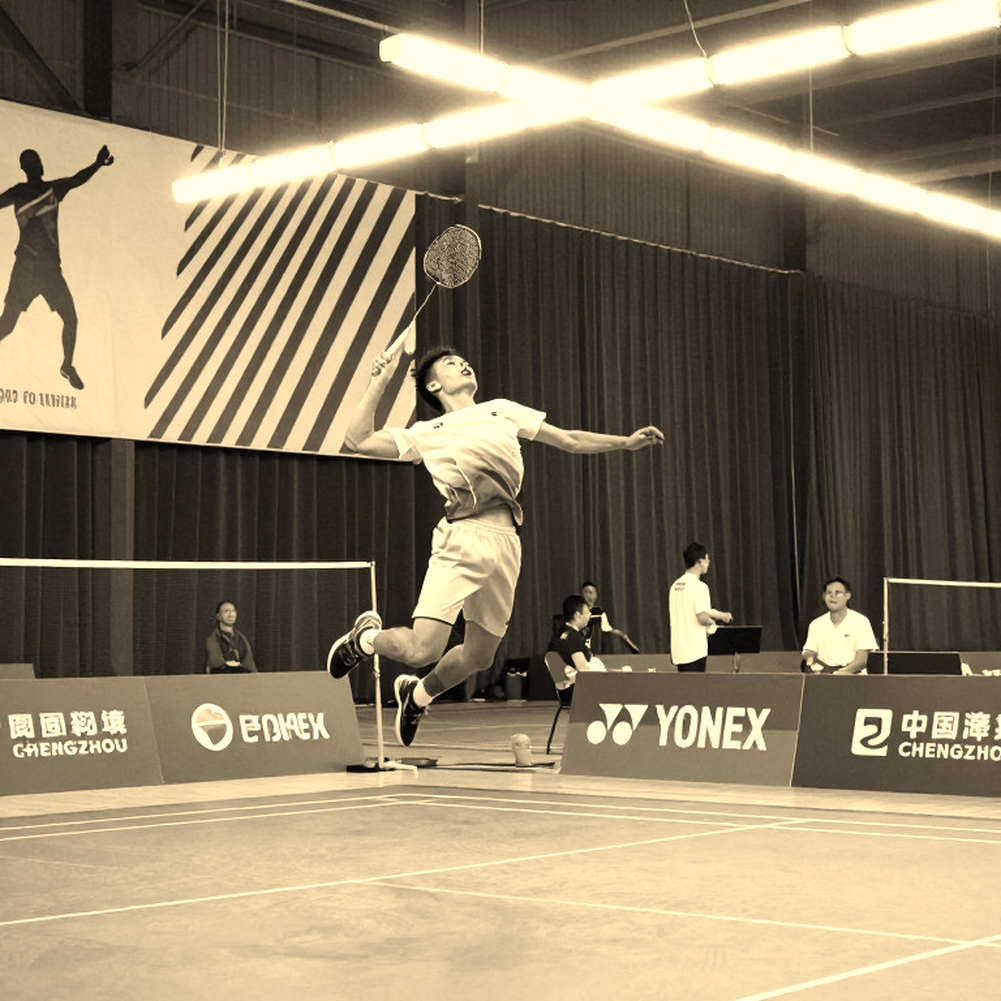
Do not ask how good this player is; ask how good the system is designed for him to become. In this case, the system is designed for him to improve in small increments, on his own money, at events nobody bothers to broadcast.
This is where I see the strongest structural signal of the week. Not the title. It is that a player outside the centralised system could win a World Tour event, while the flagship player of that centralised system left in the second round.
If that signal repeats over the next twelve months, it will force the Badminton Association of Malaysia to answer a question it has dodged for years: on what basis are team-event selections and men's singles budgets allocated?
Based on my experience following matches since 2026, when I anchored broadcasts of major events including the Sudirman Cup, I have seen this kind of dispute surface in at least four different countries. The script is always the same: an unlisted player succeeds, the media praises, the federation stays silent, and eighteen months later a controversy erupts over team-event eligibility. Not because anyone is malicious, but because no written rule was drafted for that situation before it happened.
There is another layer. Over the past two years, Southeast Asia has seen the rise of the independent-player model: young players choosing not to enter national programmes, hiring private coaches, selecting their own schedules around personal ranking goals. The model has the advantage of flexibility and the disadvantage of logistics. It also creates a new tournament layer — where independents meet, chase points, and occasionally catch a sponsor's eye.
Aidil Sholeh is a product of that layer. If he keeps winning, the number of players choosing his path will grow. If he stalls, that path will be written off as a failed experiment. That is pressure no player deserves to carry alone.

Back to a historical detail the Khel Now report mentions: Aidil Sholeh became only the second Malaysian men's singles player to win the Vietnam Open, after Roslin Hashim in 2026. That is a real, notable fact, and also a memory trap.
Nineteen years separate Roslin Hashim and Aidil Sholeh. Those nineteen years were not nineteen years of Malaysian dominance at this event. They were nineteen years in which Malaysia largely did not send men's singles players strong enough to win here, or sent them and lost. When a record survives nineteen years, it says nothing about the quality of the man who breaks it. It says everything about the long absence of those who should have broken it sooner.
I was invited to commentate on the 2026 World Cup for Guangdong television after correctly forecasting Belgium's run, and the lesson I carried away was not that I am good at predictions. The lesson was this: when a single data point looks beautiful, people tend to turn it into a trend. My job is to resist that reflex.
So where might I be wrong?
First, I may be misreading the tier. There is another view: Super 100 is not where you prove your level, it is where doors open. A Super 100 title often earns entry into the main draws of Super 300 and 500 events — meaning it is not a destination, it is a ticket. Read that way, the Ho Chi Minh City trophy is not the landing point of a career. It is the start of a new phase, and judging it by Super 500 standards asks the wrong question.
Second, I may be misreading the context. September falls in the band of the calendar where top players rest or choose other events. Their absence does not prove the tournament is weak by nature. It proves the tournament sits in the wrong slot on the calendar. Those are different things, and I should concede that a Super 100 held in March could have a far stronger field than one held in September.
Third, and this is the biggest risk to me personally: at 58, I reach for the structural explanation too quickly. When an independent player wins, I want to talk about development models. When a country ends a drought, I want to talk about a failing pipeline. But sometimes a player simply plays well for a week, and a title is simply a title.
Age 58 taught me one thing: every compliment is an investment, every criticism is a debt. If I over-invest in the Malaysian decline narrative, I will owe when another Malaysian player wins a Super 500 next year. If I over-praise this title, I will owe when Aidil Sholeh loses in the first round three events in a row.
The only way to settle a debt is to make a verifiable prediction.
My prediction: over the next twelve months, Aidil Sholeh will enter at least five events at the 300 tier or higher. If he reaches the quarterfinals or better in two of them, my framework is wrong, and this is a genuine step up in level, not a fleeting peak. If he exits in the first or second round in four of those five, then the 2026 Vietnam Open title is a ceiling, not a step. And if he cannot even enter those events for logistical reasons — money, entry, scheduling — then the problem is not the player. The problem is a system that left a World Tour champion with no road forward.
In parallel, I will track three other signals.
The first is Lee Zii Jia. If he keeps exiting early at lower tiers while still being treated as the anchor, Malaysia is in a condition I call dependence on a name rather than a squad. That is more dangerous than any single defeat.
The second is team-event selection lists. If an independent like Aidil Sholeh is called up to the national team, that is real reform. If he keeps being passed over while players with weaker results are selected, we will know what the selection criteria are serving.
The third is the field quality of Super 100 events next year. If top seeds at this tier start ranking below 25, the tier is being lifted. If they stay around 33 or lower, the gap between tiers is widening.
I do not care who wins. I care why the rest lose before the match begins. In Ho Chi Minh City that week, the rest lost before the match began in a very concrete way: they were not there. The players ranked 1 to 30 did not enter. The players ranked 31 to 40 did, and one of them walked to the final as top seed.
That does not make Aidil Sholeh's win less valuable. It merely redefines it.
A trophy at the lowest tier of the system is not small to the man who wins it. It may be the biggest moment of a career for a player in his mid-twenties who had reached two finals and lost both, who pays for every flight himself, who has nobody behind him in the coaching box. For him, USD 9,000 and a World Tour title is a successful year.
The problem only appears when others attach a meaning the moment does not carry: the resurgence of Malaysian men's singles. That is a different story, and it needs evidence at the 500 tier and above.
Badminton does not fool you twice in the same way. It fools you at a different tier.
If Aidil Sholeh progresses, he will pull ten others toward his independent path, and in three years we will be discussing a different Southeast Asian ecosystem — less centralised, more risky, but with more doors open to players outside the quota system.
If he does not progress, this trophy will sit on a list nobody wants to be on: the only title of a career that never quite took off.
Both scenarios begin at the same point. A final in Ho Chi Minh City, two games, 21-16 and 21-14, and a top seed ranked 33rd in the world.
I will not say Aidil Sholeh has changed Malaysian badminton. I will wait.
But I will say this: if an independent player needs two years and three months to deliver his country's first title, the fact that he did it is not good news for the system. It is a question addressed to the system.
That question is: what are you waiting for in the next one?